Cap Table Mistakes That Scare Away Investors
By Rohini Rajpoot · 20 July 2026

Learn the top cap table mistakes that scare away investors. Discover how to manage founder equity, ESOP allocation, equity dilution, and ownership structure effectively.
Investors don't just look at your pitch deck. They look at your cap table too. Before approaching investors, founders should ensure every aspect of their business is investment-ready. Our Startup Coaching Services help startups prepare for fundraising, compliance, financial planning, and investor readiness. A messy startup cap table raises questions before you've even had a chance to answer them. Who really owns what? Is there a fight waiting to happen between founders? Did someone forget to record a share transfer three years ago?
None of these questions inspire confidence. In this guide, we'll walk through the most common cap table mistakes founders make, why they worry investors, and how to fix them before they become a problem.
What Is a Startup Cap Table?
A cap table (short for capitalization table) is a record of who owns your company and how much. It lists founders, investors, employees with stock options, and anyone else holding equity, along with the type and amount of shares they hold. At its core, a cap table usually includes:
Founders and their ownership percentage
Investors and the rounds they came in on
The ESOP pool set aside for employees
Total startup shares issued
Ownership percentage for each stakeholder
Early on, this might live in a simple spreadsheet. As you raise more rounds and bring on more people, it gets a lot more complicated, and that's usually where mistakes creep in.
Why Is a Cap Table Important?
A cap table is more than a bookkeeping formality. It's one of the first things investors dig into during due diligence, and for good reason.
It shows who actually controls the company.
It tells investors what they'd be buying into and at what price.
It helps prevent disputes between founders and early employees down the line.
It makes future fundraising rounds easier to plan and negotiate.
It builds trust through transparency, which matters more than people expect.
If your cap table is confusing or full of gaps, investors will assume the rest of your business is run the same way. Fair or not, that's how it goes.
A well-maintained cap table becomes even more valuable when combined with accurate financial planning. You can also use our Startup Business Calculators to estimate valuation, equity dilution, and other important fundraising metrics before your next investment round.
7 Cap Table Mistakes That Scare Away Investors
1. Unequal or Unclear Founder Equity Split
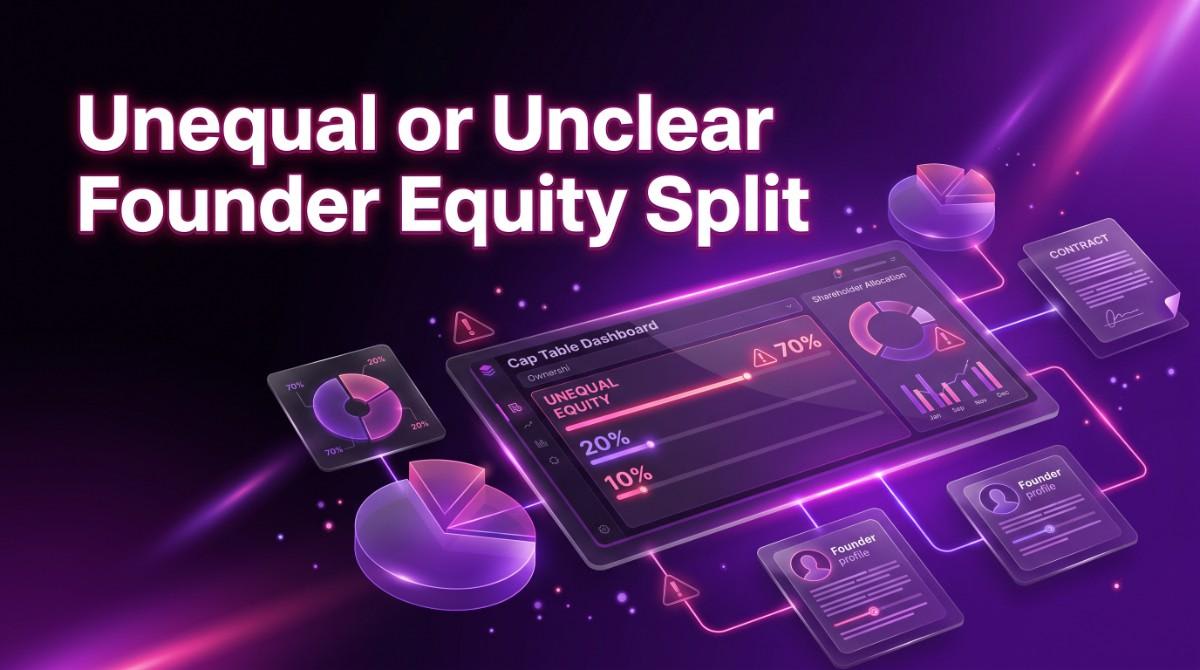 Splitting equity based on a handshake, or worse, splitting it equally without thinking about who's doing what, is one of the most common early mistakes. If one founder is full time and another is part time, or one brought the original idea while another joined six months later, an equal split can feel fair today and unfair in two years.
The bigger issue is the lack of a vesting schedule. Without vesting, a founder who leaves after three months still walks away with their full equity. Investors have seen this go wrong too many times, so they check for it early.
2. Excessive Equity Dilution
 Giving away too much equity too early, whether to investors, advisors, or co-founders, leaves founders with less skin in the game by the time a company is ready to scale. Investors want founders to stay motivated and in control. If you're already down to 20 percent ownership by Series A, that's a red flag worth explaining.
3. Poor ESOP Allocation
 Some founders forget to set up an employee stock option pool at all, which makes it hard to hire strong talent later. Others go the opposite direction and carve out a pool that's way bigger than needed, diluting everyone else more than necessary. Getting this balance right shows investors you're thinking ahead.
4. Complicated Shareholding Pattern
 A long list of small shareholders, multiple classes of shares, or a tangled ownership structure makes due diligence slower and messier. Every extra layer of complexity is one more thing an investor's legal team has to untangle before they can say yes.
5. Missing Legal Documentation
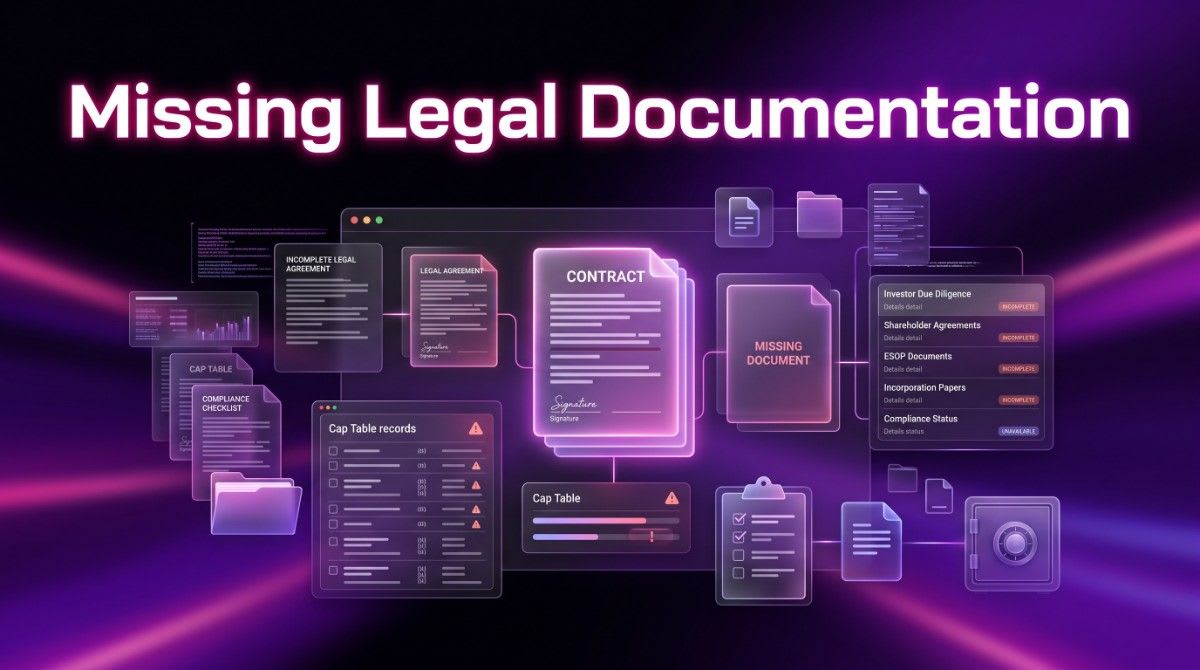 Equity transfers that were never recorded. Shareholder agreements that don't exist or were never signed. These gaps don't just look sloppy, they create real legal risk. Investors need proof that ownership is exactly what the cap table says it is, and missing paperwork undermines that instantly.
6. Outdated Cap Table
 A cap table that wasn't updated after the last funding round is a common and avoidable mistake. If the numbers on paper don't match reality, investors have no way to trust any of it. Every new round, every option grant, every share transfer needs to be reflected right away.
7. Using Spreadsheets Instead of Proper Cap Table Management

Spreadsheets work fine when you're a two person startup. Once you've raised a few rounds and issued options to a growing team, manual tracking becomes a liability. Formula errors, outdated versions floating around in different inboxes, and no audit trail all add compliance risk that dedicated cap table tools are built to avoid.
Founder Equity Split: Best Practices
Getting the founder split right doesn't mean finding a magic formula. It means having an honest conversation early and putting it in writing.
Base the split on roles, time commitment, and what each founder actually brings to the table, not just the idea.
Use a vesting schedule, typically four years with a one year cliff, so equity is earned over time.
Leave room in your planning for future dilution from investors and the ESOP pool, so today's split still makes sense two rounds from now.
Understanding Equity Dilution
What Is Founder Dilution?
Founder dilution happens every time a company issues new shares, whether to investors, employees, or advisors. Your percentage ownership goes down even though the number of shares you personally hold stays the same. If you're planning to raise capital soon, our startup advisors can help you structure your equity and fundraising strategy to avoid unnecessary dilution.
When Dilution Is Healthy
Dilution isn't automatically bad. If a funding round brings in capital that helps the company grow faster and the overall pie gets bigger, a smaller slice of a bigger pie can still mean more value for founders. The goal isn't zero dilution, it's dilution that's worth it.
How to Minimize Unnecessary Dilution
Raise only what you actually need for the next milestone, negotiate valuation carefully, and avoid giving away equity for services you could pay for in cash. Small percentages add up faster than most founders expect.
ESOP Allocation: How Much Should Startups Keep?
Most startups set aside somewhere between 10 and 20 percent of total equity for an ESOP pool, though the right number depends on your hiring plans and stage. Too small a pool and you'll struggle to make competitive offers to key hires. Too large a pool and you're diluting founders and investors more than necessary.
A well sized ESOP pool signals to investors that you understand how to attract and retain talent without giving away the company to do it.
Shareholding Pattern and Ownership Structure
Investors like ownership structures they can understand in five minutes. That means:
A reasonable number of shareholders, not dozens of small stakeholders scattered across early rounds.
Clear, documented rights for each class of shares, if you have more than one.
Full transparency about who owns what, with nothing hidden in side agreements.
Simple doesn't mean unsophisticated. It means every decision about who got equity and why is easy to trace and explain.
How Investors Review Cap Tables
When an investor sits down with your cap table, here's roughly what they're checking:
Do the founders still hold a meaningful, motivating stake?
Has dilution happened at a reasonable pace across rounds?
Is the ESOP pool sized appropriately for the stage?
Is the shareholding pattern simple enough to understand quickly?
Is the legal documentation complete and consistent with what's shown?
Any red flag here can slow down or kill a deal, even if the product and market are strong.
Which Software Is Used for Cap Table Management?
As startups grow, most move away from spreadsheets and into dedicated cap table tools. Some of the most commonly used platforms include:
Carta
Pulley
Cake Equity
Ledgy
Eqvista
These tools help with equity management, shareholder tracking, investor reporting, and staying compliant with regulations as your ownership structure gets more complex. They also make due diligence faster, since investors can get a clean, real time view of your cap table instead of a static spreadsheet that might be a few months out of date.
Best Practices for Maintaining a Healthy Cap Table
Update the cap table immediately after every funding round or option grant.
Keep all legal documentation organized and easy to access.
Model out future dilution before you raise, so there are no surprises.
Review ownership structure regularly, not just when an investor asks.
Stay transparent with founders, employees, and investors about where things stand.
Conclusion
A clean startup cap table doesn't guarantee funding, but a messy one can quietly kill a deal before it starts. Getting the founder equity split right, keeping equity dilution reasonable, sizing your ESOP allocation sensibly, and maintaining a simple, well documented ownership structure all send the same message to investors: this team knows what it's doing. Combine that with proper cap table management tools instead of a spreadsheet held together with formulas, and you'll walk into fundraising conversations with one less thing for investors to worry about. Looking to learn more about fundraising, startup finance, compliance, and business growth? Explore our collection of expert-written startup guides on the Startup Coaching Blog.
Frequently Asked Questions
1. What is a startup cap table?
It's a record of who owns a company and how much, covering founders, investors, and employees with equity.
2. Why is a cap table important?
It shows ownership and control clearly, supports fundraising, and helps prevent disputes down the line.
3. How much ESOP should startups keep?
Most startups reserve between 10 and 20 percent of equity for an ESOP pool, depending on hiring needs and stage.
4. What is founder dilution?
It's the reduction in a founder's ownership percentage that happens when new shares are issued to investors, employees, or advisors.
5. How do investors review cap tables?
They check founder ownership, pace of dilution, ESOP sizing, shareholding simplicity, and whether legal documentation matches what's on paper.
6. Which software is used for cap table management?
Popular tools include Carta, Pulley, Cake Equity, Ledgy, and Eqvista.