India's Deeptech Boom: Why Investors are Betting on Hardware, Space, and Defense
By Rohini Rajpoot · 22 September 2026
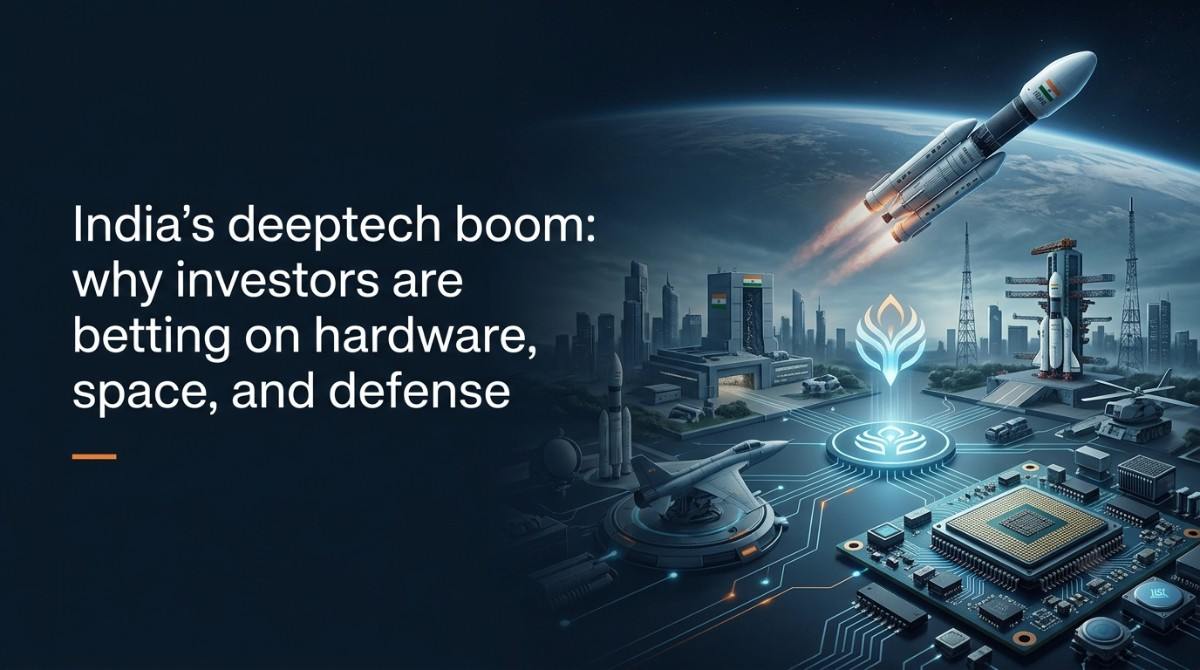
Explore India’s DeepTech investment boom across space, defense, semiconductors, robotics, and AI, and understand what’s driving this growth.
For most of the last decade, Indian venture capital chased the same playbook: build a consumer app, grow fast, raise the next round on user numbers. That story hasn't gone away, but it has quietly stopped being the whole story.
Money is now flowing into things you can't ship with an app update. Rockets. Chips. Drones. Robotic arms on a factory floor. These are slower, harder, more capital-hungry businesses than the average software startup, and investors are backing them anyway.
According to a May 2026 report covering India's deeptech funding surge, India's startup ecosystem raised nearly $9.1 billion in 2025, up 23 percent year on year, and deeptech accounted for roughly $2.3 billion of that, growing at around 37 percent. The same report flagged over $900 million in fresh deeptech capital within just a few months of 2026. Numbers like that don't happen by accident. Something has shifted in how investors think about India, and 2026 is the year it became hard to ignore.
What is driving India's deeptech investment boom?
A few forces are pushing in the same direction at once, which is part of why this feels less like a fad and more like a structural change.
Government money and policy have moved from encouraging words to actual capital. In April 2026 the government notified Startup India Fund of Funds 2.0, with a corpus of 10,000 crore rupees, prioritizing deeptech, technology-led manufacturing, and early-growth companies. A one billion dollar India Deep Tech Alliance was also announced at Semicon India 2025, alongside a Research, Development, and Innovation Fund with a corpus of 1 lakh crore rupees. That's a genuinely large amount of institutional weight behind a sector that, five years ago, most Indian VCs quietly avoided.
Investor appetite has caught up too. Funds aren't just tolerating hardware anymore; some are built for it specifically. Shastra VC launched a $100 million fund aimed at deeptech, covering AI, defense technology, space, and renewable science. That kind of dedicated capital didn't really exist in India a few years back.
Then there's talent. India has been producing engineers for decades, but a meaningful share of them used to leave, either abroad or into services companies. More of that talent is now staying to build product, partly because there's finally capital willing to fund the attempt.
Add to that a straightforward strategic argument: countries don't want to depend entirely on other countries for chips, satellites, or defense electronics anymore, and India's government has been explicit about wanting the country on the supply side of that equation rather than just the demand side.
Hardware startups: why investors are looking beyond software
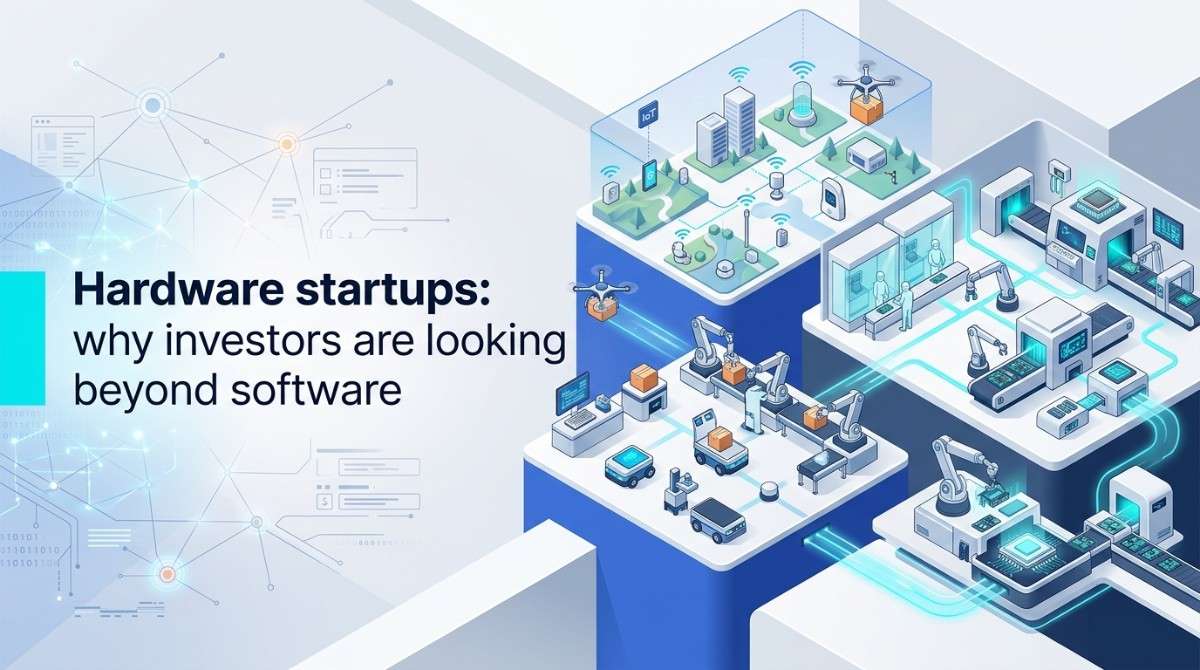 Software is easy to copy. That's the blunt version of why investors are looking elsewhere. A competitor with a laptop and a weekend can clone most SaaS products. Cloning a robotics company that spent three years tuning motor control and supply chains is a different proposition entirely.
Hardware startups working on AI computing infrastructure, industrial automation, robotics, and advanced electronics are attracting attention precisely because they're hard to replicate quickly. That difficulty cuts both ways, though. Building physical products means real capital requirements upfront, manufacturing partnerships that take time to set up, and supply chains that can break in ways a codebase never does. A chip shortage or a shipping delay can stall a hardware company for months in a way that never happens to a purely digital product.
Investors who understand this are pricing it in rather than avoiding it. The bet is that the moat these companies build is worth the extra patience.
Space tech: India's private space sector takes off
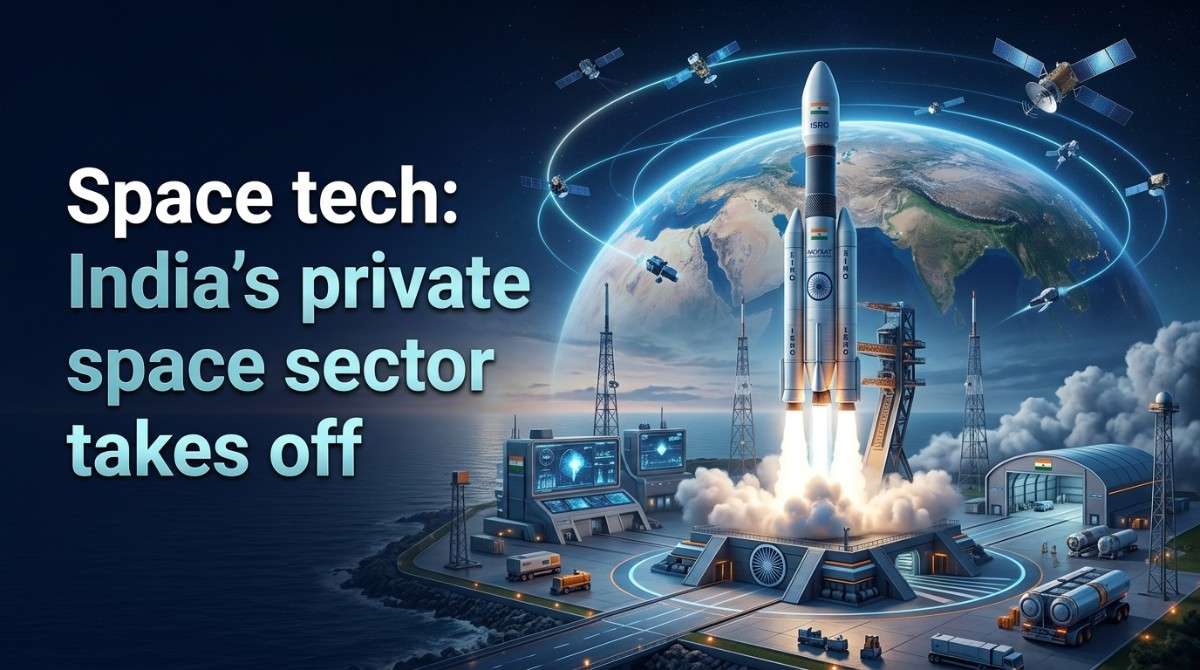
This is probably the most visible part of the boom, and the numbers back that up.
A Tracxn report covered by Business Standard in July 2026 put India's private spacetech funding at about $871 million across 241 rounds involving 285 companies. The top 10 funded companies alone account for more than $548 million of that, led by Skyroot at $150 million, Pixxel at $96 million, AgniKul Cosmos at $76 million, Digantara at $67 million, and Bellatrix Aerospace at $34 million.
Skyroot's trajectory tells the story well. The Hyderabad-based launch vehicle company became India's first spacetech unicorn after raising $60 million at a $1.1 billion valuation in May 2026 and followed that with a successful orbital launch of its Vikram-1 rocket in July. That combination, a real orbital launch plus unicorn status, is exactly the kind of milestone that makes global investors take a sector seriously rather than treating it as a curiosity.
Pixxel, a hyperspectral earth observation company, closed a $100 million Series C led by Temasek and Seraphim in September 2026. That's foreign institutional capital making a serious bet on Indian satellite technology, not just domestic VCs being patriotic.
The growth curve is steep by any measure. Space startup funding sat at around $43 million in 2021, crossed $200 million in 2025, and 2026 has already seen $113 million across 24 rounds as of the middle of the year. The private space sector was opened to non-government players only in 2020. Six years later, it has a unicorn and a company that just launched a rocket successfully.
Defence tech: from government procurement to startup opportunity
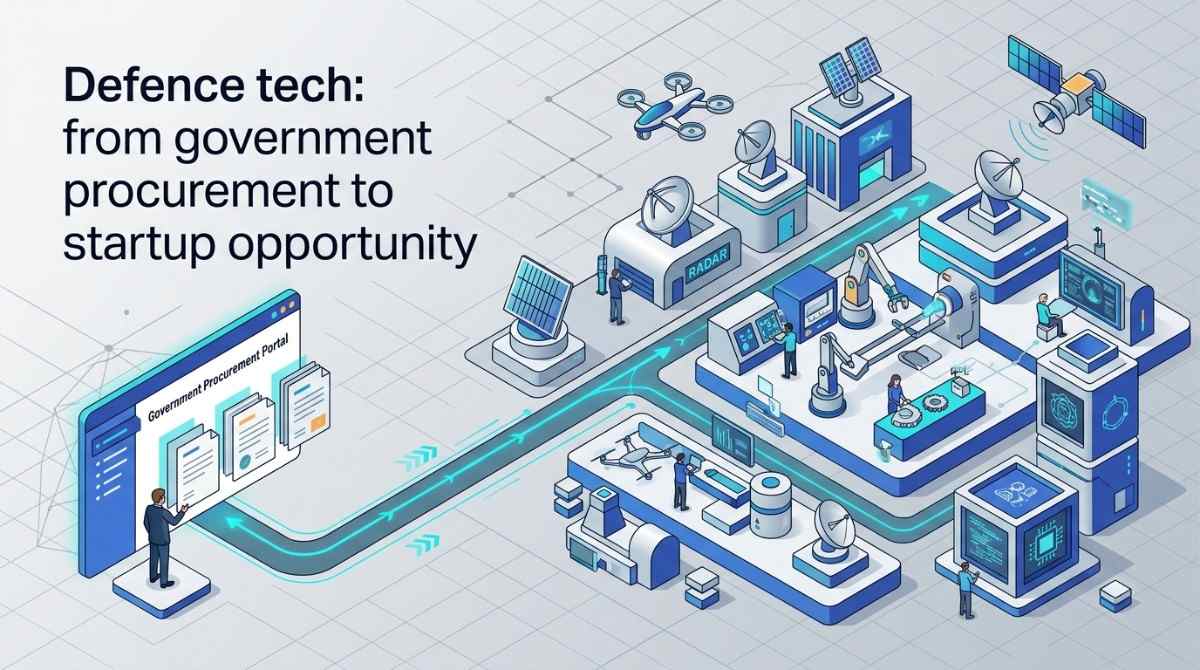 Defence used to mean a handful of large public sector companies and not much else for a founder to build around. That has changed enough that "defence tech startup" is now a normal sentence in India.
The government's iDEX programme offers non-dilutive grants of up to 10 crore rupees to defence technology startups for research, development and prototyping, making it the largest government startup grant available in the country. As of March 2026, 676 startups, MSMEs and individual innovators had entered the iDEX ecosystem, with 58 prototypes worth about 3,853 crore rupees, roughly $402 million, receiving procurement clearance, according to industry coverage of India's drone ecosystem.
Drones are where a lot of the current activity sits. India signed a $203 million agreement to lease MQ-9B Sea Guardian drones for naval surveillance in August 2026, and is preparing what could be its largest military drone procurement programme yet, with planned domestic purchases potentially exceeding $2 billion over the next 18 to 24 months. India's Drone Federation has also flagged tactical-class drone orders worth around $313 million, and the country now has more than 600 drone-related companies, over 100 of them defence-focused.
Founders working in surveillance, electronic warfare, autonomous systems and defence electronics are essentially building against a guaranteed buyer. The Indian government has committed to Make in India defence manufacturing through policies that restrict imports of specified equipment, which means domestic startups aren't just competing for a market, they're competing for one the state is legally required to source from at home wherever possible.
Semiconductors: the infrastructure behind India's tech ambition
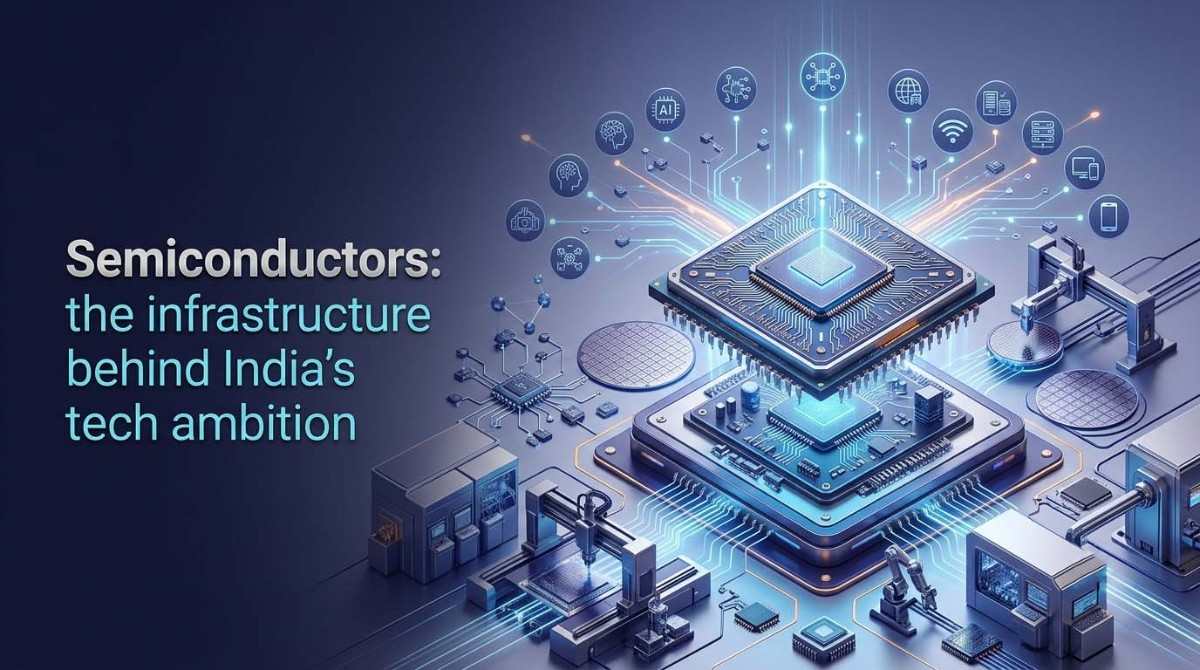 None of the above works without chips. AI hardware needs them, electric vehicles need them, defence electronics need them, and India currently imports almost all of them.
The government's Design Linked Incentive scheme, run under the India Semiconductor Mission, has supported 23 chip design startups so far. That's a narrow slice of the semiconductor value chain, design rather than fabrication, but it's a deliberate starting point. Fabrication plants cost billions and take years to build. Design is where a capital-constrained ecosystem can actually compete right now, and it's also where the intellectual property tends to live.
Opportunities exist across the rest of the chain too: packaging, testing, and the specialised equipment that supports manufacturing once fabrication capacity does come online. Investors who understand semiconductors as a decade-long bet, not a two-year one, are the ones actually writing checks in this space.
Dual-use technology: where defence meets commercial markets
A drone that maps farmland can also be modified to survey a border. A satellite built for climate monitoring can just as easily support military reconnaissance. This overlap, technology that serves both civilian and defence buyers, is called dual-use, and it's one of the more investor-friendly categories inside deeptech.
Drones, satellites, AI systems, robotics, sensors, cybersecurity tools and advanced communications equipment all fall into this bucket. The appeal for investors is straightforward: a company that can sell to both a government defence budget and a commercial market isn't dependent on either one alone. If defence procurement slows, there's still an agriculture or logistics customer paying the bills, and the reverse holds too.
Why venture capital is betting on deeptech
Set aside the patriotic framing for a second and look at the plain investment logic, because it's fairly simple. Deeptech companies tend to have real barriers to entry: patents, years of accumulated engineering know-how, manufacturing relationships that took time to build. A competitor can't just spin up an equivalent overnight, which is exactly the kind of moat investors say they want and rarely actually get in software.
These companies also tend to be selling into large, structural markets, defence budgets, global satellite demand, chip supply chains, rather than chasing a narrow consumer niche that might fall out of fashion in eighteen months. And the technology itself often has strategic relevance that outlasts any single product cycle. A chip design capability or a propulsion system doesn't become obsolete the way a social app can.
None of that guarantees returns. It does explain why serious capital is willing to accept longer timelines to get there.
Deeptech funding trends in India
Put the pieces together and the shape of 2025 and 2026 becomes fairly clear. Deeptech funding grew around 37 percent year on year to roughly $2.3 billion in 2025, against an overall startup funding pool of $9.1 billion. Space alone pulled in $871 million cumulative as of mid-2026, with defence-linked procurement through iDEX crossing $400 million in cleared prototypes.
Early-stage capital is growing fastest in relative terms. Seed-stage funding in spacetech rose from $7 million in 2022 to $62 million in 2025, and late-stage funding, which barely existed before, reached $53 million in the first part of 2026. That's the signature of an ecosystem maturing rather than just starting out. Series A and Series B rounds are becoming normal, not exceptional, and the handful of leading companies in each sector are increasingly pulling ahead of the pack rather than everyone raising roughly the same modest amount.
Note: funding figures move quickly in this sector. Check the sources cited above for the latest numbers before republishing or quoting them elsewhere.
Read More: 7 Brand Positioning Strategies That Work | Startup Coach
Why deeptech is different from traditional startups
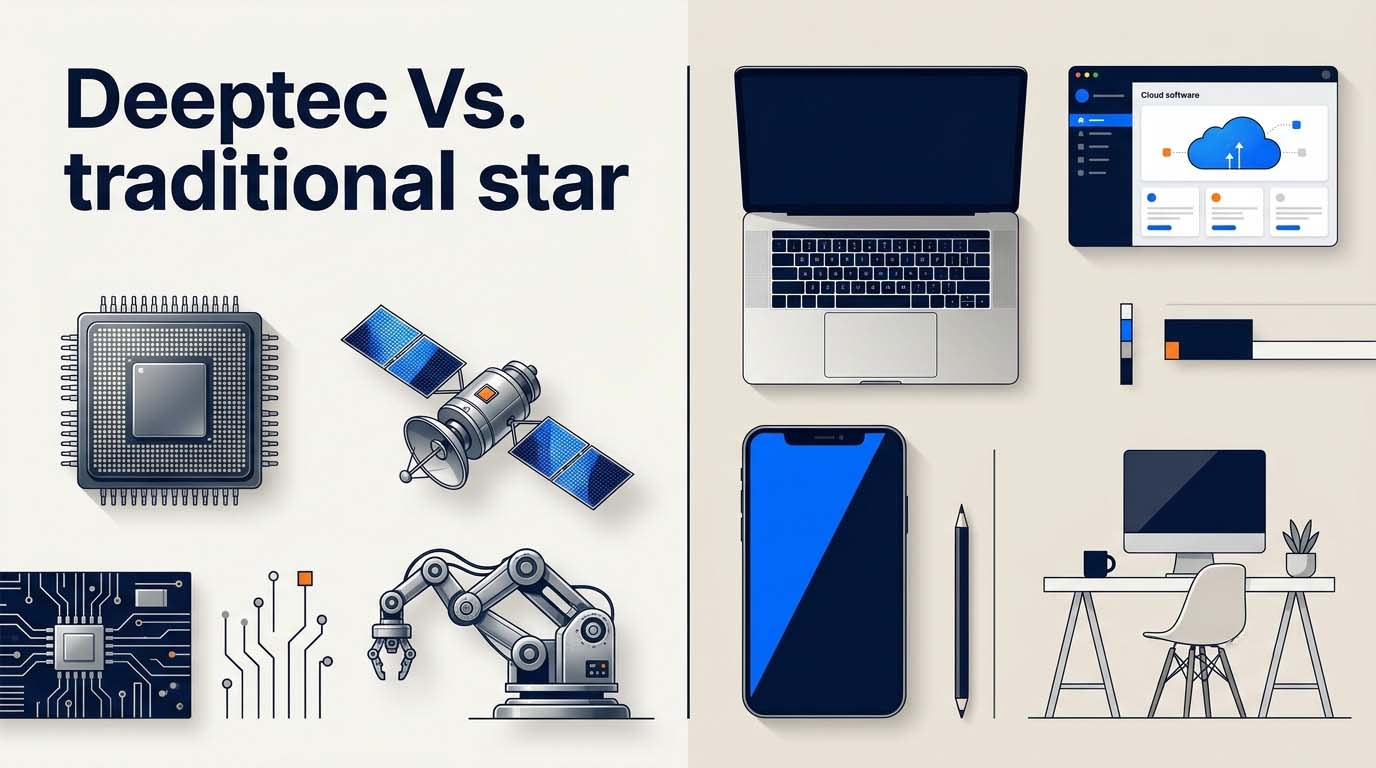
Traditional startup | Deeptech startup |
Software led | Technology and R&D led |
Faster development | Longer R&D cycles |
Lower initial capital | Higher capital requirements |
Faster market entry | Longer commercialisation |
Easier to replicate | Stronger technology barriers |
Growth focused | Technology and growth focused |
The practical upshot for founders is that the playbook they've absorbed from a decade of consumer tech advice mostly doesn't apply here. Fundraising timelines are longer. Milestones look different. A founder who expects to go from seed to Series A in twelve months, the way a fintech app might, is likely to be disappointed by how deeptech actually moves.
The challenges behind the deeptech boom
It's worth being honest that this isn't an easy path, because plenty of the coverage around it glosses over the hard parts.
R&D costs run high and product timelines stretch across years rather than months. Specialised talent, radar engineers, RF specialists, propulsion experts, remains genuinely scarce, and companies are increasingly building their own pipelines through IIT partnerships rather than relying on a hiring market that simply doesn't have enough people in it. Manufacturing complexity adds risk that a software team never faces. Capital access has improved but is still thin compared to what a similar-stage company might raise in the US. Regulatory approvals, particularly in defence and space, take time no founder can shortcut. And Indian companies are competing globally against players in the US, China and Europe who often have deeper pockets and longer track records.
None of this makes the opportunity smaller. It does mean founders need a realistic sense of what they're signing up for before they start.
What investors look for in deeptech startups
The checklist looks different from a typical software pitch. A strong technical founding team matters more here than almost anywhere else in venture, because the product often can't be built by a generalist team that picks up domain knowledge later. Proprietary technology and genuinely defensible IP carry real weight, not just as a slide in the deck but as the actual basis of the company's moat.
Investors also want evidence the technology works outside a lab: a working proof of concept, ideally paying customers or active pilots, and a commercialisation roadmap that doesn't hand-wave the path from prototype to product. Capital requirements need to be clear-eyed rather than optimistic, and increasingly, investors want to see a credible route to global markets, not just domestic ones.
What the deeptech boom means for Indian founders
If you've spent your career assuming Indian startups mean consumer apps and B2B SaaS, this is worth recalibrating. There's now real capital, government support and market demand for founders building in hardware, space, defence and semiconductors, categories that barely existed as viable startup paths a decade ago.
The tradeoff is patience. These businesses take longer to build and longer to return capital, and founders who go in expecting software timelines will struggle with the mismatch. IP and commercialisation strategy need to be part of the plan from day one, not something bolted on once the technology works, because a great invention with no path to a paying customer is just an expensive research project.
Is deeptech India's next big investment opportunity?
The interest is real and it's growing for reasons that go beyond hype: policy support, a maturing talent base, and specific strategic advantages in space, defence and semiconductors that India didn't have a decade ago.
But funding alone has never been the whole story anywhere, and it won't be here either. Plenty of well-funded hardware companies globally have failed to commercialise, burning through capital on technology that never found a market. The Indian companies that will matter in five years are the ones that pair genuine engineering depth with a real, paying customer base, not just the ones that raised the largest round this quarter.
How to build a deeptech startup in India
For founders actually considering this path, roughly in order: start with a problem that's genuinely high value, not just technically interesting. Validate the underlying technology before you validate the business model, because in deeptech the tech risk usually comes first. Build a technical team that can actually execute, not just advise. Protect your IP early rather than treating it as paperwork for later. Get to a real proof of concept, then test it with actual industry partners rather than in isolation. Understand the regulatory path for your specific sector before you're deep into product development, not after. Build a commercialisation plan that names actual customers. Identify funding sources that understand deeptech timelines rather than expecting software-speed returns. And prepare, mentally and financially, for a longer growth cycle than anything you've seen in a typical startup pitch deck.
Conclusion
Technology, policy, capital and strategic demand are all pointing the same direction at once right now, which doesn't happen often. Hardware, space, defence and semiconductors are genuinely new categories for Indian founders, ones that simply didn't exist as viable startup paths a few years back.
But a strong idea isn't enough on its own here. Deeptech asks for technical depth, real capital, patience most founders underestimate, and a serious commercialisation plan from early on. The biggest opportunity in this boom likely belongs to founders who can turn India's engineering base into technology businesses that compete globally, not just domestically funded ones.
Building a deeptech startup? Startup Coach can help you turn your technology into a scalable, investor-ready business.
FAQs
1. What is DeepTech investment in India?
Deeptech investment refers to venture and institutional capital going into startups built around advanced science and engineering, hardware, space technology, defence systems, semiconductors, and robotics, rather than software-only products. It's distinct from typical consumer or SaaS investing because it usually involves longer R&D cycles and higher capital needs.
2. Why are investors interested in Indian deeptech startups?
Government policy support, a growing pool of engineering talent, demand for domestically built technology, and strong technology moats that are harder to replicate than software all play a part. Several sectors, particularly space and defense, are also showing concrete commercial and procurement traction rather than just promise.
3. Which deeptech sectors are growing in India?
Space technology, defence tech, semiconductors, hardware and robotics, and AI infrastructure are the most active categories right now, based on both funding volume and the number of active startups in each.
4. Are hardware startups a good opportunity in India?
They can be, largely because hardware is harder to copy than software, which creates a stronger competitive moat. The tradeoff is higher capital requirements and more complex supply chains, so founders need more patience and more upfront funding than a typical software startup.
5. How is India's private space sector creating startup opportunities?
Since the sector opened to private players in 2020, companies working on launch vehicles, satellites, earth observation and space situational awareness have raised close to $871 million, with a unicorn and a successful orbital launch both achieved in 2026. That track record is opening the door for a wider set of founders in the sector.
6. What is dual-use technology?
Dual-use technology serves both civilian and defence markets, drones, satellites, AI systems and sensors are common examples. It appeals to investors because it reduces a company's dependence on any single buyer or budget cycle.
7. Is India becoming a global deeptech hub?
It's moving in that direction, with real capital, policy backing and a track record of technical milestones across space and defence in particular. Whether it becomes a true global hub depends on whether Indian companies can consistently reach global markets and revenue, not just raise large domestic rounds.
8. How can I start a deeptech startup in India?
Start with a high-value problem, validate the core technology early, build a genuinely technical founding team, and protect your IP from the outset. From there, get to a real proof of concept, test it with industry partners, understand your regulatory path, and plan your funding around a longer growth cycle than a typical startup timeline.