Documents Required for Startup Funding in India
By Toishaa Soni · 4 September 2026
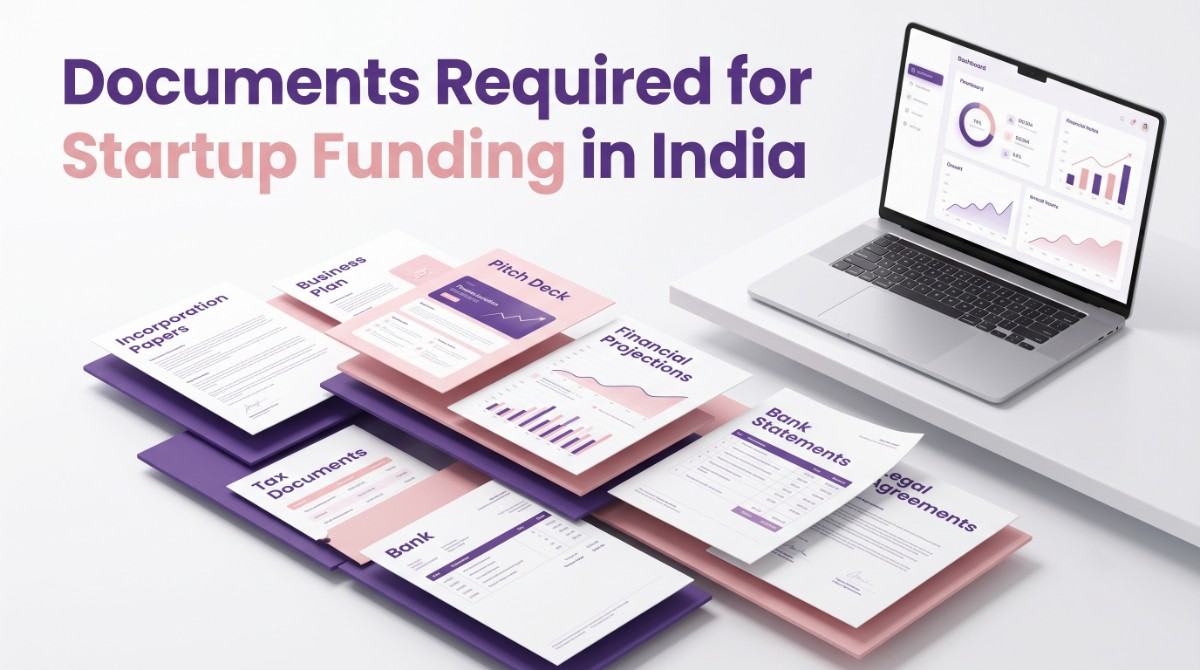
Discover the key documents investors expect for startup funding in India, from cap tables and financials to IP, compliance, and due diligence.
You finally get the message every founder wants to see: “We’re interested. Please share your documents for due diligence.”
And then the excitement can turn into panic.
Where is the latest cap table? Are the founder agreements signed? Do the numbers in your pitch deck match your financial records? Can you find your IP documents, tax records, old investment agreements, and important contracts without searching through dozens of folders?
This is the part of fundraising many founders underestimate.
Getting an investor interested is one thing. Being ready when that investor starts checking the business is another. Your startup funding documents give investors the evidence they need to understand your company, verify your claims, and assess potential risks.
What documents are needed for startup funding?
 There is no single fixed list that applies to every startup in India. Requirements can vary based on your company structure, business model, funding stage, investor, and transaction.
You may need documents covering:
Company and incorporation
Financial and business records
Ownership and founder records
Intellectual property
Employee and ESOP records
Contracts and operations
Tax and compliance
Previous and proposed fundraising
Why do investors check startup documents?
Investors are also trying to understand the risks attached to the business.
Your documents help them verify:
Who owns the company
How the company is structured
Whether the financial numbers are reliable
How equity is distributed
Who owns important intellectual property
Whether applicable legal and regulatory compliances are being maintained
What liabilities or investor rights already exist
Think of your documents as the evidence behind your pitch deck.
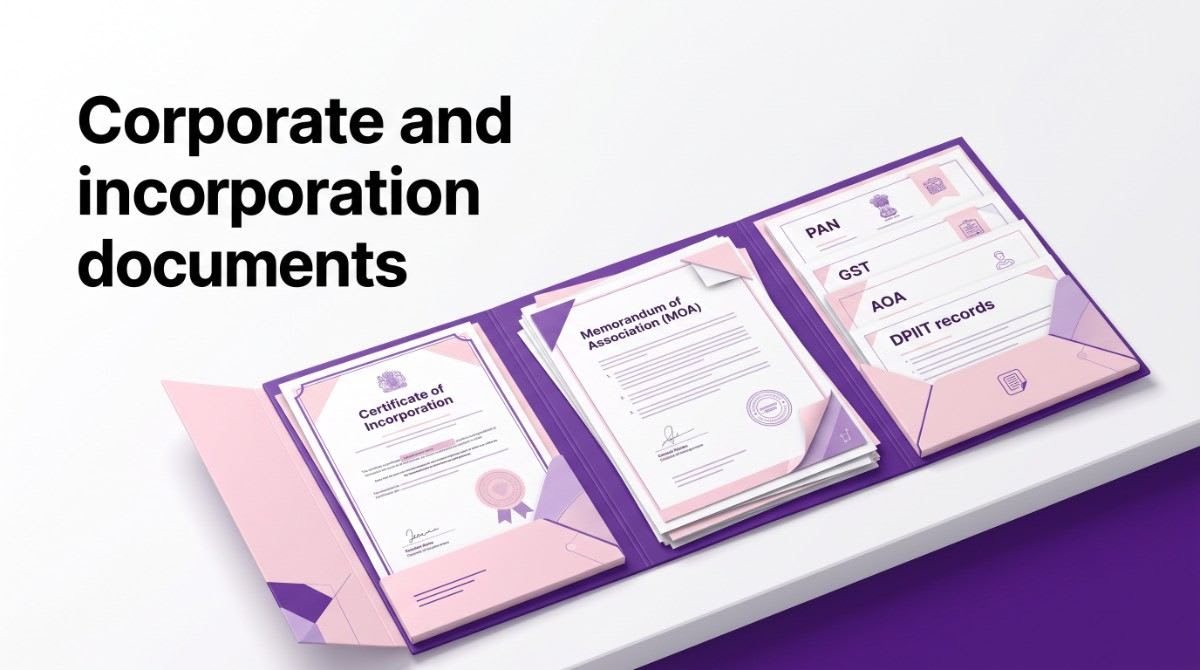
Corporate and incorporation documents
 1. Certificate of Incorporation
The Certificate of Incorporation confirms that your company has been legally incorporated.
2. Memorandum of Association
The Memorandum of Association, or MoA, defines the company's fundamental objectives and scope.
3. Articles of Association
The Articles of Association, or AoA, set out the internal rules for running the company, including shareholder rights, governance, management, and decision-making.
4. PAN, GST and DPIIT records
Keep the company's PAN documents, GST registration and related records, where applicable.
If your startup has DPIIT recognition, keep the recognition certificate and related records available.
Financial and business documents
This is where investors connect your business story with actual numbers.
1. Pitch deck
Your pitch deck should clearly cover:
Problem and solution
Target market
Business model
Traction
Competitive positioning
Growth strategy
Funding requirement
Keep the numbers consistent with your financial records.
2. Financial model
Your financial model can include revenue, expenses, cash flow, customer growth, profitability, and capital requirements.
Use realistic, explainable assumptions.
3. Financial statements and tax records
Depending on your stage and circumstances, investors may review:
Profit and loss statements
Balance sheets
Cash flow statements
Audited financial statements, where applicable
Income tax filings
GST filings
4. Bank statements
Recent company bank statements may help investors verify cash movement, collections, expenses, and balances.
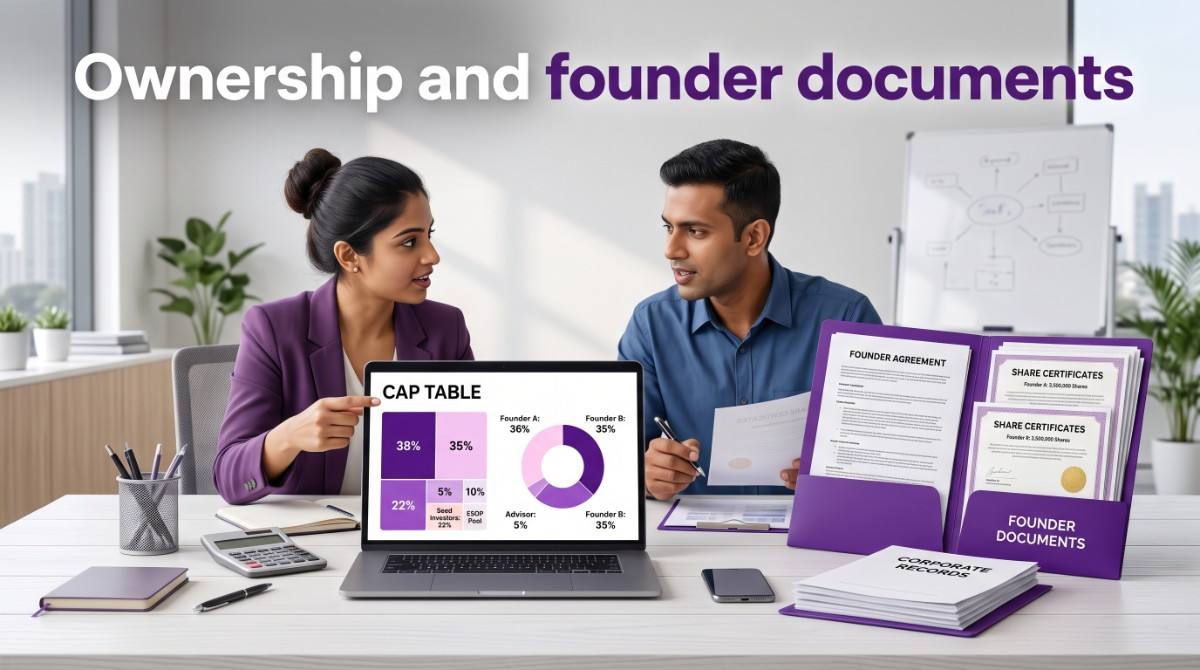
Ownership and founder documents
 1. Founder agreement
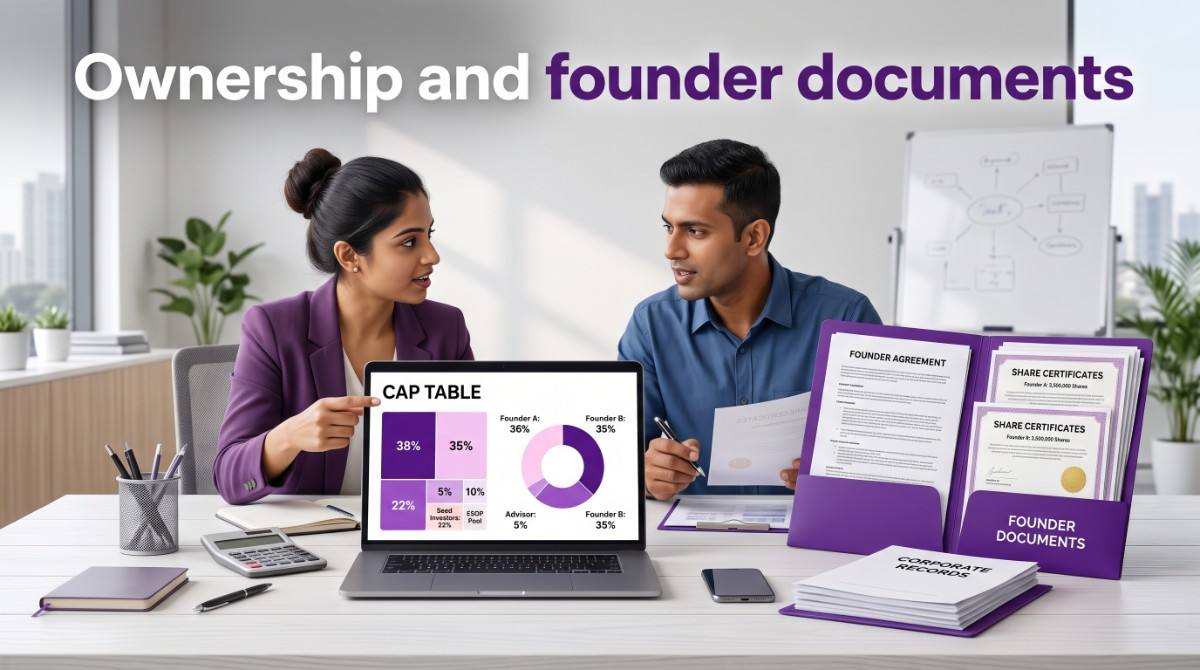
A founder agreement can document roles, responsibilities, equity ownership, decision-making, founder commitments, exit situations, and dispute resolution.
2. Cap table
The capitalisation table, commonly called the cap table, shows who owns what in the company.
It may include:
Founder holdings
Existing investors
Share classes
ESOPs or employee equity
Previous share issuances
Potential dilution
3. Share and corporate records
Keep relevant share certificates, allotment records, board resolutions, and other corporate records organised, especially if there have been previous share issuances or transfers.
Intellectual property documents
1. IP assignment agreements
These documents can establish that IP created by founders, employees, contractors, or other contributors belongs to the company, where applicable.
2. Trademark, patent and other IP records
Keep applications, registrations, licences, and other relevant IP records organized and accessible.
For technology startups, clear software ownership and licensing records can also be important.
Employee, contract and compliance documents
Investors may also review documents related to your team, commercial relationships, and regulatory obligations.
These may include:
Employment and consultant agreements
ESOP policy and grants
Employee IP assignment records
Major customer contracts
Vendor and partnership agreements
Licences and regulatory approvals
Tax and compliance records
Details of outstanding loans or liabilities
Fundraising documents
If you have already raised money, keep all previous round documentation together.
This may include:
Previous term sheets
Shareholders' Agreements
Share Subscription Agreements
Previous investment agreements
Share allotment records
Existing investor rights
Startup funding document checklist
Category | Documents to keep ready |
Company | Certificate of Incorporation, MoA, AoA |
Tax and compliance | PAN, GST records, applicable filings |
Financial | Financial statements, bank statements, tax records |
Business | Pitch deck, financial model |
Ownership | Cap table, share records, previous issuances |
Founders and employees | Founder, employment and ESOP documents |
Intellectual property | IP assignments, trademarks, patents and licences |
Commercial | Customer, vendor and partnership contracts |
Fundraising | Previous and current investment documents |
Regulatory | Relevant licences, registrations and approvals |
How to prepare your investor data room
 Do not wait for an investor to ask for documents.
Create clearly labelled folders:
1. Company and Legal: Incorporation, MoA, AoA, PAN, GST and DPIIT records
2. Financials: Financial statements, tax filings, bank statements and financial model
3. Ownership: Cap table, share records and previous issuances
4. Founders and Employees: Founder, employment and ESOP documents
5. Intellectual Property: IP assignments, trademarks, patents and licences
6. Commercial: Customer, vendor and partnership contracts
7. Fundraising: Previous investment agreements and current transaction documents
8. Compliance: Licences, approvals and applicable filings
Before sharing it, double-check the following:
Does the cap table match the current ownership?
Do pitch deck numbers match financial records?
Are founder and employee arrangements documented?
Is important IP clearly owned by the company?
Are previous investments properly recorded?
Are major contracts easy to locate?
Are liabilities and compliance records available?
Common documentation mistakes founders should avoid
Keeping an outdated cap table
Ownership changes without updating the cap table can create confusion and raise questions about your records.
Leaving founder arrangements informal
Verbal agreements around equity, roles, or decision-making can become difficult to resolve later.
Not documenting IP ownership
If important technology, designs, content, or processes are not clearly assigned to the company, investors may see this as a risk.
Having inconsistent financial information
Revenue, expenses, cash balances, and projections should make sense across your pitch deck, financial model, accounts, and supporting records.
Preparing everything at the last minute
A last-minute scramble can delay due diligence and make small documentation gaps look bigger than they are.
Startup coach perspective
Fundraising preparation should start before the investor meeting, not when an investor asks for documents.
Founders often spend months improving their pitch while leaving the underlying documentation untouched. But when an investor starts verifying the business, that documentation becomes just as important as the presentation.
An updated cap table, clean financial records, clear IP ownership, documented agreements, and an organised data room can make the fundraising process much smoother.
The goal is simple: when an investor asks for your documents, you should be ready to share them.
Conclusion
Your pitch deck tells investors what your startup can become. Your startup funding documents help them understand what exists today and whether the business is ready for investment.
Prepare your legal, financial, ownership, IP, commercial, employee, compliance, and fundraising records before you need them. Keep them updated and make sure the information stays consistent.
When an investor shows interest, you should be discussing your growth opportunity, not hunting for documents.
FAQs
Q: What documents are required for startup funding in India?
Common documents include incorporation records, financial statements, bank statements, pitch decks, financial models, cap tables, founder agreements, IP documents, tax and compliance records, contracts, and applicable investment agreements.
Q: Is a pitch deck enough to raise startup funding?
No, a pitch deck introduces the business, but investors may request financial, legal, ownership, operational, IP, and compliance documents during due diligence.
Q: Why is a cap table important for startup funding?
A cap table shows the current ownership structure. It helps investors understand founder ownership, existing investors, employee equity, previous issuances, and the potential impact of new funding.
Q: When should a startup prepare its funding documents?
Ideally, founders should organise their core documents before they begin approaching investors. Keeping the data room updated throughout the year makes due diligence easier.
Q: Do all startups need the same funding documents?
No, the exact documents vary based on the startup's structure, stage, industry, investor, existing obligations, and proposed transaction.