Essential Finance & Accounting Metrics Every Entrepreneur Must Understand
By Rohini Rajpoot · 5 July 2026
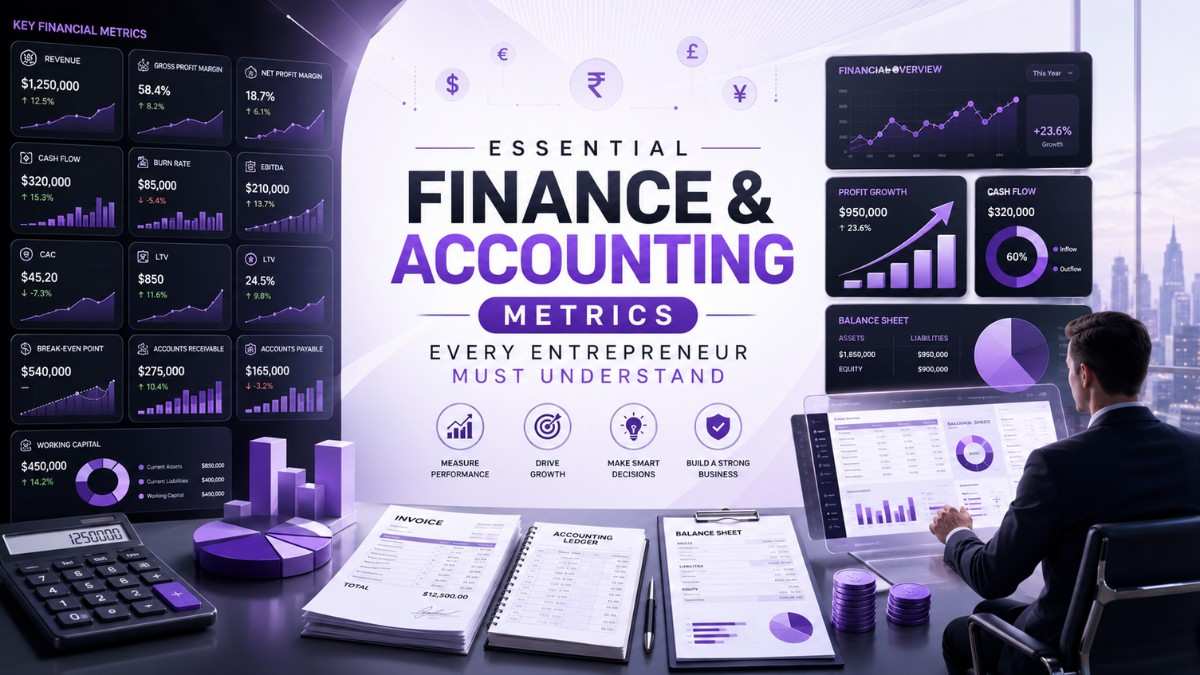
Learn the essential finance and accounting metrics every entrepreneur should understand, including burn rate, runway, EBITDA, cash flow, ROI, and revenue.
Nobody starts a company because they're excited about spreadsheets. You start because you've got a product worth building, or a service people actually need, or sometimes just a problem you can't stop thinking about. Finance shows up later, usually right after the first investor call where someone asks "what's your burn rate?" and you realise you should probably know that.
Here's the thing though. You can avoid finance for a while, but not forever. Hiring decisions, pricing, fundraising, even deciding whether to take on a new client, it all comes back to the numbers eventually. Founders who get comfortable with their finances tend to make calls faster and with way less stress. The ones who don't usually find out something's wrong only after it's already a problem.
This post walks through eight terms that come up constantly once you start running a business: balance sheet, cash flow statement, burn rate, runway, run rate, EBITDA, revenue, and ROI. You don't need an accounting degree for any of this. You just need someone to explain it without the jargon piled on top of more jargon.
Why Do Finance & Accounting Basics Actually Matter for Founders?
Investors don't fund ideas on their own. They fund founders who can talk about their numbers without hesitating. If someone asks about your runway in a pitch and you have to think for ten seconds before answering, that gap gets noticed. Every time.
But this isn't just about pitch decks. Good financial habits protect the business day to day. A founder checking cash flow every week catches problems weeks before someone who only glances at the bank balance when things feel off. None of this requires you to become an accountant. It just means learning to read what your numbers are telling you and actually listening. So let's get into the eight terms.
1. Balance Sheet
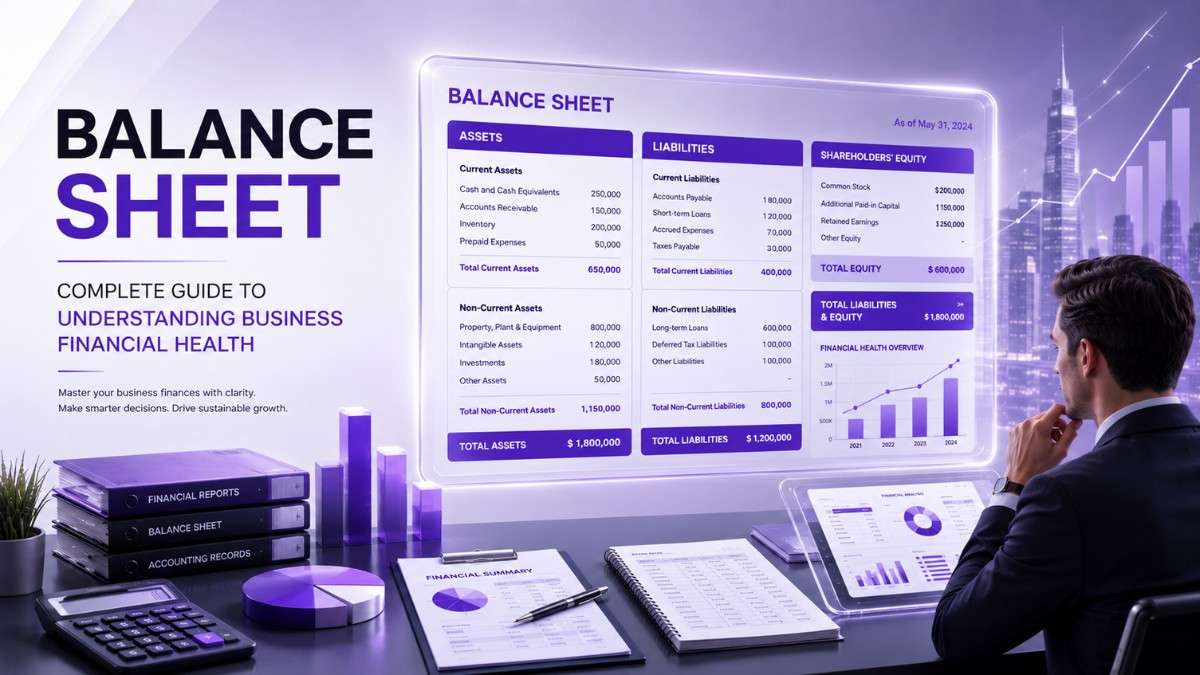 A balance sheet is basically a snapshot of what your business owns and owes on one specific day. The math behind it is simple: assets equal liabilities plus equity.
Assets are cash, equipment, inventory, and anything with value sitting on your books. Liabilities are what you owe, loans, unpaid bills, that kind of thing. Equity is whatever's left for the owners once you subtract what's owed from what's owned.
Unlike a cash flow statement, which tracks movement, a balance sheet doesn't move. It's frozen at a moment in time, usually the last day of a month or the end of the year. The question it answers is pretty blunt: if you had to pay off everything you owe right now, would there be anything left standing?
2. Cash Flow Statement
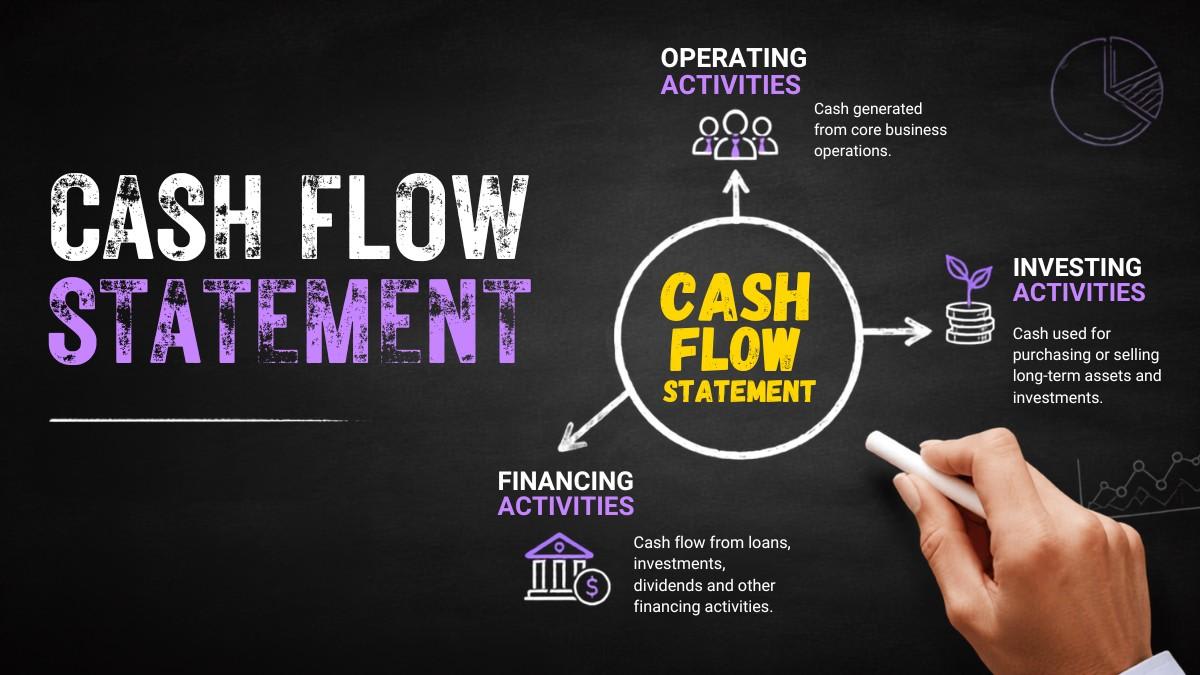 This one tracks actual money moving in and out, over a set period, broken into three buckets: operating, investing, and financing activities.
Operating covers the core business stuff, customer payments coming in and supplier bills going out. Investing covers things like buying or selling equipment. Financing covers money from investors or loans, plus whatever you're paying back.
A mistake a lot of first-time founders make is assuming profit and cash flow are the same thing. They're not even close sometimes. You can be "profitable" on paper and still be dangerously low on actual cash, especially if customers are slow payers or a chunk of your revenue is sitting in unpaid invoices. The cash flow statement cuts through all the accounting language and just shows what's happening in the bank account.
3. Burn Rate
 Burn rate is how fast you're going through cash, usually measured monthly. There are two flavours worth knowing.
Gross burn rate is total spending, no matter how much money is coming in. Net burn rate subtracts revenue from that, so it shows what's actually disappearing each month. To get net burn, just take your cash balance at the start of the month and subtract what's left at the end. Started with 100,000 dollars, ended with 85,000 dollars? That's a 15,000 dollar burn for the month.
A high burn rate isn't automatically bad, by the way. Plenty of companies burn cash on purpose to grow faster. The actual red flag is burning fast with no real plan for when revenue catches up or not having enough runway to get there.
4. Runway
 Runway is how many months you've got left before the money runs out, assuming you keep spending the way you currently are. Formula's simple: cash on hand divided by monthly net burn.
300,000 dollars in the bank, burning 30,000 a month? That's ten months of runway. And that number isn't fixed, it shifts the second your spending habits change, so don't calculate it once and forget about it.
This is usually one of the first things investors want to know, because it tells them how urgent your fundraising timeline really is. A founder with three months left is negotiating from a very different place than one sitting on eighteen months.
5. Run Rate
 Run rate takes a short window of performance and stretches it out to guess what a full year might look like. Made 50,000 dollars last month? Your annualised run rate is 600,000 dollars.
People mix this up with runway all the time because the names sound almost identical, but they mean totally different things. Runway is about survival time. Run rate is about projecting future revenue from recent numbers.
The catch with run rate is that it assumes consistency that might not exist. One unusually strong month, maybe a seasonal bump or a big one-off contract, can make your run rate look way better than your average month actually is. It's a decent quick gut check, but don't build your whole financial plan around it.
6. EBITDA
 EBITDA stands for earnings before interest, taxes, depreciation, and amortization. Long name, but the idea is simple: it strips out financing decisions, tax stuff, and accounting treatments to show how the core business is actually performing.
To calculate it, start with net income and add back interest, taxes, depreciation, and amortization. What you get is a cleaner view of how much money operations are generating, separate from how the company is financed or taxed.
Investors and buyers like this one because it makes comparing companies easier, even if those companies carry different debt loads or face different tax situations. Just don't confuse it with net profit. EBITDA leaves out real costs, like interest and taxes, that the business absolutely still has to pay.
7. Revenue
 Revenue is the total money coming in from your core business before any costs get subtracted. People call it the "top line" because, well, it sits at the top of the income statement.
A few distinctions matter here. Gross revenue is everything before deductions. Net revenue subtracts returns, discounts, or allowances. Recurring revenue comes from subscriptions or repeat business, one-time revenue comes from single transactions that won't repeat.
If you're running a subscription business, you've probably already heard of MRR (monthly recurring revenue) and ARR (annual recurring revenue). These give a much clearer picture of predictable income than total revenue alone ever could.
And honestly, revenue alone doesn't tell the full story. Plenty of businesses post strong revenue numbers and still struggle, because costs are too high or cash isn't being managed well behind the scenes.
8. ROI
 ROI, return on investment, measures how much value something generated compared to what it cost. Formula: net profit from the investment divided by the cost, usually shown as a percentage.
This goes way beyond stock investments. Founders use ROI to judge marketing spend, new hires, software subscriptions, even whether a new product feature was worth building. Spent 5,000 dollars on a campaign and made 15,000 dollars in profit from it? That's a 200 percent ROI.
The real value here isn't just reporting after the fact. Estimate expected ROI before you commit budget to something, then check the actual ROI afterward to see if it delivered. That loop is where ROI actually earns its place on this list.
How Do These Numbers Connect?
None of these eight terms exist in isolation. Burn rate and runway answer a survival question, basically how much time you've got left at your current pace. Cash flow statements feed straight into both, since they show exactly where the money's going each month.
Revenue, EBITDA, and ROI answer a different question, more about growth: is the business making money efficiently, and are specific decisions actually paying off. The balance sheet ties it all together by showing where things stand overall at any given point.
Founders who only look at these numbers right before fundraising tend to be reactive, scrambling to explain gaps after the fact. Founders who check in monthly, even just briefly, catch problems while they're still small and manageable.
Conclusion
Finance isn't some optional extra for entrepreneurs. It's one of the things that quietly decides whether a business survives its early years or runs into trouble that could've been avoided. Balance sheets, cash flow statements, burn rate, runway, run rate, EBITDA, revenue, and ROI aren't just words to memorise before a pitch meeting. They're tools you actually use, month after month.
You don't need to become an accountant. You just need the habit of checking these numbers regularly and actually asking what they're telling you. Set up a simple monthly review, or bring in an accountant early if you can. Building a stronger financial foundation today will help you make better decisions, reduce risk, and prepare your business for long-term success.
FAQs
1. What's the difference between burn rate and runway?
Burn rate is how much cash you're spending each month. Runway is how many months you've got left at that spending rate before the money is gone.
2. How is EBITDA different from net profit?
EBITDA adds back interest, taxes, depreciation, and amortisation to show operating performance on its own. Net profit includes all of that and reflects what's actually left over.
3. Why do investors care about cash flow more than revenue?
Because revenue can look great on paper while cash is actually tight, especially with slow-paying customers or high expenses. Cash flow shows what's really happening with the money.
4. What counts as a good ROI for a marketing campaign?
It depends on your industry and margins; there's no single number. Most founders aim for an ROI that clearly beats their customer acquisition cost, but it varies a lot by business model.
5. How often should I check my balance sheet?
Monthly is a solid habit for most early-stage companies. It makes it much easier to catch changes before they turn into bigger problems.
6. Can I trust run rate to predict yearly revenue?
It's a useful quick estimate, but it assumes your current pace holds steady all year, which often isn't realistic. Pair it with a proper forecast instead of relying on it alone.