Gross Margin Calculator: How Startups Can Measure Profitability the Smart Way
By Toishaa Soni · 13 April 2026
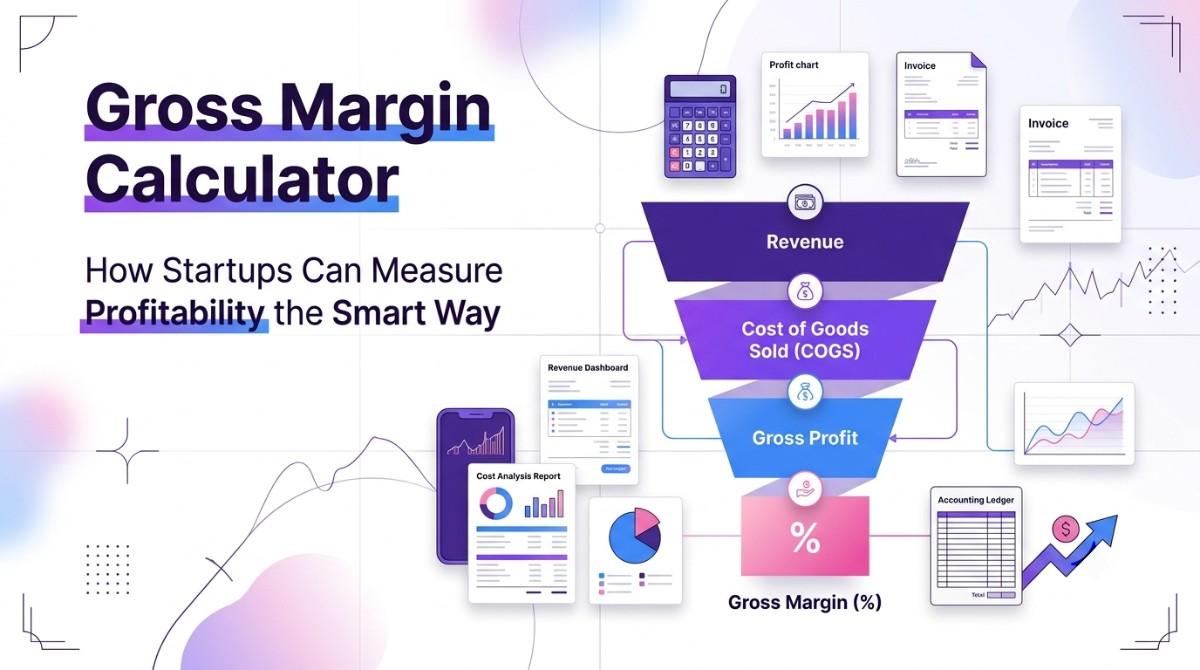
Use a gross margin calculator to measure startup profitability, understand the gross margin formula, and improve pricing and cost decisions for growth.
Honestly, that energy is justified because traction is what sustains the business and attracts investors. Most early-stage founders are obsessed with growth. Revenue numbers, new customers, monthly signups. Honestly, that energy is justified because traction is what sustains the business and attracts investors. But here is the thing that does not get discussed nearly enough: growing revenue while quietly bleeding money is one of the most common ways startups fail. They scale fast, look impressive on paper, and then run out of runway because nobody was watching the margins.
If you are not tracking your margins, you are not really tracking your business.
A gross margin calculator fixes this problem. It takes the guesswork out of profitability and shows you exactly how much you are actually keeping from every sale—not what you hope you are keeping, but what the numbers truly say.
What Is Gross Margin and Why Does It even Matters?
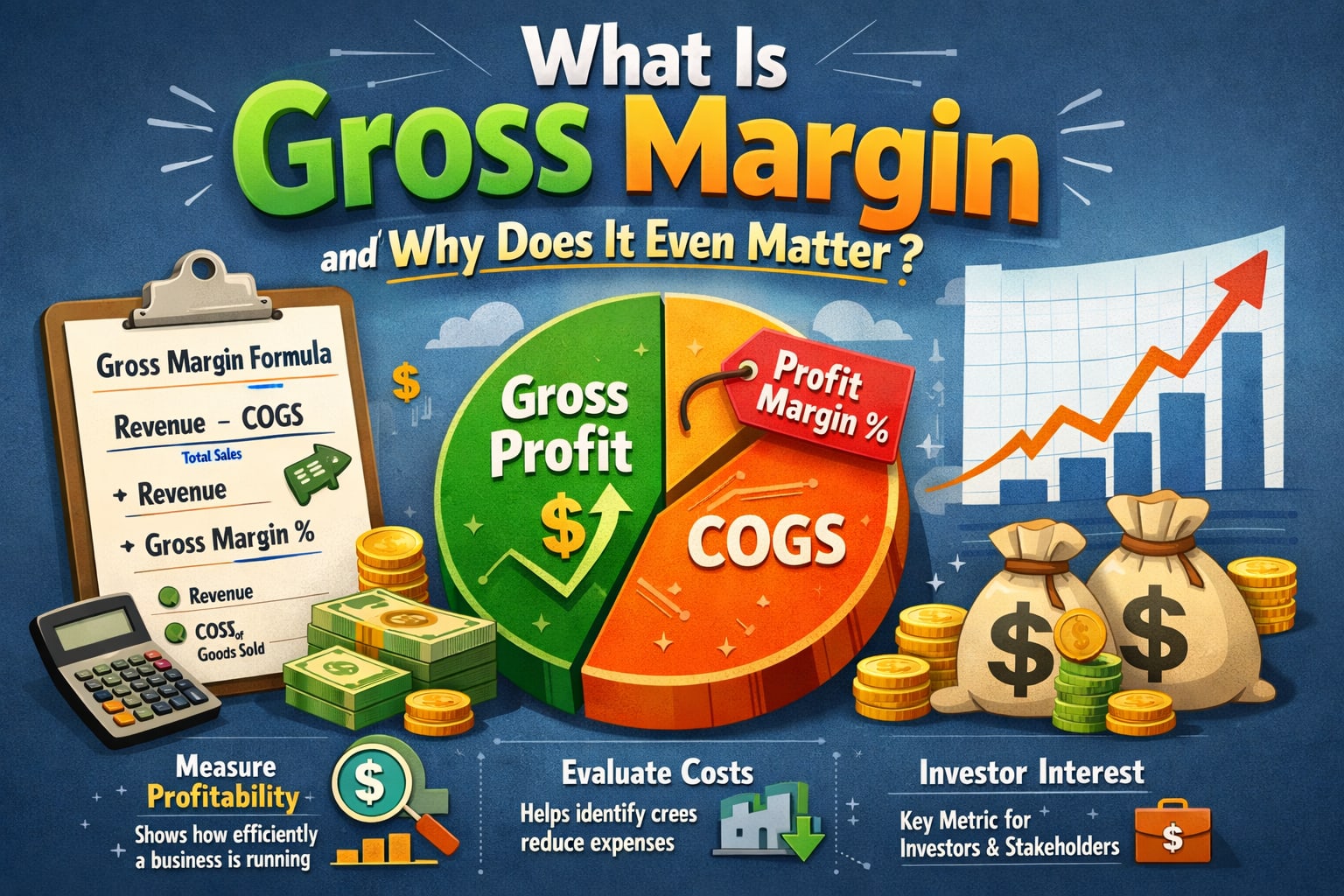 Gross margin is the percentage of your revenue that remains after you subtract the cost of producing or delivering your product or service. Gross margin is one of the most reliable metrics a business possesses, as it directly addresses the crucial question:
What amount of money is retained from each sale?
A strong gross margin tells you that your pricing is working and your costs are under control. A weak one is usually a sign of something being off, whether that is underpricing, inefficient production, or costs creeping up without anyone noticing. For startups especially, catching this early is the difference between building something sustainable and spending months fixing a problem that was always there.
How to Calculate Gross Margin?
 Understanding how to calculate gross margin is simple, but many founders still get it wrong.
The basic profit margin formula for startups is:
Gross Margin (%) = (Revenue – Cost of Goods Sold) ÷ Revenue × 100
So if your product sells for ₹2,000 and costs ₹1,200 to produce, your gross profit is ₹800 and your gross margin is 40 percent. That means for every sale you make, 40 percent of the money is yours to work with after covering direct costs.
Doing this manually every time is acceptable until it becomes problematic. Inputs change, products multiply, and suddenly you are spending more time on calculations than on decisions. That is where a startup gross margin calculator earns its place.
How a Gross Margin Calculator Works?
A business margin calculator is designed to remove complexity and provide instant clarity.
You put in two things: your selling price or total revenue and your cost of goods sold, which includes materials, labor, and any direct expenses tied to delivering the product. The calculator does the rest and gives you your gross profit and margin percentage immediately.
No formulas to remember. No spreadsheet errors from a misplaced bracket. Just the number you need so you can get back to making decisions.
Why Startups Must Use a Gross Margin Calculator?
A gross profit calculator in India is not just a convenience tool; it is a strategic advantage.
There is a version of startup failure that looks nothing like failure from the outside. Revenue is going up, the team is growing, and press coverage is good. But underneath all of that, the unit economics are broken. The margins are too thin to survive at scale, and nobody caught it early enough to fix it.
Using a gross margin calculator regularly helps you understand whether your pricing is actually sustainable, spot cost inefficiencies before they become real problems, compare profitability across different products, walk into investor conversations with proper financial clarity, and make faster decisions because the numbers are always in front of you.
Gross Margin vs Markup: A Common Confusion
Many founders confuse margin with markup, which leads to incorrect pricing decisions.
They sound similar but they measure different things. Markup is calculated based on your cost. Gross margin is calculated based on your revenue. The difference matters more than most people realize.
Take a product that costs ₹1,000 to make and sells for ₹1,500. Your markup is 50 percent, which sounds healthy. But your gross margin is only 33 percent. If you are making pricing decisions based on markup and thinking in margin terms, you are working with a number that is consistently flattering you by about 17 percent. Over time that adds up to some very uncomfortable conversations.
How to Improve Your Gross Margin?
A startup gross margin calculator is not just for analysis; it is also a tool for optimization.
Once you can see your margins clearly, you can start testing things. What happens to your margin if you raise the price by 8 percent? What if you switch to a slightly cheaper supplier without compromising quality? Which products are carrying the others and which ones are quietly dragging everything down?
Small changes in pricing or cost structure can move your margin significantly. The calculator makes it easy to model these scenarios quickly rather than spending an afternoon rebuilding a spreadsheet every time something changes.
Who Should Use a Gross Margin Calculator?
This tool is valuable across different business types.
Startup founders who want to validate their pricing before committing to it. E-commerce sellers who need to understand per-product margins before scaling ad spend. Service providers figuring out the real cost of delivery. Manufacturers trying to tighten up production efficiency. Consultants doing a financial health check on a client's business. If money comes in and costs go out, this tool is relevant to you.
Startup Coach Perspective
At Startup Coach, we often see founders chasing revenue without understanding margins. This leads to growth that looks impressive but is financially weak.
We have had conversations with founders who were genuinely shocked when they calculated their margins properly for the first time. Not because the business was failing, but because the number they had in their head was completely different from reality. They were pricing based on gut feel and a rough sense of what competitors were charging. The actual margin told a very different story.
A gross margin calculator shifts the focus from vanity metrics to real profitability. It is not the most exciting tool in a founder's kit, but it might be the most important one.
Conclusion
Profitability is not something you figure out later. It starts with understanding your unit economics from day one.
Waiting until you are at scale to think seriously about margins is like trying to fix the foundation of a building after you have already added three floors. The earlier you have this clarity, the more options you have.
A gross margin calculator gives you instant visibility into your business performance, helping you price smarter, control costs, and scale sustainably.
Stop guessing your margins and start measuring them.
For startups looking to improve financial clarity, optimize pricing, and build sustainable growth, connect with our experts for the right guidance and support.
FAQs
Q: What is a gross margin calculator?
It is a tool that calculates how much profit you are left with after subtracting your cost of goods sold from your revenue, expressed as a percentage.
Q: Why is gross margin important for startups?
Because it tells you whether your pricing and cost structure are actually sustainable, not just whether revenue is going up.
Q: How do I calculate gross margin manually?
Take your revenue, subtract your cost of goods sold, divide by revenue, and multiply by 100. That gives you your gross margin percentage.
Q: Is a higher gross margin always better?
Generally yes, but what counts as a healthy margin varies quite a bit depending on your industry and business model.
Q: Can a gross margin calculator help with pricing decisions?
Absolutely. You can test different price points and cost scenarios quickly to see what actually works before committing to anything.