Patent vs Trademark: What Your Product Needs
By Toishaa Soni · 28 August 2025
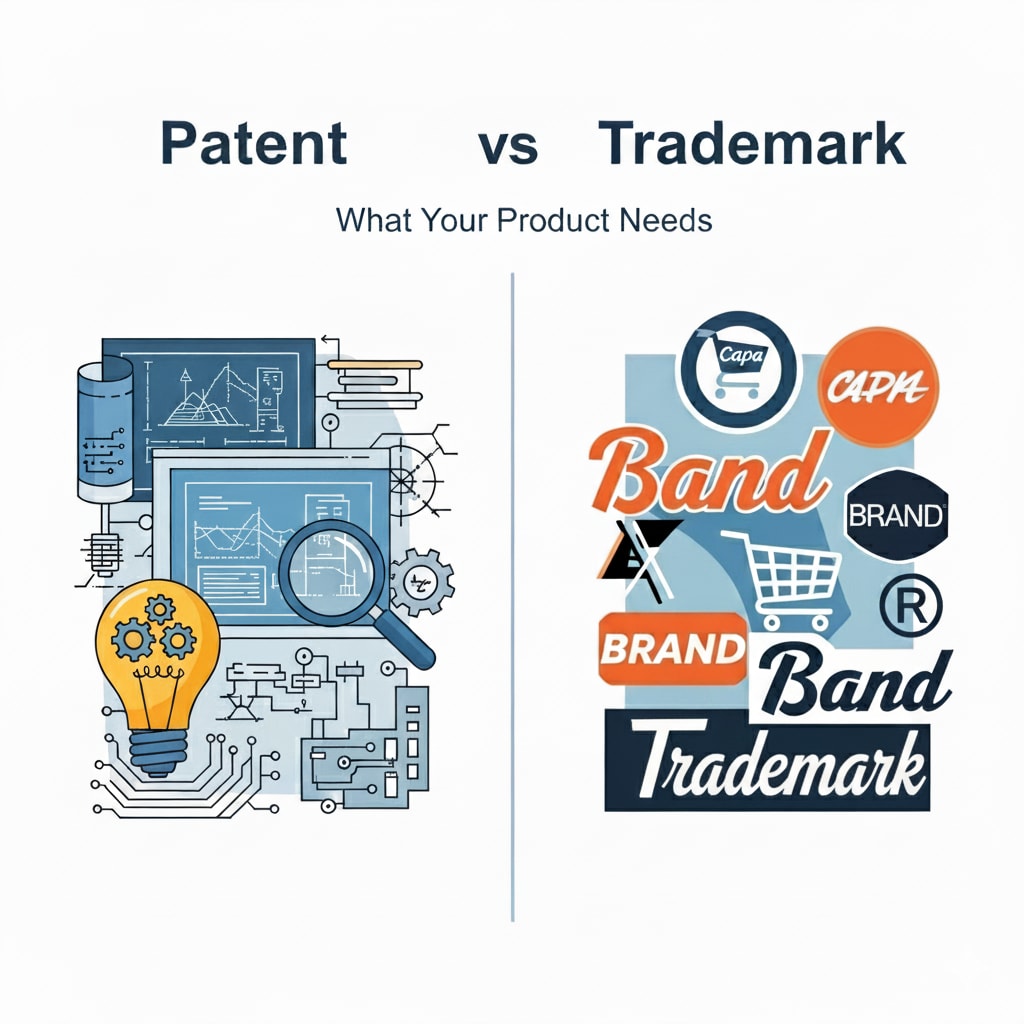
Learn how patents and trademarks differ from each other. Discover which protection fits your product, invention or brand name for development and protection.
When you establish a new business or product, it's very important to protect your brand and your ideas. But this is where most business owners get stuck: Do I need both a patent and a trademark?
Patents and trademarks are two distinct kinds of intellectual property (IP) protection. A patent protects your invention or unique process, while a trademark protects your brand name, logo, or identity. The selection of protection relies on the kind of product or service you’re offering.
This article will break down patents and trademarks in an easy-to-understand manner, which will help you decide what your product really needs.
What is a Patent?
A trademark basically protects the company’s brand name. This could be your product name, logo, slogan, or even distinctive packaging design that sets your product apart from others.
The features of a Trademark:
• It simply protects symbols, logos, words, names, or designs used in businesses.
• It is valid for 10 years but can be renewed for as long as you want.
• It generally protects only brand identity and not ideas or inventions.
• Registered in India under the Trademarks Act, 1999.
Examples:
• A new way to clean water by using technology.
• A new design for a mobile processor.
• A drug formulation made by a pharmaceutical company.
• Patents protect innovation and technical concepts.
What is a Trademark?
A trademark basically protects the company’s brand name. This could be your product name, logo, slogan, or even distinctive packaging design that sets your product apart from others.
Features of a Trademark:
• Protects symbols, logos, words, names, or designs used in businesses.
• Valid for 10 years, but can be renewed for as long as you want.
• It generally protects only brand identity and not ideas or inventions.
• Registered in India under the Trademarks Act, 1999.
Example:
• The logo of Nike or the slogan “Just Do It."
• Using the combination of red and white colors for Coca-Cola bottles.
• As the word "Zomato" is a brand name for food delivery.
• Trademarks are used to protect your identity and reputation.
Key Differences Between Patent and Trademark
Feature | Patent | Trademark |
What it Protects | Invention, product, process, or technology | Brand name, logo, design, or identity |
Validity | 20 years | 10 years (renewable indefinitely) |
Registration Law in India | Indian Patent Act, 1970 | Trademarks Act, 1999 |
Requirement | Must be novel, unique, and useful | Must be distinctive and not generic |
Purpose | Protects technical innovation | Protects brand reputation and market identity |
Example | New vaccine formula | “Pfizer” brand name |
When Does Your Product Need a Patent?
You should get a patent if your product introduces a new technology, process, or formula that can be used commercially. A patent gives you a legal edge by preventing others from copying your invention. For example, inventing a new type of eco-friendly plastic would qualify for patent protection.
When Does Your Product Need a Trademark?
You should get a trademark if your product has a unique brand name, logo, or slogan that sets it apart in the market. A trademark protects your brand identity and builds customer trust. For example, a food delivery business called FoodFly would need a trademark to stop others from using the same name or logo.
Can a Product Have Both?
Yes, definitely! Many successful products are protected by both patents and trademarks. Patent safeguards the technology that goes into the product. A trademark protects the name of the brand that sells the product.
- Protects new ideas well - Stops other people from copying technologies - Increases the company's asset worth.
Pros and Cons of Patents vs. Trademarks
Protection | Pros | Cons |
Patent | - Protects new inventions | - Expensive and time-consuming process |
Trademark | - Helps people recognise your brand - Easier and cheaper to register | - Doesn’t protect technology or ideas |
Common Mistakes Made by Businesses
As a lot of startups and small companies make mistakes when they have to choose between patents and trademarks. Some of these mistakes are
1. Mixing up patents with trademarks
Believing that a trademark protects an invention or a patent protects a logo.
2. Putting off registering
Waiting till the product gets big to find out that someone else has already signed up.
3. Using Generic Names
Choosing titles like "Best Foods" or "Quality Tech" that can't be trademarked.
4. Not Consulting Professionals
Registering themselves without knowledge of legal requirements.
5. Overlooking International Protection
Failing to register internationally when expansion is planned.
Conclusion
While both safeguard intellectual property, patents and trademarks are formulated for different purposes. A patent defends an idea or a new method of doing something, whereas a trademark defends a name or logo of a brand. Most companies require both safeguards to thrive and prosper. The right solution for you will be based on your business and product aspirations, but paying for them initially will safeguard your innovation and brand as you establish it.
For founders looking to protect their business legally and strategically, connect with our experts for the right guidance and support.