Startup Due Diligence Checklist in India: Everything Founders Need Before Fundraising
By Rohini Rajpoot · 18 July 2026
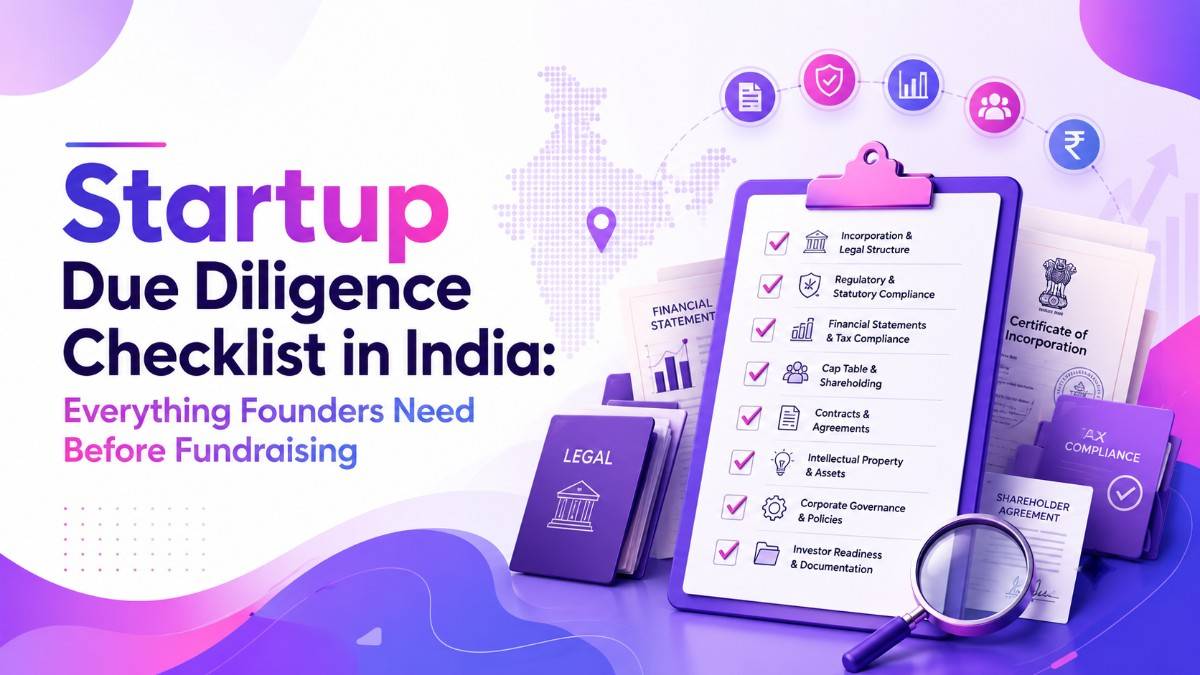
Most founders spend months perfecting their pitch deck and rehearsing their story for investors, then get genuinely caught off guard when the actual due diligence request lands in their inbox. Suddenly it's not just about the vision anymore, it's spreadsheets, contracts, compliance filings, and a dozen documents that haven't been touched since the company was incorporated.
Due diligence is the stage where an investor actually verifies everything a founder has claimed in the pitch. It's not a formality tacked onto the end of a deal, it's often the thing that decides whether the deal closes at all, and how quickly. A startup that walks in prepared tends to move through this process in weeks. One that scrambles to pull documents together as requests come in can watch a round stall for months, or fall apart entirely.
This guide covers what due diligence actually involves, why it matters specifically for Indian startups, the full checklist of documents investors typically ask for, and the red flags that tend to slow deals down or kill them outright.
What is startup due diligence?
 Due diligence is the process an investor uses to verify a startup's legal, financial, and operational standing before committing capital. It's essentially the investor's way of confirming that what's been presented in the pitch actually holds up once someone starts checking the paperwork behind it.
The purpose is straightforward: reduce risk before money changes hands. Investors are putting real capital into a company they don't run day to day, so due diligence is how they build confidence that the business is what it claims to be, and that there's nothing hiding underneath that could blow up later.
It usually breaks down into a few categories. Legal due diligence looks at incorporation documents, contracts, and compliance. Financial due diligence digs into the actual numbers, statements, filings, projections. Business due diligence looks at the model itself, how the company makes money and whether that's sustainable. Operational due diligence checks how the company actually runs day to day. And for tech startups specifically, technical due diligence covers the product, the codebase, and how secure and scalable the underlying technology actually is.
Why due diligence is important for Indian startups
Due diligence isn't just something investors do out of habit, it genuinely shapes how a deal plays out.
It builds real trust between founders and investors, since a startup that hands over clean, organized documentation signals that things are run properly behind the scenes. It surfaces risks early, before they turn into bigger problems down the line, giving both sides a chance to address issues before they become deal breakers. It also confirms the company is actually compliant with Indian legal and financial requirements, which matters a lot given how much regulation touches company formation, taxation, and foreign investment here.
A smooth due diligence process tends to keep fundraising on schedule too, since messy or incomplete documentation is one of the most common reasons rounds drag on far longer than anyone expected. And oddly enough, it can even work in a founder's favor during valuation talks, since strong financials and clean compliance records give founders more leverage to negotiate rather than just accept whatever terms get offered.
The startup due diligence process in India
Step 1: Initial investor review This is usually the lightest touch stage, the investor going through the pitch deck, an executive summary, and getting a first sense of the founders themselves before deciding whether to dig deeper.
Step 2: Document request Once there's real interest, the investor typically asks for access to a data room, a shared folder or platform where all the relevant documents live, organized in a way that makes it easy for their team to review everything without chasing founders for missing pieces one by one.
Step 3: Detailed verification This is where the actual work happens, a thorough review of financials, legal documents, and how the business actually operates day to day. This stage tends to take the longest and surfaces most of the questions that come back to founders.
Step 4: Management meetings Founders usually sit down directly with the investor's team at this point, sometimes multiple rounds of conversation, along with product demonstrations and deeper discussions with key team members if needed.
Step 5: Investment decision Once everything checks out, or gets resolved if issues came up, the investor moves toward finalizing terms, negotiating specifics, and putting together a term sheet.
Startup due diligence checklist
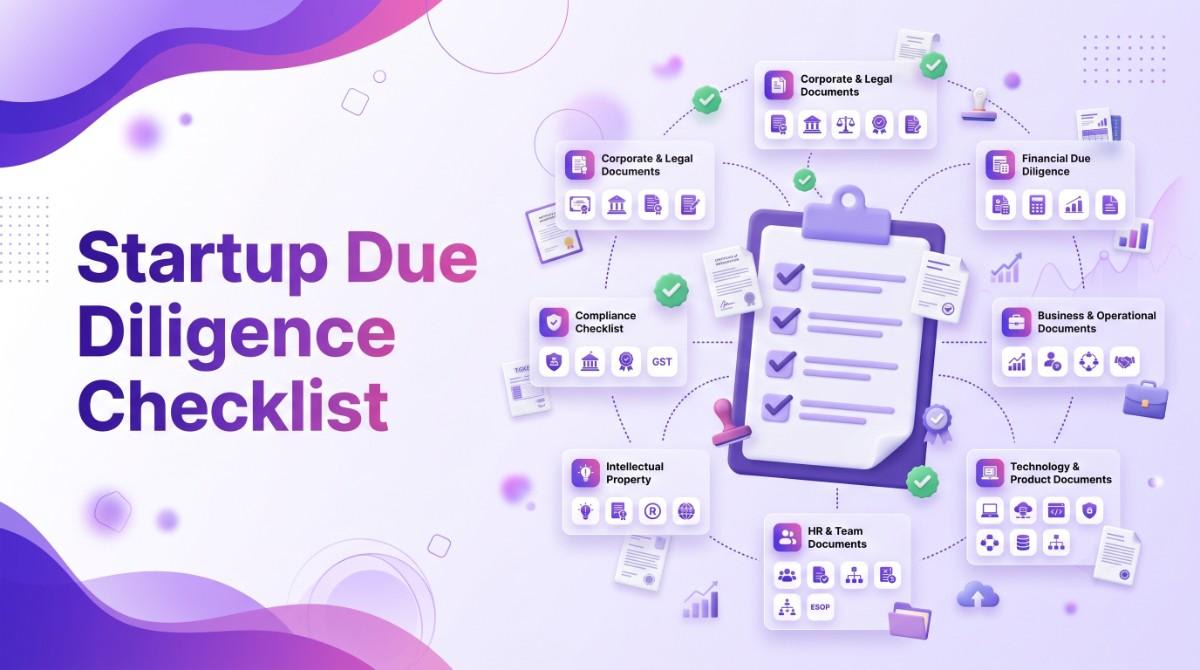 Corporate and legal documents
This covers the foundational paperwork proving the company exists and is structured properly. That means the Certificate of Incorporation, PAN, GST, and other business registrations, the Memorandum and Articles of Association, a clear and up to date shareholding pattern or cap table, board resolutions, shareholder agreements, founder agreements, and proper ESOP documentation if any equity has been allotted to employees.
Financial due diligence checklist
Investors will want audited financial statements covering recent years, along with the Profit and Loss Statement, Balance Sheet, and Cash Flow Statement. Bank statements, tax returns, and GST filings all get checked too, alongside financial projections and budget forecasts going forward. Any outstanding liabilities, loans, unpaid dues, pending settlements, need to be disclosed clearly rather than surfacing later during review.
Compliance checklist
This includes MCA filings and general ROC compliance, income tax compliance, and GST compliance. Labour law compliance matters once there's a team in place, and industry-specific licenses need to be current for sectors that require them. Data privacy compliance is increasingly relevant too, particularly for startups handling customer data at any real scale.
Business and operational documents
Investors want to understand the business model and revenue model in detail, along with the customer acquisition strategy and current sales pipeline. Key customer contracts, vendor agreements, and partnership agreements all get reviewed, along with the product roadmap and any documented SOPs the company has in place for how things actually run.
Intellectual property
This covers trademark registrations, copyrights, and patents where applicable, along with domain ownership and clear software ownership. Licensing agreements matter too, especially if the product relies on third-party tools or technology under license.
HR and team documents
Employment contracts and consultant agreements need to be in order, along with a clear ESOP policy if one exists. An organizational chart, payroll records, and a clear breakdown of founder roles and responsibilities round this section out.
Technology and product documents
For tech startups specifically, investors will look at source code ownership, product architecture, and cybersecurity policies. The technology stack itself gets reviewed, along with any third-party software licenses in use, and data backup and security practices, particularly important if the product handles any sensitive user data.
What do investors check during due diligence?
Beyond just collecting documents, investors are really trying to answer a handful of core questions. Is the company legally compliant? Is its financial health solid, and is the revenue it's reporting actually high quality rather than inflated or one-off? How concentrated is the customer base since heavy reliance on one or two clients is a real risk. Are the founders credible, and does the product actually show product-market fit.
They're also looking closely at the size of the market opportunity, the unit economics behind the business, and how scalable the model really is once growth accelerates. Operational efficiency matters too, along with clean intellectual property ownership and confirmation that there's no existing litigation or unresolved disputes sitting quietly in the background.
Common red flags that can delay or kill a funding round
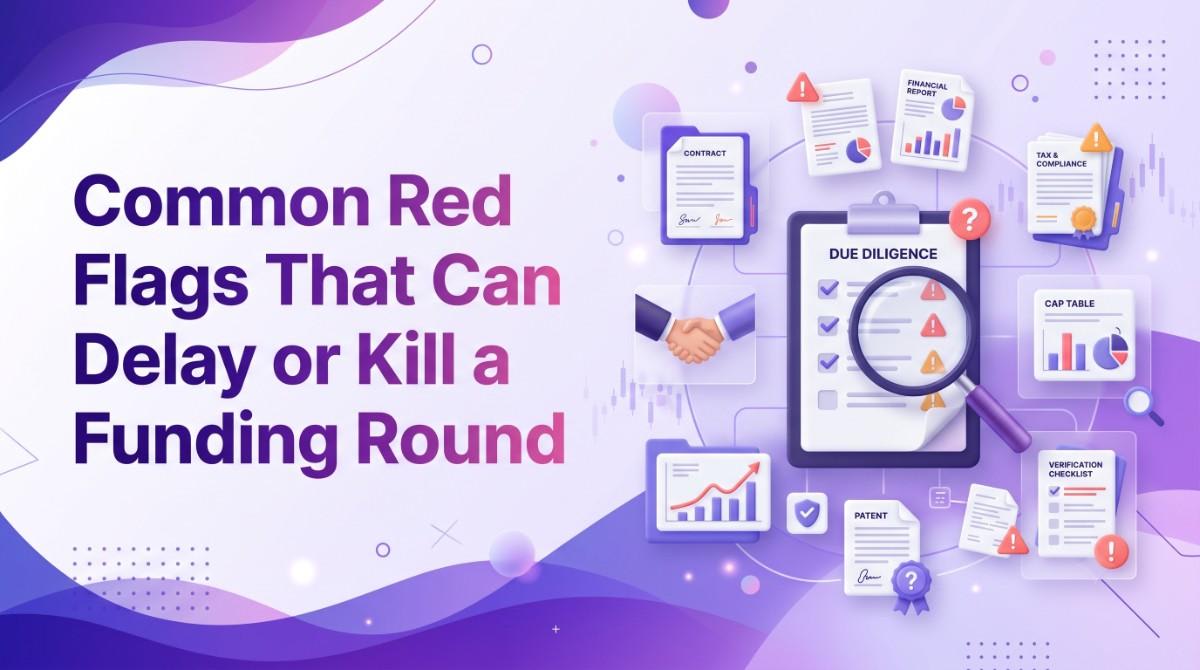 A few issues come up again and again and tend to slow deals down or stop them entirely. Incomplete legal documentation is one of the most common missing agreements, unsigned contracts, and gaps in the paper trail. Poor financial records are another, inconsistent numbers or a lack of proper bookkeeping raises immediate concern.
Tax or compliance issues, especially unresolved ones, tend to worry investors significantly, as do founder disputes that surface during review. An unclear cap table, one that doesn't add up cleanly or has undocumented equity grants, is a frequent problem too. Pending litigation, weak customer traction, overstated financial projections, and unresolved intellectual property ownership questions round out the list of issues that tend to derail rounds that otherwise looked promising.
How long does investor due diligence take?
Timelines vary quite a bit depending on who's investing and how complex the startup's situation is. Angel investors typically move fastest, often wrapping up due diligence in two to four weeks. Venture capital firms usually take longer, somewhere around four to eight weeks, given the deeper scrutiny involved. Institutional investors tend to be the most thorough, and their process can stretch anywhere from six to twelve weeks.
A few things push these timelines longer than expected, incomplete documentation, unresolved compliance issues, complicated cap tables, or founders who are slow to respond to requests. Startups that keep everything organized and respond quickly tend to move through even the more thorough processes faster than average.
How to prepare your startup for due diligence?
Setting up a proper virtual data room ahead of time, rather than scrambling once requests start coming in, saves a huge amount of back and forth later. Keeping financial records genuinely updated, not just accurate on the surface but reconciled and current, matters just as much.
Making sure legal compliance is actually current across MCA filings, tax, and GST removes one of the most common sources of delay. Reviewing contracts and agreements beforehand catches issues before an investor's legal team does. Resolving pending issues, whether that's a messy cap table entry or an unresolved dispute, before fundraising begins is far better than trying to explain it mid process. Clear, realistic financial projections and genuine transparency with investors throughout round out the preparation that actually makes a difference.
Best practices for a smooth due diligence process
Maintaining accurate documentation as an ongoing habit, not a scramble before fundraising, makes the entire process smoother. Responding promptly to investor queries keeps momentum going and signals that the team is organized and serious. Keeping compliance up to date year round, rather than catching up right before a round, avoids a lot of last minute stress.
Avoiding the temptation to hide potential issues is worth emphasizing on its own, since problems that surface during due diligence after being concealed tend to damage trust far more than the original issue would have. And seeking legal and financial advice before fundraising begins, rather than after problems show up, tends to save founders considerable time and money in the long run.
Conclusion
Due diligence is often treated like a paperwork exercise, but it's really a reflection of how ready a startup actually is for investment. Organized documentation, genuine compliance, and transparency with investors throughout the process do more to build confidence than any pitch deck slide can on its own.
Founders who prepare early, keep a running due diligence checklist rather than assembling one under pressure, and get proper legal and financial guidance before fundraising begins tend to move through this process with far less friction. If a round is coming up, start pulling documentation together now rather than waiting for the first request to land, and consider getting a professional to review your data room before investors do.
This article is for general informational purposes only and does not constitute legal or financial advice. Founders should consult a qualified lawyer or financial advisor to prepare properly for investor due diligence.
FAQs
1. What documents are needed for startup due diligence?
Founders typically need to provide corporate and legal documents, financial statements, compliance records, business and operational documents, IP documentation, HR records, and technology documents if it's a tech company. The exact list varies depending on the investor and the stage of the round.
2. How long does investor due diligence take?
It depends on the type of investor. Angel investors usually take two to four weeks, venture capital firms typically take four to eight weeks, and institutional investors can take anywhere from six to twelve weeks depending on the complexity involved.
3. What do VCs check during due diligence?
VCs look closely at legal compliance, financial health, revenue quality, customer concentration, founder credibility, product-market fit, market opportunity, unit economics, and scalability, along with confirming there's no significant pending litigation or IP ownership issues.
4. What is legal due diligence in startup funding?
Legal due diligence involves reviewing a startup's incorporation documents, contracts, shareholder agreements, compliance filings, and any pending legal disputes to confirm the company is properly structured and legally sound before investment.
5. Can due diligence fail a funding round?
Yes. Issues like incomplete documentation, poor financial records, unresolved compliance problems, founder disputes, or IP ownership concerns can delay a round significantly or cause an investor to walk away entirely.
6. How can startups prepare for due diligence?
Setting up an organized data room in advance, keeping financial records current, ensuring compliance is up to date, resolving any pending issues beforehand, and being transparent with investors throughout the process all help significantly.