Statutory Audit for Startups: What It Is, Process & Compliance Guide (2026)
By Toishaa Soni · 23 April 2026
Understand statutory audit for startups in India process requirements, documents, and compliance steps to stay audit-ready in 2026.
As startups grow, financial discipline becomes as important as growth itself. One of the most critical components of this discipline is the statutory audit.
Most founders hear the word "audit" and immediately think of large corporations with entire finance departments handling the process. The reality is that statutory audits apply to startups much earlier than most people expect, and the founders who understand this early are the ones who never have to scramble when the requirement actually lands.
Whether you are raising funds, preparing for due diligence, or simply trying to build something that lasts, understanding what a statutory audit involves and how to stay ready for one is not optional. It is part of running a serious business.
What Is a Statutory Audit?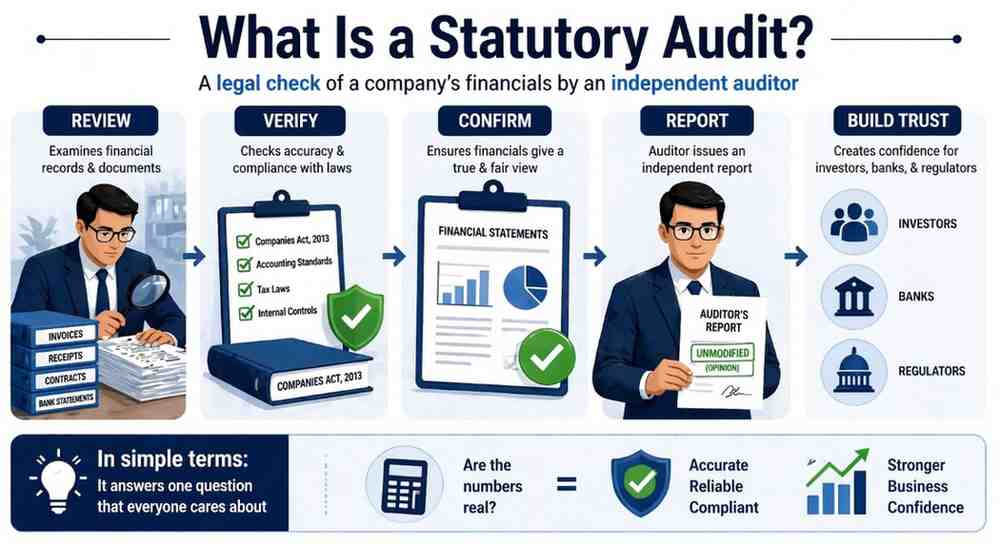 A statutory audit is a legally mandated review of a company's financial records, carried out by an independent auditor who has no stake in the business.
The purpose is straightforward: to verify that your financial statements give an accurate and honest picture of where the company actually stands, in line with applicable laws, including the Companies Act 2013. It is an external check that confirms your financials are not just internally consistent but genuinely trustworthy to anyone looking at them from the outside.
In simple terms it answers one question that investors, partners, and regulators all care about: are these numbers real?
Why Does a Statutory Audit Matter for Startups?
A statutory audit is not just a compliance requirement; it is a credibility signal for your startup.
Clean audit records make fundraising faster, simplify due diligence, and build trust with investors and partners. They show that your business is financially disciplined and well-managed.
Beyond external benefits, audits also give founders clearer financial insights and highlight gaps that internal reviews may miss.
Startups with strong audit practices move faster and face fewer challenges when it matters most.
Startup Audit Requirements in India
Whether your startup needs a statutory audit depends on how it is structured.
For private limited companies the answer is simple: a statutory audit is mandatory regardless of your turnover or whether you made a profit. There is no threshold to cross. If you are incorporated as a Pvt. Ltd., you need an audit.
LLP’s obligation to get their audit done depends upon having a turnover above ₹40 lakh or having contributions above ₹25 lakh. If they don’t have this turnover or contribution, then getting the audit done is optional for them. Though, keeping their books ready for audit is always beneficial.
In the case of partnership firms, a statutory audit obligation may not be there, but there may still be an obligation to do a tax audit based on your turnover. It is better to consult an expert chartered accountant to find out what your position is.
How to Perform a Statutory Audit in India? Step 1: Appointment of Auditor
It is necessary that an auditor get appointed within 30 days of incorporation of the company. It is a mandatory obligation.
Step 2: Planning for the Audit
Here, the auditor analyzes your business operations and your accounting system. It gives him an idea about your business.
Step 3: Examination of Your Financial Documents
In this step, the auditor checks all your books of accounts, bills, invoices, bank statements, etc. Efficient record maintenance helps this process go smoothly.
Step 4: Assessment of Internal Controls
This step deals with checking the integrity of your financial system and process rather than just financial figures.
Step 5: Audit Report Preparation The auditor prepares a formal report stating whether your financial statements present a true and fair view and comply with applicable laws.
Step 6: Filing with Authorities The audited financial statements are filed with the Ministry of Corporate Affairs. Timely filing is crucial to avoid penalties and compliance issues.
Key Documents Required for Statutory Audit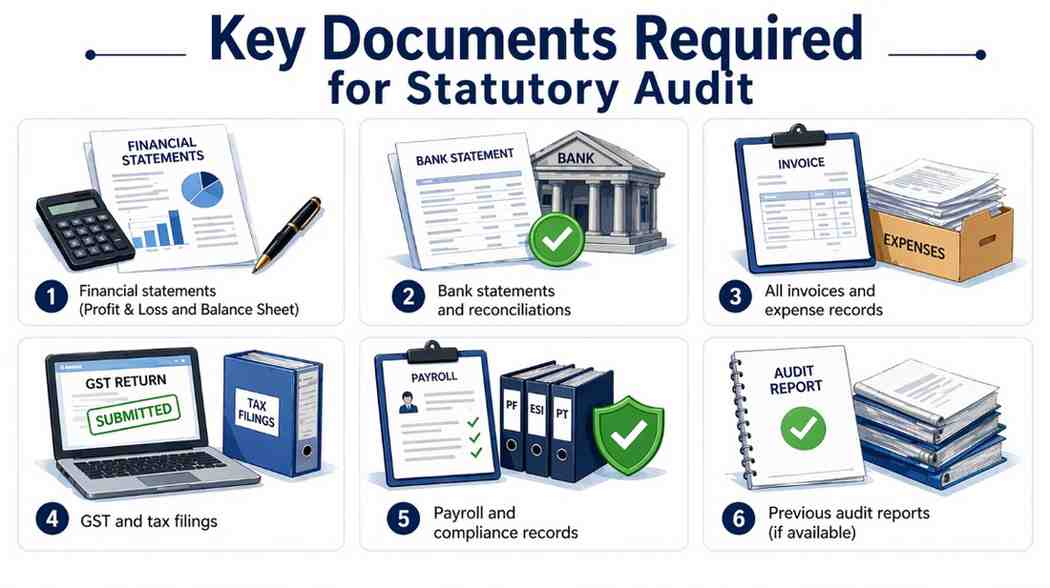 Being organized here makes a huge difference to how smoothly and quickly the process moves. You will need:
Financial statements (Profit & Loss and Balance Sheet)
Bank statements and reconciliations
All invoices and expense records
GST and tax filings
Payroll and compliance records
Previous audit reports (if available)
Founders who maintain these documents throughout the year barely feel the audit process. Founders who try to rebuild months of financial data at the last minute face stress and often end up with avoidable audit observations.
Audit Compliance for Startups
Staying audit-ready is not something you do once a year in the weeks before your auditor shows up. It is an ongoing discipline that makes the audit itself almost a formality.
Accurate bookkeeping throughout the year, regular account reconciliation, timely tax filings, following proper accounting standards, and keeping all financial documentation current are the habits that separate startups with clean audit records from those that dread the process every year.
Compliance should be continuous. The audit is just the point at which everything you have been doing all year gets verified.
Common Mistakes Startups Make During Audits
The same mistakes show up repeatedly across different startups, and almost all of them are avoidable.
Poor or incomplete bookkeeping makes the auditor's job harder and increases the likelihood of observations that reflect badly on the business. Mixing personal and business transactions is a red flag that raises questions about financial discipline. Missing invoices or documentation creates gaps that are difficult to explain after the fact. Ignoring compliance deadlines throughout the year creates a backlog that surfaces during the audit. And lacking internal financial controls suggests the business is not being managed with the rigor investors expect.
None of these are difficult to avoid with the right systems and habits in place from the beginning.
Startup Coach Perspective
At Startup Coach, we often see founders treating audits as a last-minute requirement. This leads to stress, delays, and sometimes negative audit observations.
We have seen this pattern play out many times. A founder focuses entirely on product and growth, compliance gets pushed back repeatedly, and then a funding opportunity arrives that requires clean, audited financials. What should be a straightforward process becomes a weeks-long scramble that sometimes costs the founder the deal or at minimum the momentum.
A statutory audit should not be a reactive process. It should be the natural outcome of consistent financial discipline that was already in place. Startups that maintain clean books find audits genuinely simple and often come away with useful insights about their own business in the process.
Conclusion
A statutory audit is more than a legal requirement. It is a foundation for trust, transparency, and long-term growth.
The founders who get this right early find that it opens doors rather than creating friction. Clean audit records signal to everyone who matters that the business is being run properly, that the numbers can be trusted, and that the people running it understand their obligations.
If you want to build something fundable, scalable, and credible, audit readiness is not a future concern. It belongs in your core operations from the moment you incorporate.
FAQs
Q: What is a statutory audit?
A mandatory independent review of your company's financial statements to confirm they are accurate, honest, and legally compliant.
Q: Is statutory audit mandatory for all startups in India?
For Private Limited Companies yes, always.
For LLPs it depends on turnover and contribution thresholds. For other structures it varies, so checking with a CA is worthwhile.
Q: When should a startup appoint an auditor?
Within 30 days of incorporation for companies. Not something to leave until later.
Q: What does the audit actually cover?
Financial records, transactions, bank statements, compliance filings, and whether your internal financial controls are working properly.
Q: Why does it matter for fundraising specifically?
Because investors rely on audited financials to verify that what you are telling them about your business is actually accurate. Clean audit records remove a significant layer of doubt from every funding conversation.