Chara Technologies raises ₹52 Crore to build Rare-Earth-Free Electric Motors
By Toishaa Soni · 24 October 2025
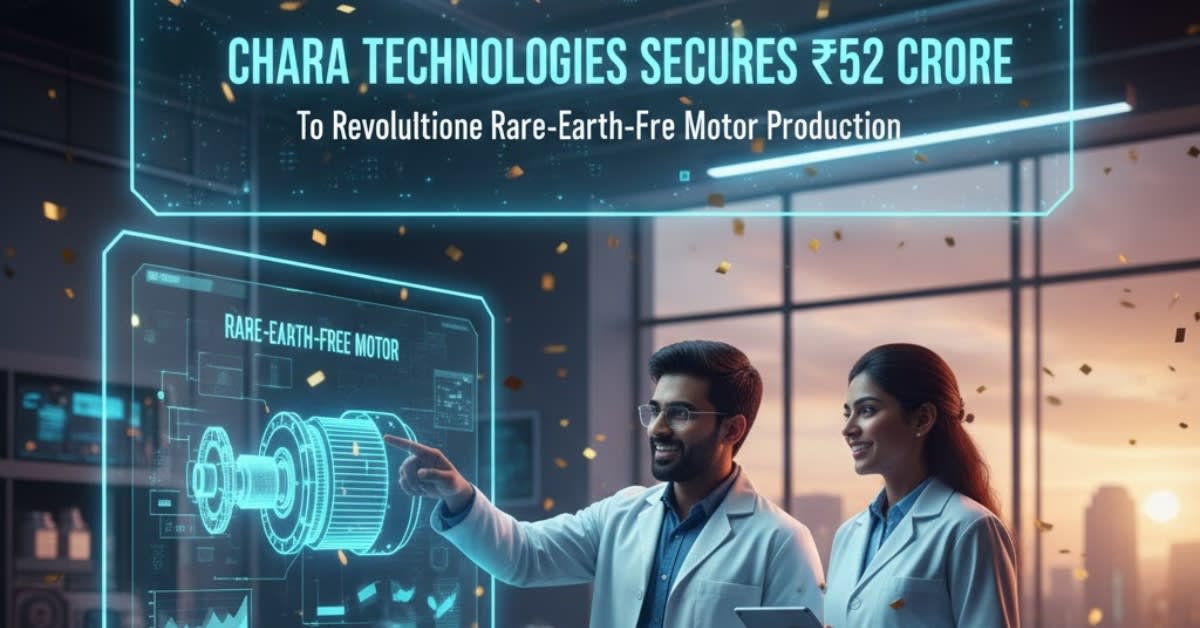
Chara Technologies raises ₹52 Crore to expand its manufacturing of rare-earth-free motors, boosting India's electric vehicle manufacturing and sustainable innovation.
India's electric vehicle market is thriving but is nevertheless overwhelmingly import-dependent for most of its raw material. Among the larger issues has been the employment of electric motors using rare-earth magnets—metals that are costly, hard to excavate, and overwhelmingly imported.
A smarter and greener alternative has now been proposed by a Bengaluru firm called Chara Technologies. Chara has so far raised ₹52 crore (roughly USD 6 million) towards the development and commercialization of rare-earth-free electric motors. This funding marks a major move towards indigenizing India's EV supply chain and making it green and affordable, contributing to India's electric vehicle market growth and innovation.
Understand the Rare-Earth Challenge
Many electric motors also employ rare-earth magnets such as neodymium and dysprosium because motors become compact and very powerful. But the mining causes a lot of environmental damage, and the world's supply happens in a few countries.
For India itself, which is trying to create its base for electric vehicle manufacturing, it's a serious issue. Price volatility, import regulation, and environmental concerns have all gone to indicate that the country needs a long-term solution.
That's where Chara Technologies enters the picture — making motors that are equally good but that don't utilize a single atom of rare earth.
Chara’s Funding and Its Purpose  Chara Technologies has raised a Series A funding of ₹52 Crore led by such notable players like Arkam Ventures, Big Capital, and Kalaari Capital. The financing will seek to scale Chara's research and manufacturing activities.
These will be utilized for:
1. Increased Production: Chara will expand the current yearly motor manufacturing of approximately 20,000 pieces to approximately 100,000 pieces.
2. New Facility Establishment: A new test and manufacturing facility in Bengaluru will guarantee quality test and manufacturing.
3. Introduction of New Line of Products: A new category of motors for electrically operated two-wheelers, electric/diesel-run three-wheelers, buses, and for industrial purposes.
4. Increased R&D: More money will be spent to improve the motor control technologies, the energy efficiency, and the performance.
5. The investment aids the expansion of Chara and consolidates the position of India regarding the center for deep-tech entrepreneurship.
What Makes Chara's Motors Different From
The technology of Chara relies on Synchronous Reluctance Motors (SynRel). Unlike the conventional electric motors that have no permanent magnets involved, they generate the torque by the construction's magnetic resistance.
This policy has the following important advantages:
1. No Rare-Earth Elements: No imported rare-earth magnets are required by the design.
2. Lower Costs: Eliminating magnets reduces material and manufacturing expenses.
3. Environment-Friendly: It avoids the pollution and wastage that comes from mining of rare-earth compounds.
4. Comparable Performance: Chara's non-magnetic design motors are comparable in efficiency and rotor torque to the conventional magnet-based motors.
In short, Chara motors are cleaner, less expensive, and just as powerful — a good fit for India's electric vehicle shift.
Effect on India's Electric Vehicle Industry 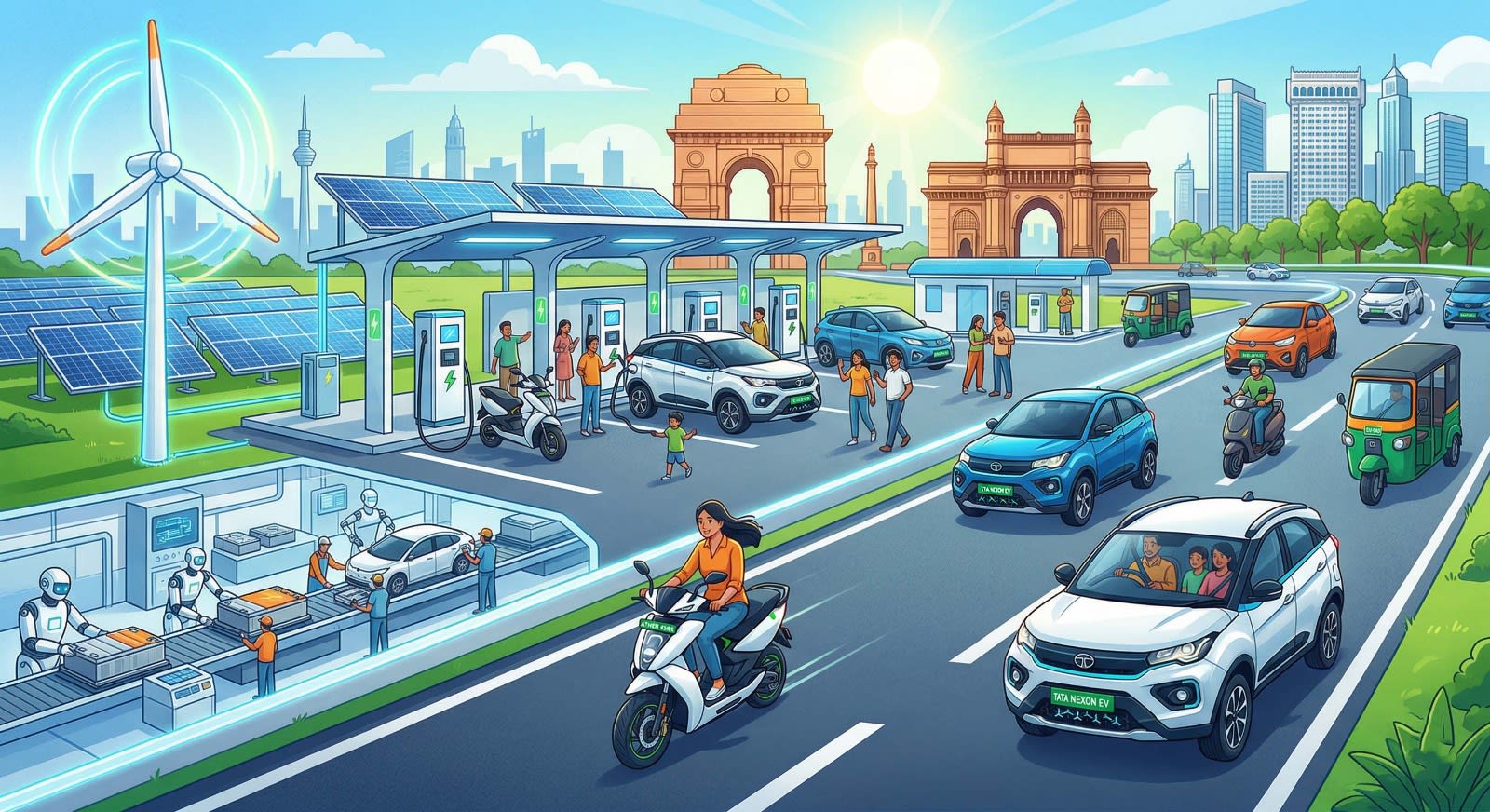 Chara Technologies already has tie-ups with major Indian and multinational companies. It has customers such as Greaves Cotton, Sonalika, VST Tillers, and a few companies in Europe.
By supplying these partners with high-end motors manufactured in India, Chara is also helping reduce Indian imports of foreign componentry. Chara technology has uses that are wide-ranging — anything from scooters and rickshaws to industrial machinery and electric ploughing tractors.
This transition may reduce the cost of EVs to stabilize the supply chain and encourage green manufacturing throughout the industry.
The Challenges and the Future Direction
Like all true deep tech startups, Chara has its challenges scaling. Its motors have to work reliably in real-world conditions – in the presence of temperature variation, varied terrains, and wear and tear.
To offset this, Chara's new test facility in Bengaluru will focus on quality verification and long-term reliability. Competition is the second challenge because several companies globally are also developing magnet-free motor designs. Chara's early mover and strong local base, however, give it a competitive edge.
If the firm is successful in achieving the high-volume manufacturing objectives while keeping the quality and cost-effectiveness on
their side, they may create a new industry standard.
Why It Matters for India
Chara's advancements are not merely a single firm's success but also represent a larger transformation in India's innovation ecosystem. Building high-performance motors that are rare-earth-free in India aligns with several national objectives—from Atmanirbhar Bharat to green growth.
It also reduces environmental impacts, facilitates clean manufacturing, and advocates for further startups to explore hardware-based mobility and energy solutions. Shattering the import dependency of rare earths will enable India to become a stronger and globally competitive player in the world of electric vehicles.
Conclusion
Chara Technologies' ₹52 Crore funding is a great stride towards sustainable and self-sufficient electric motor manufacturing for India. Through the manufacturing of rare-earth-free motors, the company is solving a real need – reducing import dependence while getting a boost for environment-friendly technology.
While India keeps the pedal to the metal on cleaner transportation and local manufacturing strength, Chara's success could spawn the next generation of deep-tech startups for green tech. It's a shining illustration of the power of Indian ingenuity to create global impact — supported by expert guidance and startup support.
FAQs
Q- What does “rare-earth-free motor” mean?
It refers to a motor that will not employ magnets composed of rare-earth metals such as neodymium or dysprosium. It rather applies a unique configuration that creates motion without the need for such materials.
Q- Why are the rare earths significant?
The rare-earth metals are highly priced, environmentally hazardous to produce, and predominantly imported from overseas. This renders manufacturing expensive and inconsistent.
Q- Chara Technologies will utilize its funding for what?
The ₹52 crore will be utilized in scaling up manufacturing operations, constructing a new test lab, and designing new affordable motor styles.
Q- With which industries are Chara's motors applicable?
The motors of Chara are applicable in electric bicycles, three-wheelers, automobiles, buses, farm tractors, and machines for industries.
Q- How is this important for India's electric vehicle industry?
By manufacturing rare-earth-free motors indigenously, India will be able to lower import expenses, foster green technology, and further its mission to become a world leader in electric vehicles.