Startup Funding Rounds Explained: Seed, Series A, B & C: Which Stage Are You At?
By Rohini Rajpoot · 7 April 2026
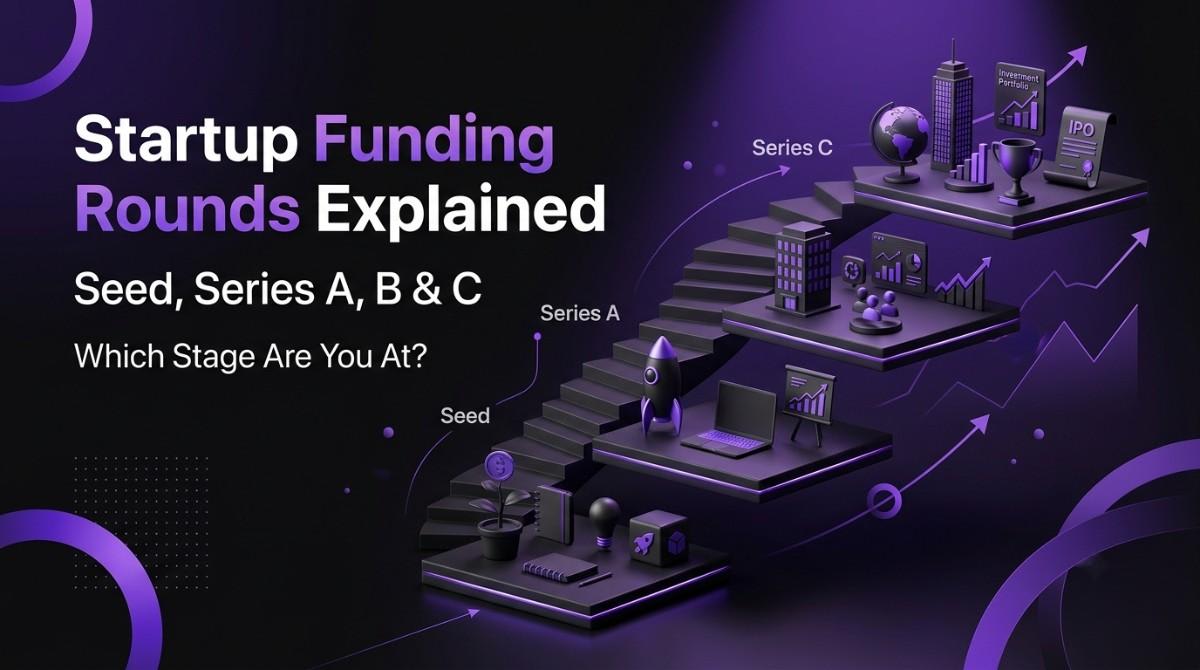
Learn startup funding rounds from seed to series C understand rounds of startup funding investor expectations and how to raise startup business funding.
Understanding startup funding rounds is essential for every founder who wants to scale their business strategically. These rounds of startup funding help startups move from just an idea to a fully established company. Whether you're building your MVP or expanding globally, knowing how startup business funding works can help you raise capital at the right time without losing unnecessary equity. In this blog, we’ll break down each stage of startup funding rounds, from Seed to Series C, so you can clearly identify where your startup stands today.
What Are Startup Funding Rounds? 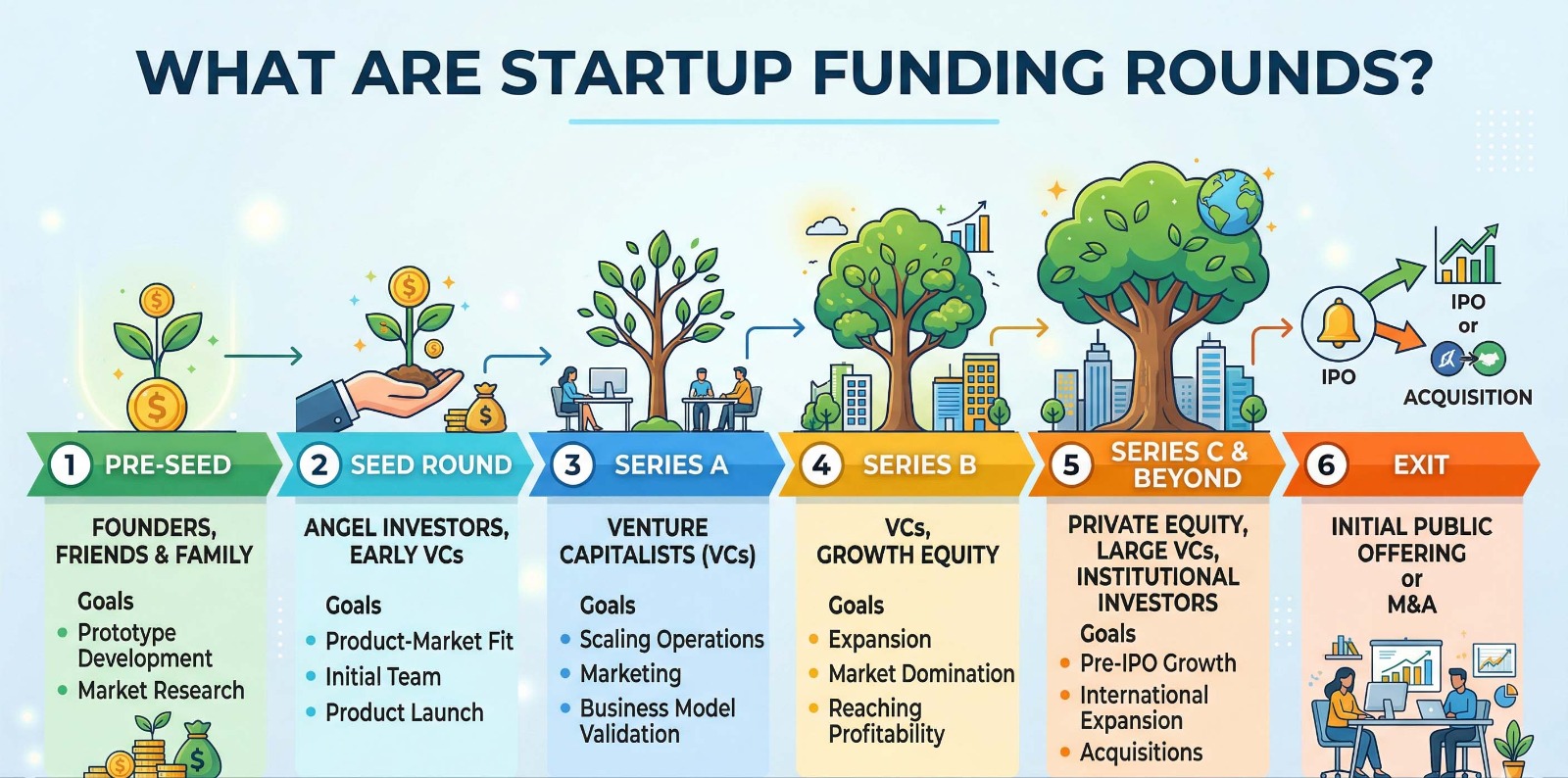 Startup funding rounds refer to the different phases in which startups raise money to grow their business. These rounds of startup funding are designed to match the company’s growth stage, risk level, and financial needs. From early-stage validation to large-scale expansion, every stage of startup business funding plays a crucial role in long-term success.
1. Seed Funding: The Starting Point  Seed funding is the first official step in startup funding rounds, where founders turn their ideas into reality. At this stage, startup business funding is primarily used to build a prototype or MVP and test whether the idea has real market demand. In most rounds of startup funding, the seed stage is considered the riskiest, which is why investments are smaller and often come from personal networks or angel investors.
Companies like Airbnb and Uber began their journey with seed funding, proving that even the biggest startups start small.
2. Series A: Building the Foundation
 SeriesA is one of the most important startup funding rounds because this is where startups move beyond the idea stage and start scaling. At this point, founders have already validated their product and are ready for structured startup business funding.
Unlike earlier rounds of startup funding, Series A investors focus heavily on data such as user growth, retention, and revenue models. This is where venture capital firms come in, looking for startups that show strong potential for scalability. For example, Facebook used Series A funding to expand its platform and grow its user base significantly.
3. Series B: Scaling Up
 Series B represents a more advanced stage in startup funding rounds, where the business is already established and ready to scale aggressively. At this stage, startup business funding is used to expand operations, hire teams, and enter new markets. Compared to earlier rounds of startup funding, Series B involves larger investments and more experienced investors. They expect clear proof that the business model works and can generate consistent revenue. A great example is Swiggy, which used Series B funding to expand across multiple cities and strengthen its logistics network.
4. Series C: Expansion & Dominance
 Series C is one of the later startup funding rounds, where companies aim to dominate their market or expand globally. At this point, startup business funding is no longer about survival; it’s about scaling to the next level. These rounds of startup funding often involve large investments from private equity firms, hedge funds, and late-stage venture capitalists. The focus is on expansion, acquisitions, or preparing for an IPO.
For instance, Ola leveraged Series C funding and beyond to expand its services and compete internationally.
Beyond Series C: What’s Next?'
After completing major startup funding rounds, companies may continue raising funds through Series D, E, or even further rounds. These additional rounds of startup funding are typically used for global expansion or entering new verticals. Eventually, many startups move towards an IPO. Companies like Zomato transitioned from multiple rounds of startup business funding to becoming publicly listed companies.
Types of Investors Across Funding Rounds
Different startup funding rounds attract different types of investors. In early rounds of startup funding, angel investors and incubators play a major role. As the startup grows, venture capital firms, growth investors, and private equity firms take over. Understanding this shift in startup business funding sources helps founders target the right investors at the right time.
How to Know Which Stage You’re At?
To understand where you stand in the journey of startup funding rounds, evaluate your business honestly. If you’re still validating your idea, you’re in the early rounds of startup funding like Seed. If you have traction, you’re likely ready for Series A. As your startup grows and requires larger startup business funding, you move into Series B and beyond.
Common Mistakes Founders Make
Many founders struggle with startup funding rounds because they misunderstand timing and expectations. One common mistake in rounds of startup funding is raising money too early without proper validation. Another issue in startup business funding is giving away too much equity, which can hurt long-term control of the company.
Conclusion
Mastering startup funding rounds is crucial for building a successful startup. Each stage of startup business funding serves a specific purpose, and understanding these rounds of startup funding allows founders to grow strategically. The goal is not just to raise money but to raise it smartly, at the right stage, and from the right investors.
If you are planning your funding rounds or want to raise capital strategically, connect with our experts to get the right guidance.
FAQs
1. What are startup funding rounds?
Startup funding rounds are stages where startups raise capital to grow their business.
2. What is seed funding?
Seed funding is the early stage of startup business funding used to validate an idea or build an MVP.
3. What is Series A funding?
Series A is a stage in startup funding rounds where startups scale after achieving product-market fit.
4. What is Series B funding?
Series B funding helps startups expand operations and grow their market presence.
5. What is Series C funding?
Series C is used for large-scale expansion, acquisitions, or preparing for an IPO.
6. How many rounds of startup funding are there?
There is no fixed number, but common rounds of startup funding include Seed, Series A, B, and C.
7. Who invests in startup funding rounds?
Investors include angel investors, venture capital firms, and private equity firms.