Financial Compliance for Startups: Complete Checklist & Step-by-Step Guide (2026)
By Toishaa Soni · 20 April 2026
Learn financial compliance for startups with a complete checklist GST tax filings and steps to stay investor ready in 2026
Most startups focus on building products, acquiring customers, and raising funds. Compliance sits somewhere at the bottom of the priority list, usually filed under "we will deal with that later." And then later it arrives, often at the worst possible moment, right in the middle of a due diligence process or a funding conversation that suddenly stalls because the books are not in order.
Ignoring compliance does not just lead to penalties. It affects investor trust, funding readiness, and long-term sustainability in ways that are genuinely difficult to recover from once the damage is done.
For founders building serious businesses in India, financial compliance is not something you bolt on later. It is part of the foundation, and getting it right early is significantly easier than fixing it under pressure.
What Is Financial Compliance?
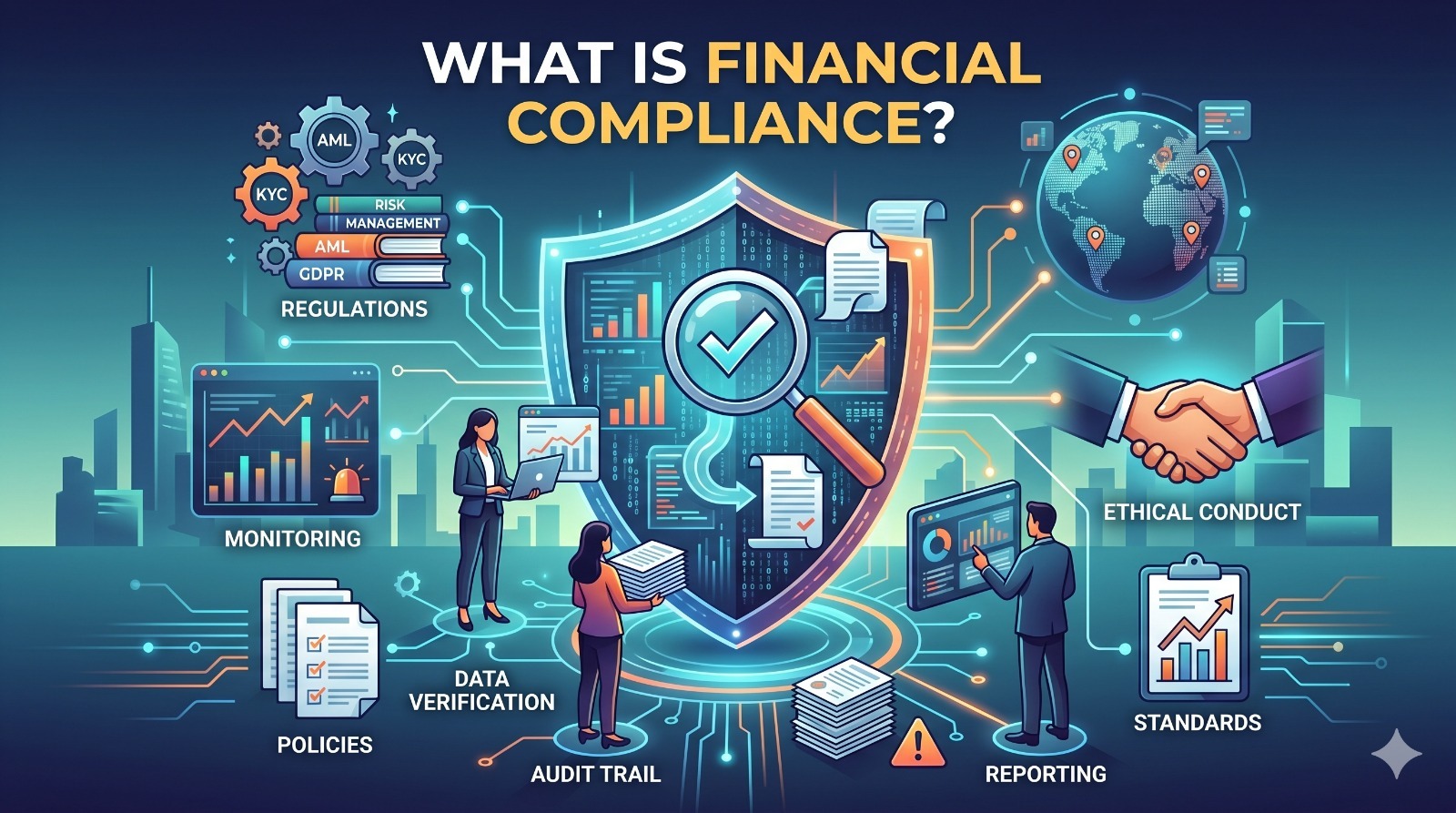 Financial compliance means staying on the right side of every legal, tax, accounting, and regulatory requirement that applies to your business. That covers maintaining accurate financial records, filing taxes on time, following statutory obligations, and making sure your financial reporting is transparent and defensible.
For startups specifically, this is not just about avoiding fines. It is about building the kind of credibility that investors, partners, and serious stakeholders actually look for before committing to anything.
Why Does Financial Compliance Matter for Startups?
A strong compliance framework does several things that directly affect your ability to grow.
It keeps you out of legal trouble, which sounds obvious until you realize how many startups get blindsided by penalties they genuinely did not see coming. It builds credibility with investors who will scrutinize your financial records carefully before any funding conversation goes anywhere serious. It makes due diligence smoother, which means deals close faster. And it gives you the financial transparency you need to actually understand how your business is performing rather than operating on guesswork.
Startups that treat compliance as an afterthought tend to find it waiting for them at exactly the wrong moment. The ones that build it early barely notice it after a while because it just becomes part of how the business runs.
Startup Financial Compliance Checklist (India)
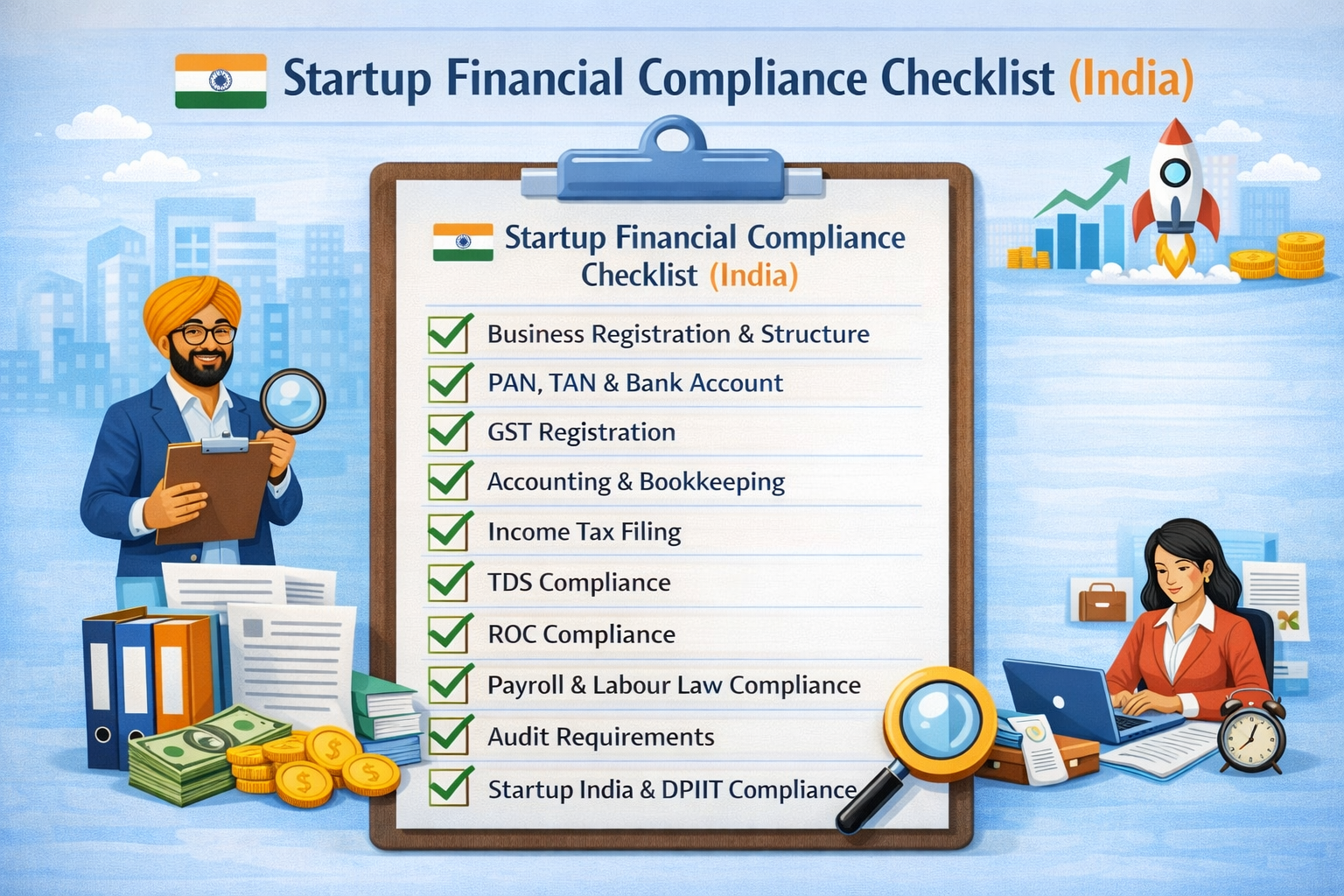 Here is a practical startup financial compliance checklist every founder should follow:
1. Business Registration and Structure
Ensure your startup is registered as a Private Limited Company, LLP, or partnership, depending on your goals and funding plans.
2. PAN, TAN, and Bank Account
Obtain PAN and TAN for tax purposes and open a dedicated business bank account to separate personal and business finances.
3. GST Registration
Register for GST if your turnover exceeds the prescribed limit or if your business falls under mandatory registration categories.
4. Accounting and Bookkeeping
Maintain proper books of accounts, including income, expenses, invoices, and financial statements.
5. Income Tax Filing
File annual income tax returns and ensure proper tax planning to avoid penalties.
6. TDS Compliance
Deduct and deposit TDS where applicable and file regular TDS returns.
7. ROC Compliance
For companies and LLPs, file annual returns and financial statements with the Ministry of Corporate Affairs.
8. Payroll and Labour Law Compliance
Ensure compliance with EPF, ESIC, and other labor laws if applicable.
9. Audit Requirements
Conduct statutory audits if your startup crosses prescribed thresholds.
10. Startup India and DPIIT Compliance
If recognized, maintain compliance to continue receiving benefits like tax exemptions.
Step-by-Step Guide to Ensure Financial Compliance
Understanding how to ensure financial compliance becomes much less overwhelming when you break it into clear steps.
Step 1: Set Up Proper Financial Systems Start with structured accounting tools and processes from day one. The cost of setting this up properly at the start is a fraction of what it costs to untangle messy records six months in.
Step 2: Hire or Consult Experts. Work with a chartered accountant or compliance professional early. This is not an area where learning by doing serves you well. The mistakes are expensive, and a good CA pays for itself very quickly.
Step 3: Maintain Real-Time Records Track transactions, invoices, and expenses as they happen rather than trying to reconstruct everything at the end of the quarter. Backtracking is tedious, error-prone, and a sign that your financial systems are not working for you.
Step 4: Follow Filing Calendars Build a compliance calendar that covers all your GST, TDS, ROC, and tax filing deadlines. Put reminders in advance. Missed deadlines are almost always avoidable and almost always costly.
Step 5: Review Financials Regularly. Monthly or quarterly financial reviews catch gaps before they become problems. They also give you a much clearer picture of how the business is actually performing.
Step 6: Stay Updated with Regulations Compliance rules in India change more often than most founders realize. Staying current is part of the job, and your CA should be helping you stay ahead of anything relevant to your business.
Common Financial Compliance Mistakes Startups Make
Most compliance problems come from the same handful of mistakes repeated across different startups.
Mixing personal and business finances creates confusion that is painful to untangle and raises red flags with investors and auditors. Missing filing deadlines generates penalties that accumulate quietly until they become a real problem. Ignoring GST or TDS obligations is surprisingly common among first-time founders who simply did not know they applied. Poor bookkeeping makes every financial conversation harder than it needs to be. And not preparing for audits or due diligence in advance means you are always catching up rather than presenting a clean picture.
None of these are difficult to avoid with the right systems in place from the beginning.
Startup Compliance Requirements in India: 2026 Outlook
The direction of travel for startup compliance in India is clear. Everything is becoming more digital, more structured, and more scrutinized.
Filings and reporting are increasingly digital. Financial transparency requirements are getting stronger. Fundraising and audit processes involve greater scrutiny than they did a few years ago. And compliance is increasingly being integrated directly into the financial tools that startups use every day.
Building compliance systems that can scale with your business is not optional anymore. The regulatory environment is moving in one direction, and startups that get ahead of it now will find the path considerably smoother than those who keep treating it as something to deal with later.
Startup Coach Perspective
At Startup Coach, we often see founders treating compliance as a last-minute activity. This approach creates friction during fundraising, partnerships, and scaling.
We have watched deals slow down and sometimes fall apart entirely because a founder could not produce clean financial records quickly enough. Not because the business was not performing, but because the compliance foundation was not there. Investors do not just want to see growth. They want to see that the business is being run properly. Compliance is part of that picture.
Financial compliance should be built into your business from day one. It is not just a legal requirement; it is a growth enabler. Startups that maintain clean records and compliance discipline consistently move faster and attract better opportunities than those who are always catching up.
Conclusion
Financial compliance is the backbone of a sustainable startup. It is not the most exciting part of building a business, and nobody starts a company because they love filing TDS returns. But the founders who take it seriously early find that it removes an entire category of problems from their lives while making every fundraising conversation, every partnership discussion, and every due diligence process significantly smoother.
Whether you are bootstrapping or preparing for your first funding round, compliance ensures your business is always ready for the next step rather than scrambling to get there. For founders looking to stay compliant and build investor-ready businesses, connect with our experts for guidance.
FAQs
Q: What is financial compliance for startups?
Following all legal, tax, and financial regulations that apply to your business. Everything from GST and income tax to ROC filings and bookkeeping.
Q: Why does it matter so much for startups specifically?
Because the consequences show up at exactly the moments that matter most, during fundraising, due diligence, and partnerships. Clean compliance keeps those doors open.
Q: What are the key compliance requirements in India?
GST registration, income tax filing, TDS, ROC filings, proper bookkeeping, and statutory audits once you cross the relevant thresholds.
Q: How can startups stay on top of compliance without it consuming all their time?
Good accounting systems, a reliable CA, a compliance calendar, and regular financial reviews take most of the uncertainty out of it.
Q: What actually happens if a startup ignores compliance?
Penalties, legal exposure, and serious friction when you try to raise money or close partnerships. The costs always end up being higher than whatever was being avoided.