Startup Funding Mistakes to Avoid in the Early Stage
By Toishaa Soni · 25 February 2026
Common early-stage startup funding mistakes founders make and how to raise capital strategically without losing control or clarity.
Raising money is often seen as a milestone for startups. But in reality, funding raised at the wrong time, from the wrong source, or for the wrong reasons can do more harm than good.
Many early-stage startups fail not because they couldn’t raise capital, but because they raised it incorrectly. Poor funding decisions can lead to dilution, loss of control, misaligned expectations, and long-term execution pressure.
This blog highlights the most common startup funding mistakes early-stage founders must avoid and how to approach funding strategically.
Mistake 1: Raising Money Before Validating the Problem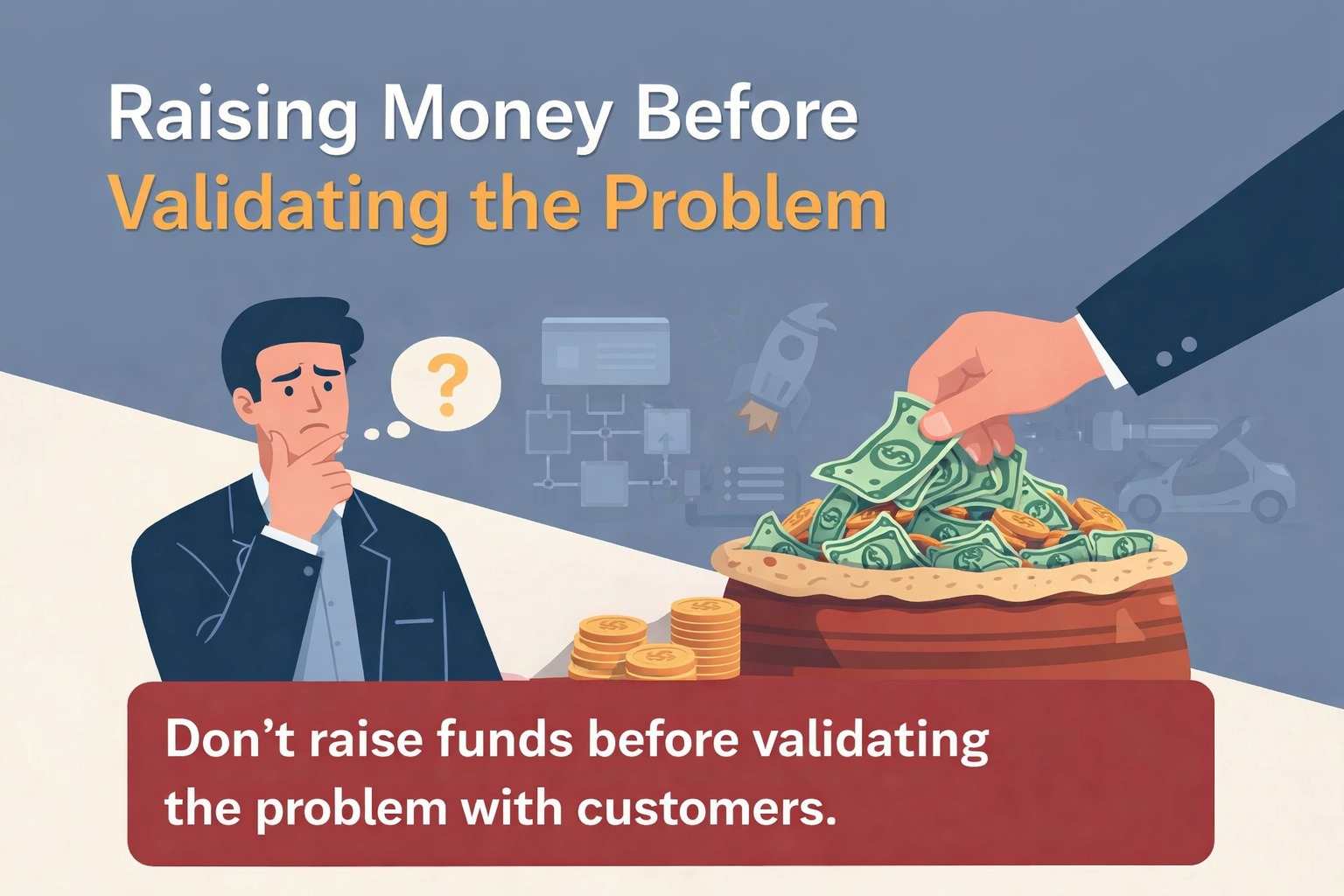 One of the biggest early-stage mistakes is raising capital before clearly validating the problem and solution.
Founders often raise funds based on assumptions, not evidence. Without early customer validation or proof of demand, capital gets spent on features, hiring, or marketing that does not move the business forward.
Early funding should be used to validate, not guess. Raising too early increases burn without clarity.
Mistake 2: Choosing the Wrong Type of Funding
Not all money is good money.
Many founders default to equity funding when a grant, bootstrapping, or even small debt could have sufficed. Others take loans before revenue stability, creating repayment pressure too early.
Funding should match your startup’s stage. Grants suit validation and R&D. Equity suits high-growth scaling. Loans suit predictable cash flows. Misalignment here is costly.
Mistake 3: Giving Away Too Much Equity Too Early
Dilution is irreversible.
Early-stage founders often give away large equity stakes at low valuations because they need capital urgently. This weakens founder ownership and creates long-term control issues.
A common red flag investors notice later is over-diluted cap tables. Founders should aim to preserve equity early and raise capital incrementally as valuation improves.
Mistake 4: Raising Without a Clear Use of Funds
Raising capital without a defined execution plan is a silent killer.
Founders often raise money because it is available, not because they know exactly how it will be deployed. This leads to scattered spending, bloated teams, and rising burn without results.
Investors fund clarity, not ambition. Every funding round should be tied to clear milestones, timelines, and outcomes.
Mistake 5: Ignoring Cash Flow and Burn Rate 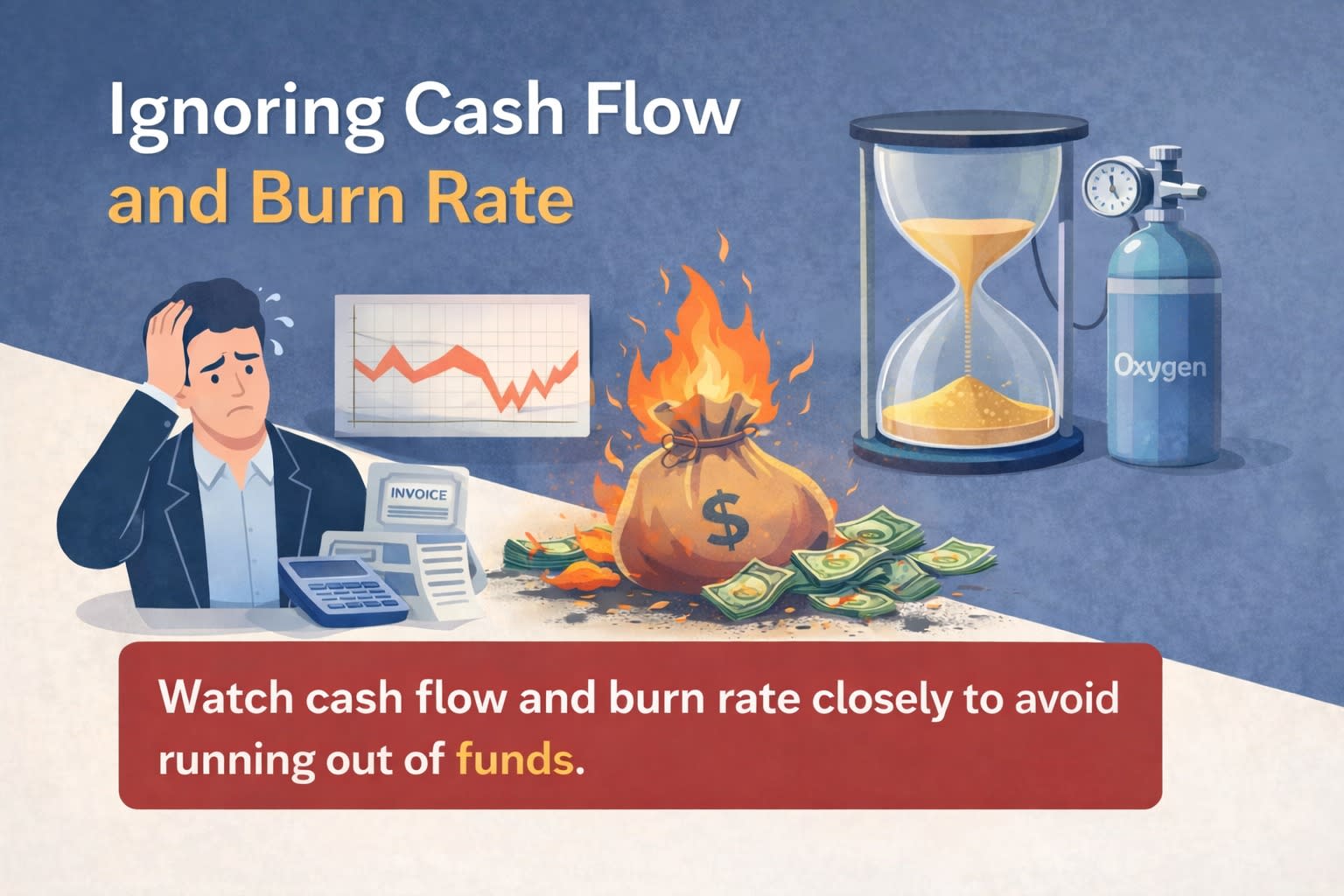
Early-stage startups often focus only on fundraising, ignoring burn rate and runway.
Without clear tracking of monthly expenses and cash runway, startups burn capital faster than expected. This forces rushed follow-on fundraising, usually on weak terms.
Strong founders treat cash as oxygen. Managing burn is as important as raising capital.
Mistake 6: Chasing Valuation Instead of Alignment
A high valuation may look good on paper, but it often comes with unrealistic expectations.
Founders sometimes choose investors purely based on valuation, ignoring alignment on vision, growth pace, and decision-making. This creates pressure to scale unnaturally and can damage culture and execution.
Right, investors matter more than high valuations, especially early on.
Mistake 7: Treating Funding as Success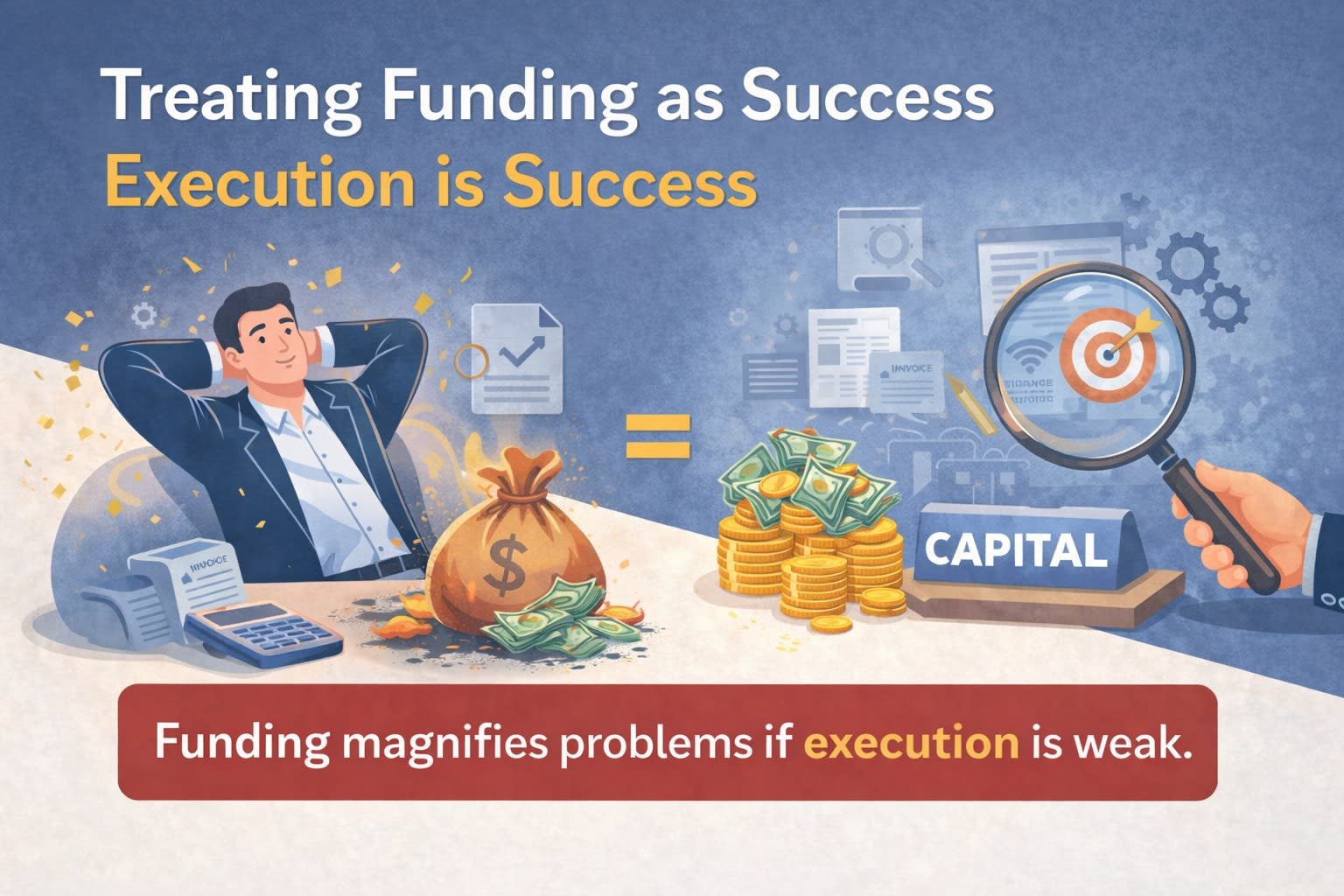
Funding is not success. Execution is.
Many early-stage founders relax after raising money, assuming the hard part is over. In reality, funding increases responsibility and scrutiny.
Capital amplifies execution. If systems, processes, and strategy are weak, funding magnifies problems, not solutions.
Startup Coach Perspective
At Startup Coach, we see funding as a tool, not a trophy. The best founders raise money with intention, timing, and clarity.
Early-stage funding should reduce risk, validate assumptions, and strengthen execution. When funding decisions are rushed or emotional, they often lock startups into paths that are hard to reverse.
Conclusion
Avoiding early-stage funding mistakes is just as important as raising capital itself. The goal is not to raise money quickly, but to raise it correctly.
By choosing the right funding type, preserving equity, managing burn, and aligning capital with execution, founders set their startups up for sustainable growth rather than short-term validation.
Funding should support your journey, not control it.
FAQs
Q- When should a startup raise its first round of funding?
A startup should raise funding after validating the problem and solution, not just the idea.
Q- Is raising too early worse than raising late?
Yes, raising too early often leads to unnecessary dilution and spending without clarity.
Q- How much equity should founders give up in the early stage?
There is no fixed number, but founders should aim to preserve as much equity as possible until valuation improves.
Q- Can the wrong investor hurt a startup?
Yes, misaligned investors can create pressure, conflict, and strategic misdirection.
Q- Is bootstrapping better than fundraising in the early stage?
For many startups, yes. Bootstrapping helps validate the model before introducing dilution and investor expectations.