How to Approach Angel Investors and Venture Capitalists
By Toishaa Soni · 10 November 2025
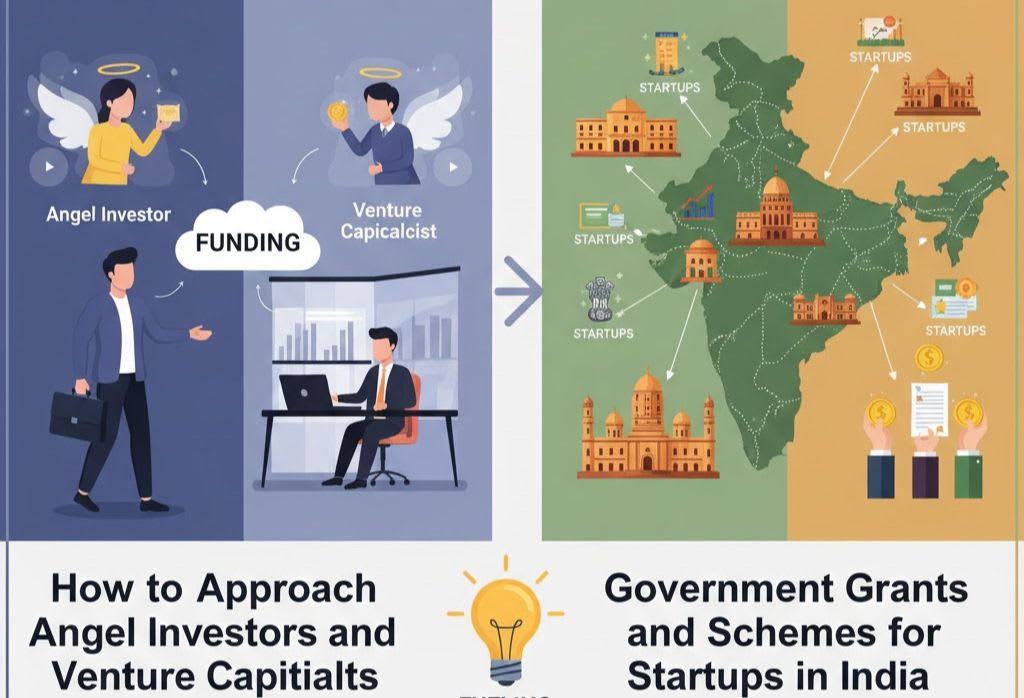
Learn how to approach angel investors and venture capitalists with confidence, the right timing, and a strong pitch strategy.
Every successful startup begins with an idea, but turning that idea into a thriving business often requires the right startup funding strategy. For early-stage founders, angel investors and venture capitalists are two of the most important sources of external capital.
However, approaching them is not just about sending a pitch deck or requesting a meeting. It is about knowing when to reach out, how to present your vision, and how to build relationships that last beyond a single funding round.
In this blog, we’ll help you understand how to approach angel investors and venture capitalists the right way with clarity, preparation, and confidence.
Understanding Angel Investors and Venture Capitalists
Before approaching investors, it is essential to understand who they are and how they operate.
Angel investors are typically high-net-worth individuals who invest their personal money in startups during the early stages. They often get motivated by both potential returns and a genuine interest in mentoring new entrepreneurs.
Venture capitalists, on the other hand, manage pooled funds from multiple investors and usually invest larger amounts in startups that have already shown some traction or growth potential. They are more structured and analytical and tend to focus on scalable businesses with strong teams and clear market opportunities.
While both angels and venture capitalists can provide funding, they differ in their approach, risk appetite, and level of involvement. Understanding this distinction helps you tailor your pitch accordingly.
When Should You Approach Investors?
Timing is everything. Approaching investors too early, before you have validated your idea, can weaken your chances. On the other hand, waiting too long might mean missing the right opportunity to scale.
You should consider approaching investors when you have:
1. A validated business idea with early customer feedback or traction
2. A minimum viable product or prototype that demonstrates potential
3. A clear business model that shows how you plan to generate revenue
4. A committed founding team capable of executing the vision
Investors are not just backing an idea; they are backing your ability to make it work. The more clarity and progress you can demonstrate, the stronger your pitch will be.
Preparing Before You Reach Out
Preparation builds confidence and credibility. Before contacting investors, make sure you have your fundamentals in place.
Create a strong pitch deck:
Keep it concise, ideally under 15 slides. It should include your problem statement, solution, market size, business model, traction, financial projections, and the investment you’re seeking.Know your numbers:
Investors will always test your understanding of key metrics such as revenue, customer acquisition cost, lifetime value, and burn rate.Build a compelling story:
Data tells investors what you do, but your story tells them why you do it. Your vision should inspire confidence and connect emotionally.Do your due diligence:
Be ready with incorporation documents, financial statements, and intellectual property details. Transparency builds trust.Refine your valuation expectations:
Unrealistic valuations are a major red flag. Ensure your valuation aligns with your traction and market potential.
How to Find the Right Investors
Not every investor is the right fit for your startup. Instead of reaching out randomly, focus on those whose interests, experience, and portfolio align with your domain. Here’s how to identify and connect with the right investors:
Research investor portfolios and look at startups they’ve funded before. If they’ve invested in similar sectors, they are more likely to understand your value proposition.
Use startup networks such as AngelList, LetsVenture, and LinkedIn to find relevant investors.
Leverage incubators and accelerators that have access to angel networks and venture capital firms.
Attend startup events and pitch competitions where personal interactions can lead to meaningful relationships.
Seek warm introductions from founders or mentors, as referrals increase your chances of being noticed.
The key is quality over quantity. A handful of well-matched investors is far more valuable than dozens of cold emails.
How to Approach and Pitch Investors Effectively
Once you’ve identified potential investors, the next step is crafting a strong approach.
1. Start with a personalized introduction:
Avoid generic messages. Mention why you admire their portfolio or how your startup aligns with their interests.
2. Be clear about what you’re asking for:
Whether you’re seeking seed funding or Series A investment, specify how much you’re raising and what you’ll use it for.
3. Keep your communication short and focused:
Your initial message should grab attention in the first few lines. A simple, crisp summary of your problem, solution, and traction works best.
4. Pitch confidently, not arrogantly:
Investors appreciate passion but expect professionalism. Be honest about your challenges and your achievements.
5. Show traction and momentum:
Even small wins, such as customer signups, partnerships, or pilot projects, help demonstrate growth potential.
6. Follow up respectfully:
If you don’t get a response, a polite follow-up after a week or two is fine. Avoid being pushy or impatient.
Approaching investors is about building relationships, not just raising money. Most of the successful founders start conversations months before they actually seek funding.
Common Mistakes to Avoid
Even great startups can lose investor interest if they make avoidable mistakes. Here are some to watch out for:
1. Overvaluing your startup without sufficient traction
2. Focusing only on funding instead of showing a long-term strategy
3. Ignoring investor feedback or becoming defensive during discussions
4. Not understanding your competition or market landscape
5. Failing to prepare legal and financial documents
6. Investors back founders who are coachable, transparent, and realistic.
Conclusion
Approaching angel investors and venture capitalists is as much about preparation as it is about persistence. You don’t just pitch your startup; you pitch your mindset, clarity, and execution ability. Start by understanding your business deeply, researching the right investors, and communicating your vision with confidence. Be data-driven but also human, because investors invest in people as much as in ideas.
If you’re a founder preparing for your first fundraising round, StartupCoaching.in offers expert mentorship, pitch deck reviews, and investor readiness programs designed to help you raise funds strategically and confidently.
If you’re a founder preparing for your first fundraising round and want to raise capital strategically, connect with our experts to get the right guidance and support.
FAQs
Q- What is the difference between angel investors and venture capitalists?
Angel investors use personal funds to invest in early-stage startups, while venture capitalists invest pooled money from institutions or individuals into more established startups.
Q- How do I know if my startup is ready for funding?
If you have a validated idea, early traction, a clear business model, and a committed team, you’re likely ready to approach investors.
Q- How should I contact investors for the first time?
Use a short, personalized email or message highlighting your value proposition, traction, and funding needs. Avoid sending long, generic messages.
Q- What do investors look for in a startup?
They look for a strong team, a scalable product, a large market opportunity, early traction, and clear financial projections.
Q- How can I increase my chances of getting funded?
Show measurable progress, be transparent about challenges, and build relationships with investors well before your funding round begins.