How to get Mudra Loan for Startup
By Toishaa Soni · 19 November 2025
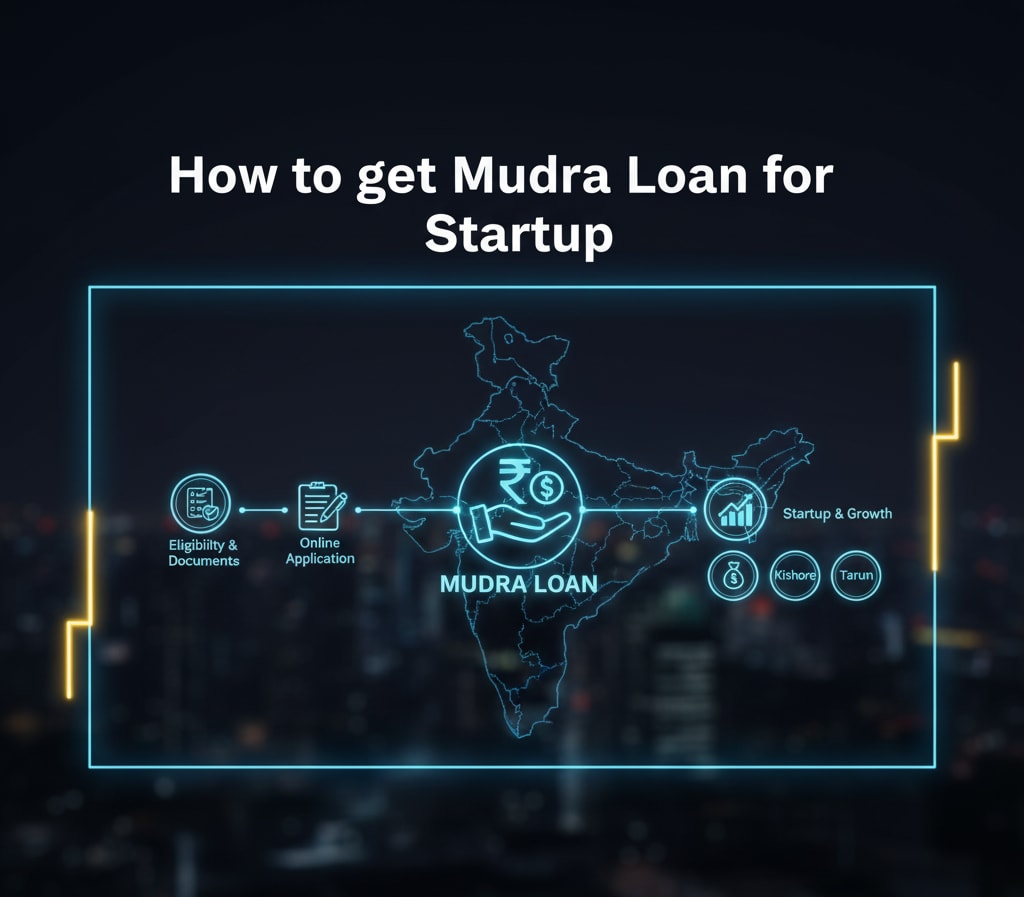
Learn how to get a Mudra loan for your startup with eligibility, documents, benefits and a simple step by step process.
India's startup ecosystem is growing rapidly today. The biggest challenge faced by small and new entrepreneurs is initial funding. Many people have great ideas, but lack of capital prevents their businesses from taking off.
Addressing this funding gap, the Government of India launched the Pradhan Mantri Mudra Yojana (PMMY), which provides collateral-free loans to micro and small-business owners across the country. The primary purpose of Mudra loans is to provide financial support to those looking to start their businesses on a small scale or expand existing ones.
Mudra loans are a powerful tool for startups because they are collateral-free, offer low interest rates, and have a flexible repayment tenure. In this blog, we'll explain in detail what a Mudra loan is, who can apply, the eligibility criteria, the documents required, and how you can obtain a loan step-by-step for better business growth.
What is a Mudra Loan?
The full form of MUDRA is Micro Units Development & Refinance Agency Ltd. It is an economic institution established by the government with the objective of providing timely and appropriate funding to micro units. Mudra loans are completely collateral-free, meaning the applicant does not have to pledge any property, gold, or documents. These loans are provided by almost all commercial banks, Regional Rural Banks (RRBs), cooperative banks, private banks, NBFCs, and Micro Finance Institutions (MFIs) in India.
Loans under this scheme are targeted to support individuals or small enterprises engaged in manufacturing, trading, food processing, the service sector, or agriculture-allied activities. The special thing about the Mudra loan under the Schemes for Startups in India is that the government has divided the loan categories according to the stages of the business so that every entrepreneur can get the right amount as per their need.
Objective of the Mudra Loan Scheme
The primary objective of the Mudra loan scheme is to strengthen India's microbusiness sector. The government believes that strengthening small businesses will increase employment, boost the economy, and encourage people to move towards self-employment.
The Mudra scheme also focuses on promoting financial inclusion. Many business owners borrowed money from informal moneylenders at high interest rates, preventing their businesses from remaining profitable. The Mudra loan provides them with a formal and affordable credit system with low interest rates, flexible repayment options, and a simple loan process.
Another objective of this scheme is to provide strong support to women entrepreneurs. Many banks also offer women-specific concessional interest rates on Mudra loans, making it easier for women to start a startup.
Types of Mudra Loans (2025 Update)
As of the 2025 update, there are four categories of Mudra loans, each selected based on the applicant's business stage.
The Shishu Loan, which is up to ₹50,000, is for new startups and micro-businesses just starting out. It's perfect for those looking to start a home-based business, such as tailoring, homemade food businesses, handicrafts, small vending, etc.
Kishor Loan, which ranges from ₹50,001 to ₹5 lakh, is offered to entrepreneurs with already established businesses who need investment in working capital, inventory, or infrastructure for expansion.
Tarun Loan, which ranges from ₹5 lakh to ₹10 lakh, is for businesses at an advanced stage of growth, such as upgrading machinery, purchasing new tools, expanding a workshop, etc.
From 2025, a new category has been introduced—Tarun Plus, with a limit of ₹20 lakh. It's offered to entrepreneurs who have previously taken out a Tarun category loan and made timely repayments. Tarun Plus is for businesses planning large-scale expansion, modernization, or technology upgrades.
Who can apply for a Mudra Loan?
Any individual or small enterprise in the manufacturing, trading, or service sectors can benefit from a Mudra loan. Agriculture-allied activities such as poultry, dairy, fisheries, and beekeeping are also eligible. The basic conditions for applying are:
Applicant must be over 18 years of age.
Banking history must be clean, with no loan defaults
Business plan or business must be viable.
This scheme is especially beneficial for those running a small business but are unable to access affordable and secure funding.
Required Documents for a Mudra Loan
Mudra loan documents are simple, and in the Shishu category, a loan can be obtained with minimal documentation. Applicants typically need to provide identity proof, address proof, a passport-size photo, business registration (if any), bank statements for the last 6–12 months, an equipment quotation, and a business plan.
For higher loan categories, the bank may also check the applicant's turnover and ITR.
Key Features & Benefits of a Mudra Loan
Mudra loans range from ₹50,000 to ₹20 lakh. Interest rates vary by bank but average 9.05% per annum. Repayment tenures range from 1 to 7 years, which is comfortable for small businesses.
Its biggest benefit is that it's collateral-free. The loan is guaranteed under the CGFMU (Credit Guarantee Fund for Micro Units).
Processing fees are zero for the Shishu and Kishor categories, and there's a nominal fee for the Tarun category. You can use this loan to expand your business, purchase machinery, build inventory, renovate your shop, or manage working capital. Special discounts are also available for women entrepreneurs.
How to Apply for a Mudra Loan?
1. Offline Application Process
You can visit your nearest bank branch, such as SBI, PNB, Bank of Baroda, HDFC, ICICI, RRB, or NBFC, and fill out the PMMY application form. Attach the documents and submit it. The bank will verify the form, and if everything is in order, the loan is approved within 7–10 days.
2. Online Application Process
Many banks now offer online portals for Mudra loans. You can fill out the form, upload documents, and easily track your status. The online process is fast, transparent, and convenient.
Mudra Card: Digital Working Capital Tool
After loan approval, the applicant receives a Mudra Card. This is a RuPay debit card linked to a working capital limit. Business owners can easily manage small daily expenses, stock purchases, fuel, transportation, or digital transactions. Using a Mudra Card makes businesses cashless and organized.
Role of Banks & NBFCs
Mudra loans are provided through Member Lending Institutions (MLIs) in India. Each bank conducts a credit appraisal based on its own policies. Loans are approved based on the applicant's repayment capacity, business turnover, bank statements, and financial discipline. Those with a strong banking history have a significantly higher chance of approval.
Conclusion
The Mudra Loan Scheme is a very powerful initiative for micro-entrepreneurs. Under this, you can get a collateral-free loan of up to ₹20 lakh, which is very helpful in business growth. If you want to start a startup or expand your existing business, Mudra Loan can be a smart and affordable funding option for you. With proper documents, a clear business plan, and a clean banking history, your loan approval can be easy.
If you want to start a startup or expand your business with the right funding approach, connect with our experts to get the right support.
FAQs
Q: Is business registration required for a Mudra Loan?
No, registration is not required in the Shishu category.
Q: Is collateral required?
No, Mudra Loan is completely collateral-free.
Q: Is there a subsidy on Mudra loans?
Generally speaking, no, but interest subsidies may be available in certain categories.
Q: What if the loan is rejected?
You can apply again after correcting the documents.
Q: Can you get more than one Mudra loan?
Yes, you can apply for a higher category after repaying the first loan on time.