NBFC vs Bank Business Loans: Which Is Better for Startups in India?
By Rohini Rajpoot · 13 February 2026
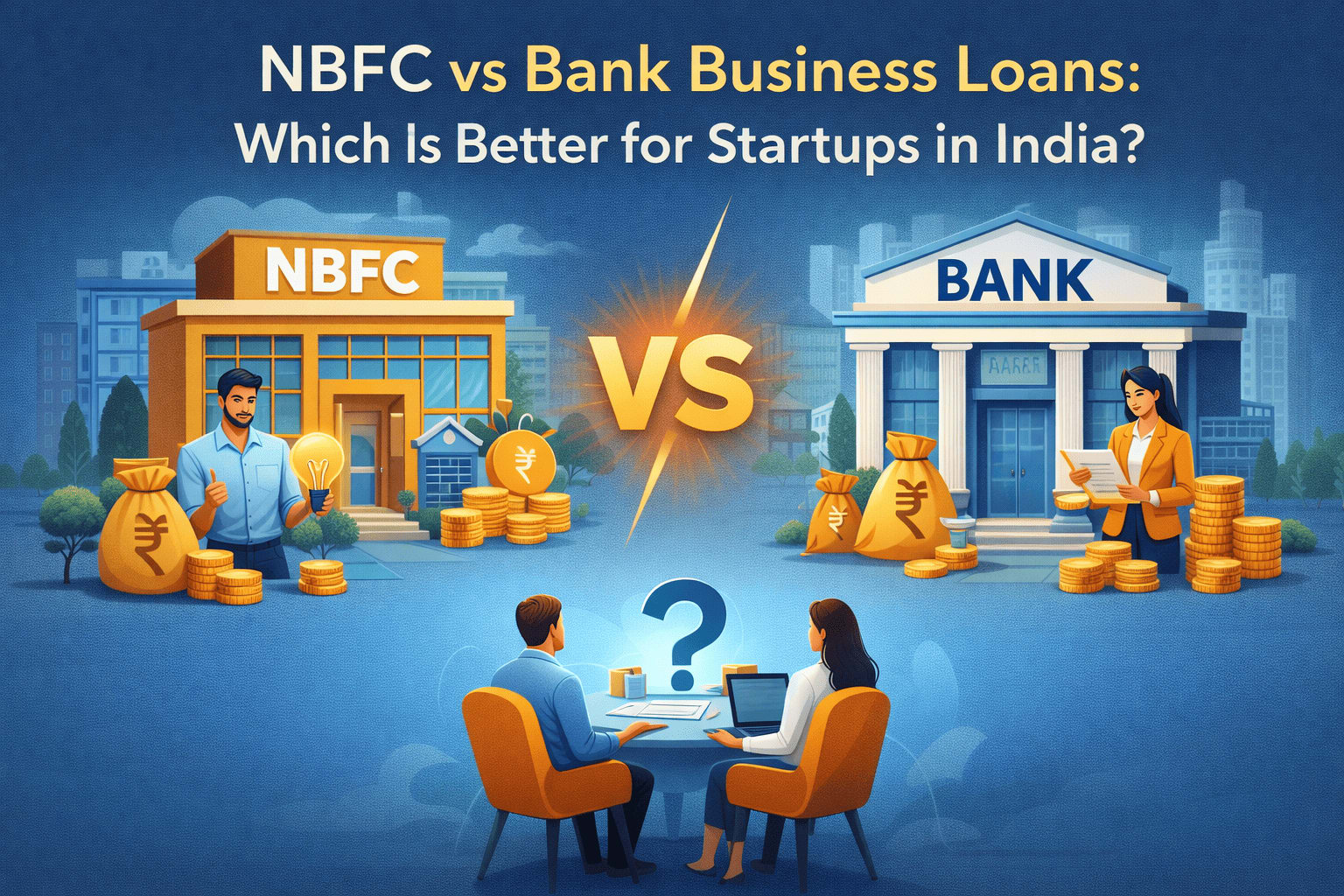
A clear comparison of NBFC and bank business loans to help Indian startups choose the right funding option based on stage, speed, and cost.
Access to capital is one of the biggest challenges for startups in India. While equity funding gets most of the attention, debt financing through business loans is often a faster and less dilutive option.
However, founders frequently face a critical decision: should you approach a traditional bank or a non-banking financial company (NBFC) for a business loan? Both options have advantages and trade-offs. The right choice depends on your startup’s stage, urgency, credit profile, and long-term financial strategy.
Let’s break it down clearly.
Understanding the Difference: NBFC vs Bank
Banks are traditional financial institutions regulated by the Reserve Bank of India. They typically offer lower interest rates but follow strict eligibility norms, documentation processes, and collateral requirements.
NBFCs, on the other hand, are financial institutions that provide credit but operate with more flexibility. Many NBFCs are digital-first, faster in processing, and more open to funding early-stage businesses with limited credit history.
Why NBFCs Often Work Better for Startups
For early-stage startups, speed and flexibility matter more than marginal differences in interest rates.
NBFCs generally offer faster approvals, often within 24 to 72 hours. The application process is usually digital, documentation requirements are lighter, and many NBFCs provide unsecured loans without collateral.
They also have a higher risk appetite compared to banks. Startups with shorter operational history, limited credit scores, or unconventional business models often find NBFCs more accessible.
However, this flexibility comes at a cost. Interest rates with NBFCs are typically higher, often ranging between 14 percent to 30 percent per annum depending on risk assessment.
NBFC loans are best suited for immediate working capital needs, short-term expansion, inventory purchases, or managing cash flow gaps.
Why Banks Are Better for Established Businesses
Banks generally offer lower interest rates, making them cost-effective in the long run. However, they follow stricter due diligence processes.
Most banks require a strong credit history, consistent revenue track record, audited financial statements, and often collateral. Approval timelines can extend to several weeks.
For startups that are already established, profitable, and have stable cash flows, bank loans become a better option due to lower borrowing costs.
If your startup has matured into a structured SME with clean books and a strong credit profile, a bank loan can significantly reduce financing expenses.
Key Differences at a Glance
NBFCs prioritize speed, flexibility, and accessibility. They are ideal for early-stage startups that need quick capital and may not qualify under strict banking norms.
Banks prioritize stability, documentation, and lower risk. They are ideal for established startups seeking larger loans at lower interest rates.
Which One Should a Startup Choose?
If your startup is in its early stage, has urgent capital needs, or lacks long credit history, NBFCs are generally more suitable. The higher interest rate may be justified by speed and accessibility.
If your startup has stable revenues, audited statements, and time to undergo longer approval cycles, banks offer lower-cost financing.
The decision ultimately depends on three factors
• Urgency of funds
• Strength of financial documentation
• Cost sensitivity versus speed priority
Startup Coach Perspective
Debt should support growth, not strain it. Founders often focus only on interest rates without evaluating approval speed, flexibility, and repayment structure.
At Startup Coach, we advise founders to align debt decisions with cash flow predictability and growth plans. Sometimes paying slightly higher interest for faster access to capital can unlock bigger opportunities. At other times, patience for lower-cost bank funding preserves margins in the long term.
The smarter approach is not choosing an NBFC or bank blindly, but choosing strategically based on your stage and business model.
Conclusion
Both NBFCs and banks serve important roles in India’s startup ecosystem. NBFCs offer speed, flexibility, and startup-friendly eligibility criteria, making them ideal for early growth phases. Banks offer lower interest rates and long-term cost efficiency for mature startups.
There is no universal winner. The better option is the one aligned with your startup’s financial health, urgency, and growth roadmap.
FAQs
Q: Are NBFC loans safe for startups?
Yes, NBFCs are regulated by the RBI and are legitimate financial institutions. Founders should compare terms carefully before borrowing.
Q: Why are NBFC interest rates higher than banks?
NBFCs take higher lending risks and offer faster approvals with flexible criteria, which leads to higher interest rates.
Q: Can early-stage startups get bank loans easily?
Usually not. Banks require strong credit history, stable revenue, and documentation, which early-stage startups may lack.
Q: Do NBFCs require collateral?
Many NBFCs offer unsecured loans, though terms vary based on risk assessment.
Q: Which option is better for short-term working capital?
NBFCs are generally better for short-term, urgent funding needs due to faster processing