Top Startup India Incubators List 2026: State-wise Innovation Hubs in India
By Rohini Rajpoot · 31 March 2026
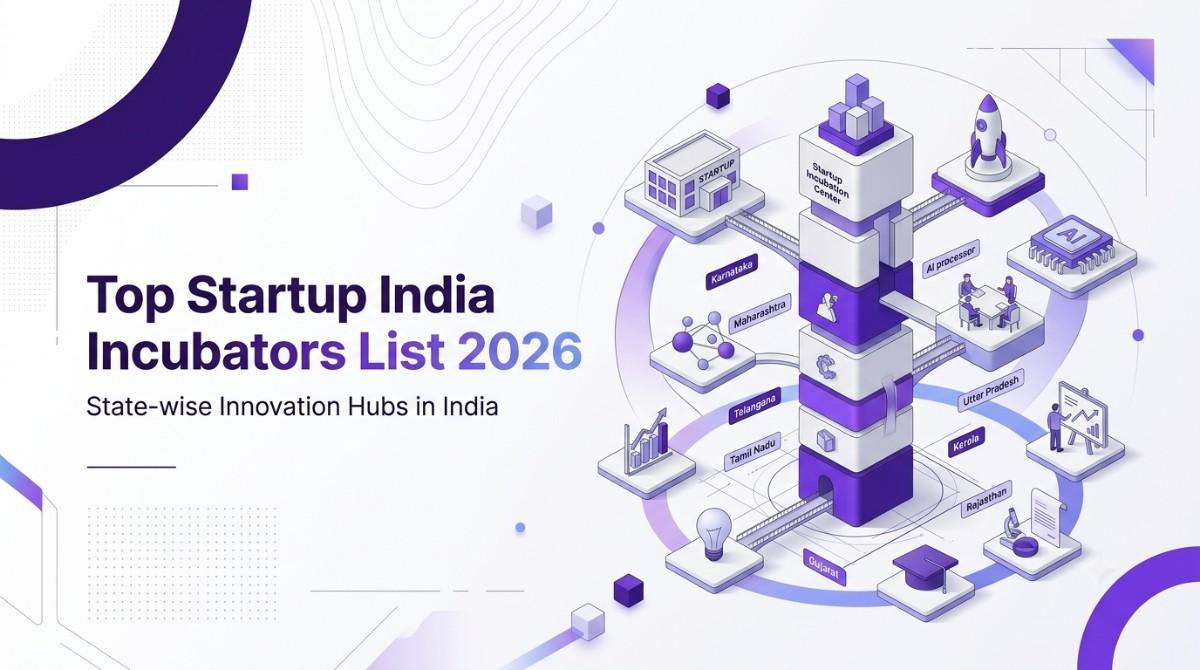
Explore top startup incubators in India 2026 with a complete state wise list of startup hubs government incubators and innovation centers.
India has rapidly evolved into one of the world’s most vibrant startup ecosystems, ranking among the top global destinations for innovation and entrepreneurship. Over the past decade, the country has seen the rise of thousands of startups across sectors such as fintech, edtech, healthtech, SaaS, and deep technology. At the core of this transformation lies a strong support infrastructure built around startup incubators in India.
Startup incubators act as the backbone of early-stage entrepreneurship by providing guidance, funding access, mentorship, and infrastructure to budding founders. With strong support from government initiatives like Startup India, Atal Innovation Mission, and MeitY schemes, the number of incubation centers in India has grown significantly across all states.
In this blog, we present a state-wise Startup India incubator list for 2026, covering top government incubators, private accelerators, and emerging startup hubs in India. Whether you are an aspiring entrepreneur or an early-stage founder, this guide will help you understand where to start and how to choose the right incubator.
What Are Startup Incubators?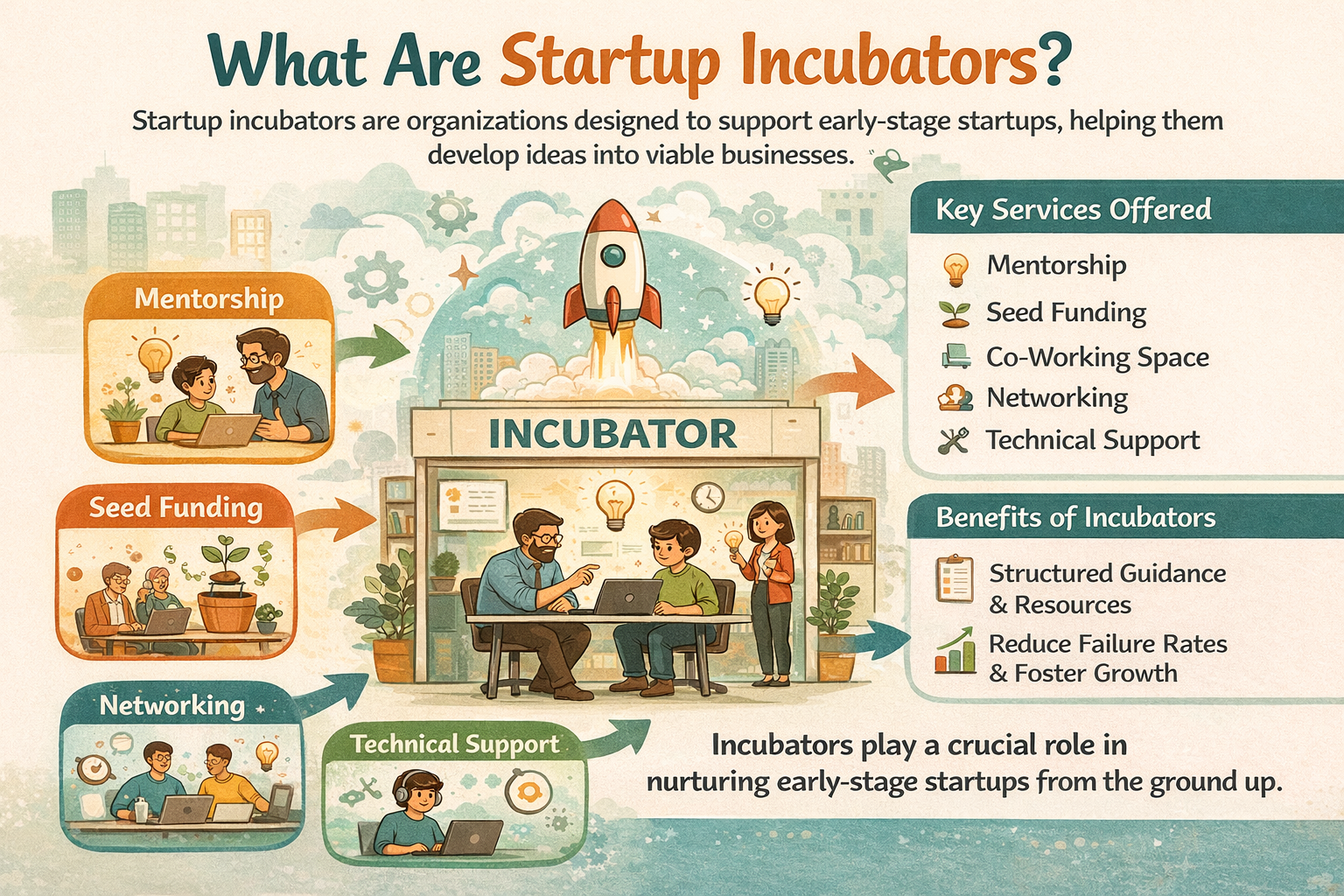 Startup incubators are organizations designed to support early-stage startups, particularly those in the idea or prototype stage. Their primary objective is to nurture startups until they become viable, scalable businesses.
Incubators provide a wide range of services, including mentorship, seed funding, co-working space, networking opportunities, and technical support. Unlike accelerators, which focus on scaling already established startups, incubators work closely with founders from the ground up.
The role of incubators in India has become increasingly important as more individuals are choosing entrepreneurship over traditional career paths. With structured guidance and support, incubators help reduce startup failure rates and improve long-term success.
Why Startup Incubators Matter in India
The rise of startup hubs in India is directly linked to the expansion of incubation centers. These incubators not only support startups but also contribute to the broader economy.
Firstly, incubators promote innovation by encouraging individuals to experiment with new ideas and technologies. They provide a safe environment where founders can test their concepts without significant financial risk.
Secondly, incubators play a major role in job creation. Successful startups often generate employment opportunities, contributing to economic growth.
Thirdly, incubators help bridge the gap between academia and industry. Many incubation centers are associated with institutions like IITs and IIMs, allowing startups to leverage research and technical expertise.
Finally, incubators support regional development by expanding into Tier-2 and Tier-3 cities. This ensures that innovation is not limited to metro cities but spreads across the country.
Government Support for Startup Incubators in India
The Indian government has been instrumental in building a strong incubation ecosystem. Several initiatives have been launched to strengthen government incubators in India and provide financial and infrastructural support.
1. Startup India Initiative
Launched in 2016, Startup India aims to promote entrepreneurship by offering tax benefits, funding opportunities, and policy support. It also plays a key role in building a network of incubators across the country.
2. Startup India Seed Fund Scheme (SISFS)
This scheme provides funding support of up to ₹50 lakh to startups through recognized incubators. It helps startups move from prototype development to commercialization.
3. Atal Innovation Mission (AIM)
Under NITI Aayog, AIM supports Atal Incubation Centres (AICs) across India. These centers focus on innovation and entrepreneurship at the grassroots level.
4. MeitY TIDE 2.0 Scheme
This initiative focuses on technology startups, particularly in areas like AI, IoT, and blockchain. It supports multiple incubators across India.
5. MSME Incubation Scheme
Designed for micro, small, and medium enterprises, this scheme encourages innovation and supports startups with funding and technical assistance.
These initiatives have significantly increased the number and quality of incubation centers in India, making it easier for entrepreneurs to access resources and support.
State-wise Startup Incubators in India (2026)
India’s startup ecosystem is diverse and geographically distributed. Below is a detailed state-wise list of top incubators.
Karnataka – India’s Silicon Valley
Karnataka, particularly Bengaluru, is widely regarded as the startup capital of India. The state hosts a large number of incubators, accelerators, and venture capital firms.
Top Incubators:
NSRCEL – IIM Bangalore
C-CAMP (Centre for Cellular & Molecular Platforms)
Axilor Ventures
Deshpande Startups, Hubballi
Karnataka’s strength lies in its robust IT infrastructure, access to global talent, and strong investor network. It is a preferred destination for startups in SaaS, AI, and deep-tech.
Maharashtra – Financial and Innovation Hub
Maharashtra, with cities like Mumbai and Pune, is a major startup hub.
Top Incubators:
SINE – IIT Bombay
Venture Center, Pune
Zone Startups India
Riidl – Somaiya Vidyavihar
The state excels in fintech, healthcare, and enterprise technology startups. Mumbai’s financial ecosystem provides easy access to investors.
Delhi NCR – Policy and Corporate Ecosystem
Delhi NCR has emerged as a powerful startup ecosystem due to its proximity to government bodies and corporate headquarters.
Top Incubators:
IIT Delhi Incubation Centre
India Accelerator, Gurgaon
NASSCOM Startup Warehouse, Noida
Amity Innovation Incubator
Delhi NCR is ideal for startups looking to scale quickly and access policy support.
Telangana – Rapidly Growing Startup Ecosystem
Hyderabad has become one of India’s fastest-growing startup hubs.
Top Incubators:
T-Hub
WE Hub
IIIT Hyderabad Incubator
Telangana’s startup-friendly policies and strong infrastructure have made it a preferred destination for entrepreneurs.
Tamil Nadu – Deep-Tech and Manufacturing Hub
Tamil Nadu has a strong focus on industrial and deep-tech innovation.
Top Incubators:
IIT Madras Incubation Cell
Villgro
Forge Accelerator
The state is known for its strength in manufacturing, hardware, and SaaS startups.
Gujarat – Emerging Innovation Hub
Gujarat is gaining recognition as a startup-friendly state.
Top Incubators:
CIIE.CO – IIM Ahmedabad
GUSEC
iCreate
The state promotes innovation in fintech, clean energy, and manufacturing sectors.
Uttar Pradesh – Fastest Growing Startup Ecosystem
Uttar Pradesh is rapidly emerging as a startup hub due to strong government initiatives.
Top Incubators:
IIT Kanpur SIIC
AKTU Incubation Center
NASSCOM Noida
Cities like Noida and Lucknow are becoming key startup destinations.
Kerala – Inclusive and Innovation-Driven Ecosystem
Kerala is known for its supportive startup policies.
Top Incubators:
Kerala Startup Mission (KSUM)
Maker Village
Technopark TBI
The state focuses on social innovation, IoT, and AI startups.
Andhra Pradesh – Growing Startup Landscape
Top Incubators:
AIC Andhra Pradesh
RISE Incubation Centre
AP Innovation Society
The state promotes entrepreneurship in rural and urban areas.
West Bengal – Eastern India’s Innovation Hub
Top Incubators:
IIM Calcutta Innovation Park
Webel Incubation Centre
TCG CREST
Kolkata is emerging as a center for AI, analytics, and fintech startups.
Rajasthan – Expanding Startup Ecosystem
Top Incubators:
Bhamashah Techno Hub
iStart Rajasthan
Poornima Incubation Centre
Rajasthan is focusing on digital startups and youth entrepreneurship.
Madhya Pradesh – Central India Growth Hub
Top Incubators:
AIC RNTU Bhopal
IIM Indore Incubator
Atal Incubation Centre MP
The state promotes startups in agriculture and healthcare.
Haryana – Corporate-Driven Startup Hub
Top Incubators:
India Accelerator
Startup Warehouse Gurgaon
BML Munjal University Incubator
Haryana benefits from its proximity to Delhi and corporate ecosystem.
14.. Punjab – Emerging Startup Ecosystem
Top Incubators:
Punjab Startup Mission
STPI Mohali
LPU Incubator
Punjab focuses on agritech and manufacturing startups.
North-East India – Emerging Innovation Regions
States like Assam, Meghalaya, and Tripura are building startup ecosystems.
Key Incubators:
Assam Startup – The Nest
STPI Centres
Regional incubation programs
Government initiatives are helping expand entrepreneurship in these regions.
Types of Incubation Centers in India
India offers a diverse range of incubation models:
Government Incubators: Supported by government schemes and grants.
Academic Incubators: Hosted by universities like IITs and IIMs, offering research-driven support.
Corporate Incubators: Backed by large corporations focusing on innovation partnerships.
Private Accelerators: Provide funding, mentorship, and rapid growth support.
Benefits of Joining Startup Incubators
Joining a startup incubator offers multiple advantages:
Access to funding and grants
Expert mentorship and guidance
Networking with investors and industry leaders
Reduced risk of failure
Startups that join incubators have a higher probability of success compared to those that operate independently.
How to Choose the Right Incubator
Choosing the right incubator is crucial for startup success.
Industry Focus: Select an incubator aligned with your domain.
Location: Choose a location that offers access to markets and talent.
Funding Support: Check if the incubator provides seed funding or connects you to investors.
Mentorship: Evaluate the quality of mentors and advisors.
Alumni Success: Look at past startups incubated and their success stories.
Challenges Faced by Startup Incubators in India
Despite growth, incubators face challenges:
Limited funding in smaller regions
Lack of experienced mentors
Infrastructure gaps in Tier-3 cities
Difficulty in scaling startups globally
Addressing these challenges is crucial for strengthening the ecosystem.
Future of Startup Incubators in India
The future of startup incubators in India looks promising:
Expansion into Tier-2 and Tier-3 cities
Increased focus on AI, deep-tech, and sustainability
Rise of women-led incubators
Stronger global collaborations
Growth of sector-specific incubators
India is expected to become a global leader in innovation and entrepreneurship.
Conclusion
The growth of startup incubators in India has transformed the country into a thriving innovation hub. With strong government support, a growing number of incubation centers, and increasing investor interest, India’s startup ecosystem is set to scale new heights in 2026.
From Bengaluru and Delhi to emerging regions like the North-East, incubators are empowering entrepreneurs across the country. For aspiring founders, choosing the right incubator can be the key to turning ideas into successful businesses.
FAQs
Q: What are startup incubators in India?
They are organizations that support early-stage startups with mentorship, funding, and resources.
Q: How many incubators are there in India?
India has over 400+ incubators across different states.
Q: What is the Startup India Seed Fund Scheme?
It is a government initiative that provides funding to startups through incubators.
Q: Which city is best for startups in India?
Bengaluru, Delhi NCR, and Hyderabad are top startup hubs.
Q: Are incubators free in India?
Some government incubators are free, while private ones may take equity or fees.