Term Sheet Clauses Every Founder Should Negotiate
By Rohini Rajpoot · 22 July 2026
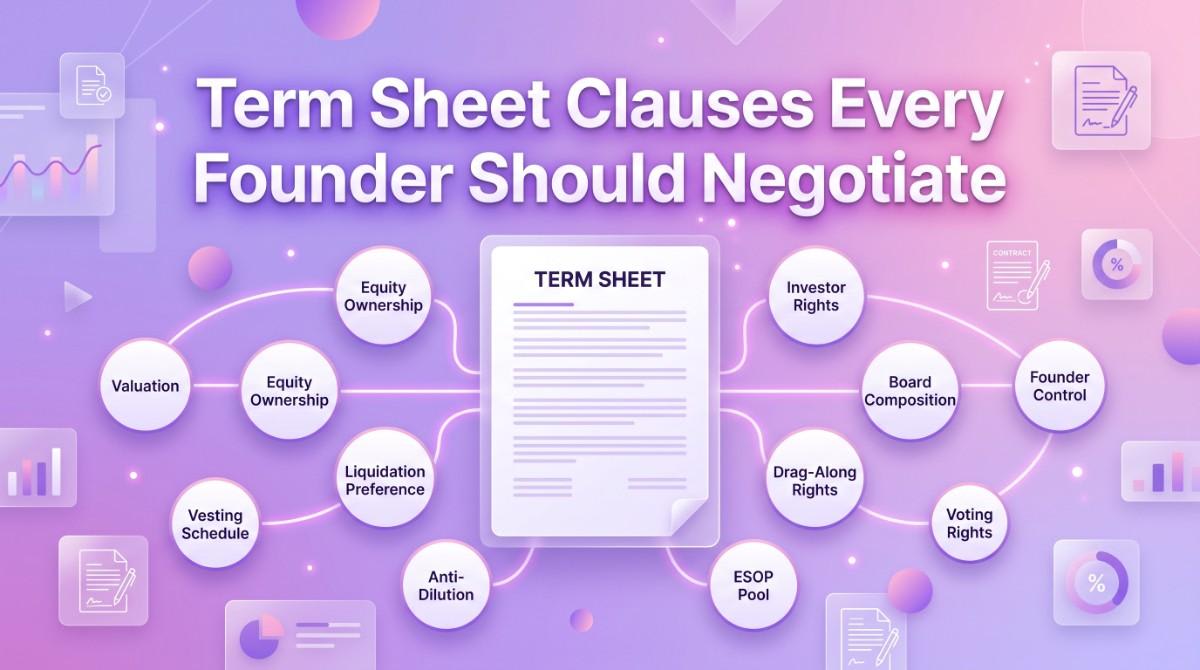
Discover essential term sheet clauses every founder should negotiate to protect their interests and maintain control in startup investments. Learn about valuation, liquidation pref
A term sheet might only run a few pages, but it sets the tone for everything that comes after it. The valuation gets the attention, sure, but the clauses buried further down, liquidation preference, anti-dilution protection, board rights, are the ones that actually decide how much control you keep and what happens if things go sideways.
Most founders sign their first term sheet without fully understanding half of it. This guide walks through the clauses that matter most, what they mean in plain language, and where founders actually have room to negotiate.
What Is a Startup Term Sheet?
A startup term sheet is a short document that lays out the proposed terms of an investment before the lawyers get involved. It's not the final agreement, but it's the blueprint everyone works from once you move into legal documentation.
A typical investor term sheet covers:
Valuation, both pre-money and post-money
The investment amount and equity being offered in exchange
Rights the investor is asking for, like board seats or pro-rata rights
Governance terms that affect how decisions get made going forward
Think of it as the handshake before the paperwork. Get the handshake wrong, and the paperwork just formalizes a bad deal.
Why Is a Term Sheet Important?
A term sheet does more than set a price. It becomes the foundation for the full startup investment agreement, so anything vague or unfavorable here tends to carry through to every document that follows.
It sets expectations for both sides before anyone spends money on lawyers.
It reduces the odds of surprises during due diligence.
It acts as a roadmap for the shareholders' agreement and other legal paperwork.
It gives founders their real opportunity to negotiate, since terms only get harder to change later.
Is a Term Sheet Legally Binding?
Mostly, no. Most of a term sheet is intentionally non-binding, meaning either side can walk away before the final agreements are signed. That said, a few sections usually are binding, and founders need to know which ones.
Confidentiality clause: keeps deal terms and company information private. This is almost always binding.
Exclusivity or no-shop clause: stops founders from talking to other investors for a set period, often 30 to 60 days. This one is binding too, and it's worth negotiating the timeframe down if you can.
Governing law: specifies which jurisdiction's laws apply if there's ever a dispute.
Everything else, valuation, equity split, board structure, is generally a proposal until the final legal documents are signed.
7 Term Sheet Clauses Every Founder Should Negotiate
1. Valuation and Equity Offered
 This is the number everyone focuses on, and for good reason. But it's worth knowing the difference between pre-money and post-money valuation, since investors sometimes present numbers in a way that sounds better than it actually is. Pre-money is what the company is worth before the new investment goes in. Post-money is pre-money plus the new capital. Confusing the two can lead to founders giving away more equity than they think they are.
2. Liquidation Preference
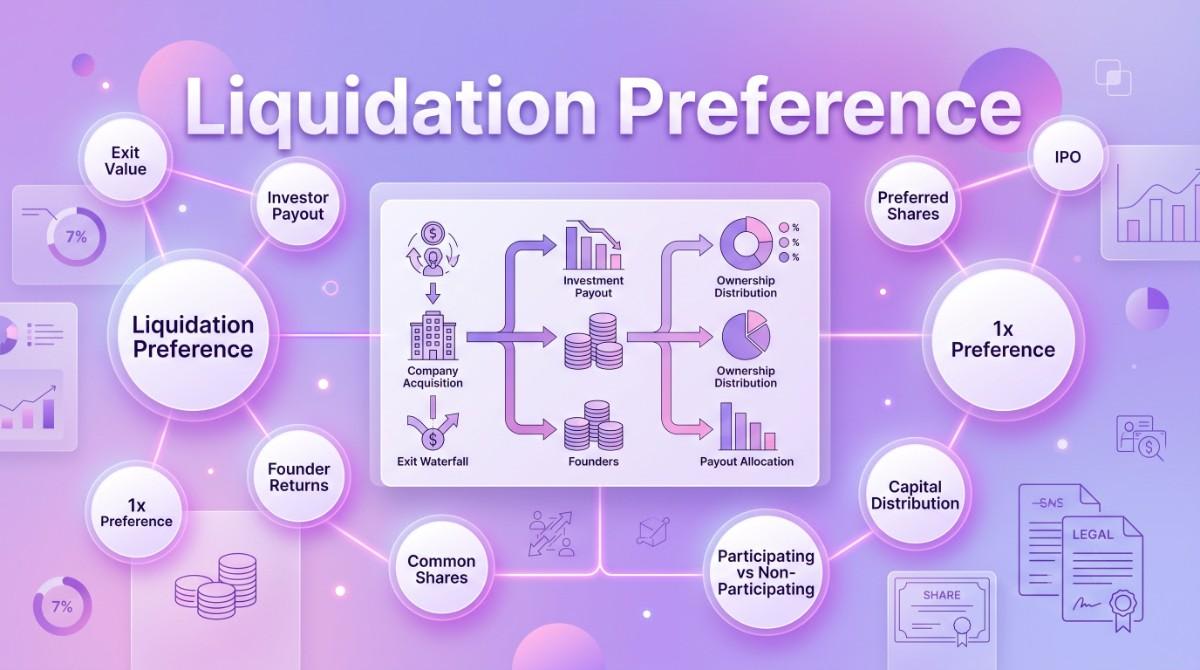 Liquidation preference determines who gets paid first, and how much, if the company is sold or shut down. A 1x non-participating preference is generally considered fair and standard. Anything higher, like 2x, or "participating" preferences that let investors double dip, can quietly wipe out founder returns even in a decent exit. This is one of the clauses worth pushing back on hardest.
3. Anti-Dilution Clause
 Anti-dilution protection kicks in if a future funding round happens at a lower valuation than the current one, sometimes called a down round. It protects the investor's ownership percentage by adjusting their share price retroactively. There are two common types: full ratchet, which is aggressive and heavily favors investors, and weighted average, which is more balanced and far more common in healthy deals. If you see full ratchet on your term sheet, that's a flag to negotiate.
4. Board Rights
 Investors often ask for a board seat as part of the deal, sometimes more than one depending on the round size. Board rights determine who has a formal say in major company decisions, from hiring executives to approving future funding rounds. Founders should think carefully about how many seats they're giving up and what voting thresholds apply, since losing board control can mean losing control of the company itself, even while still holding majority equity.
5. Pro-Rata Rights
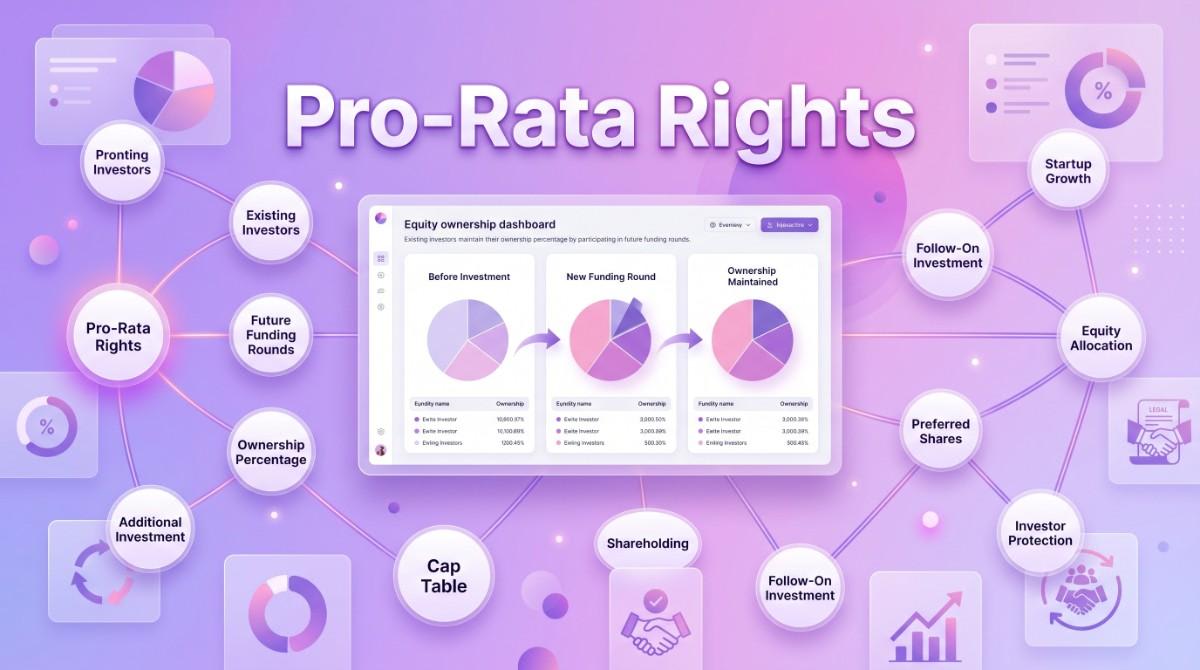 Pro-rata rights let an investor maintain their ownership percentage in future funding rounds by investing more money as the company raises again. It's a completely standard ask and usually reasonable, since it rewards early believers in the company. Founders just need to make sure these rights don't stack up across too many investors in a way that crowds out room for new investors later.
6. Founder Vesting
 It might feel strange to vest equity in your own company, but investors almost always require it. Founder vesting ties your ownership to staying with the company over time, typically across four years with a one year cliff. It protects the company (and your co-founders) if someone leaves early. This clause is close to non-negotiable in most deals, but the schedule and cliff length sometimes have a little room to move.
7. Exit and Control Clauses
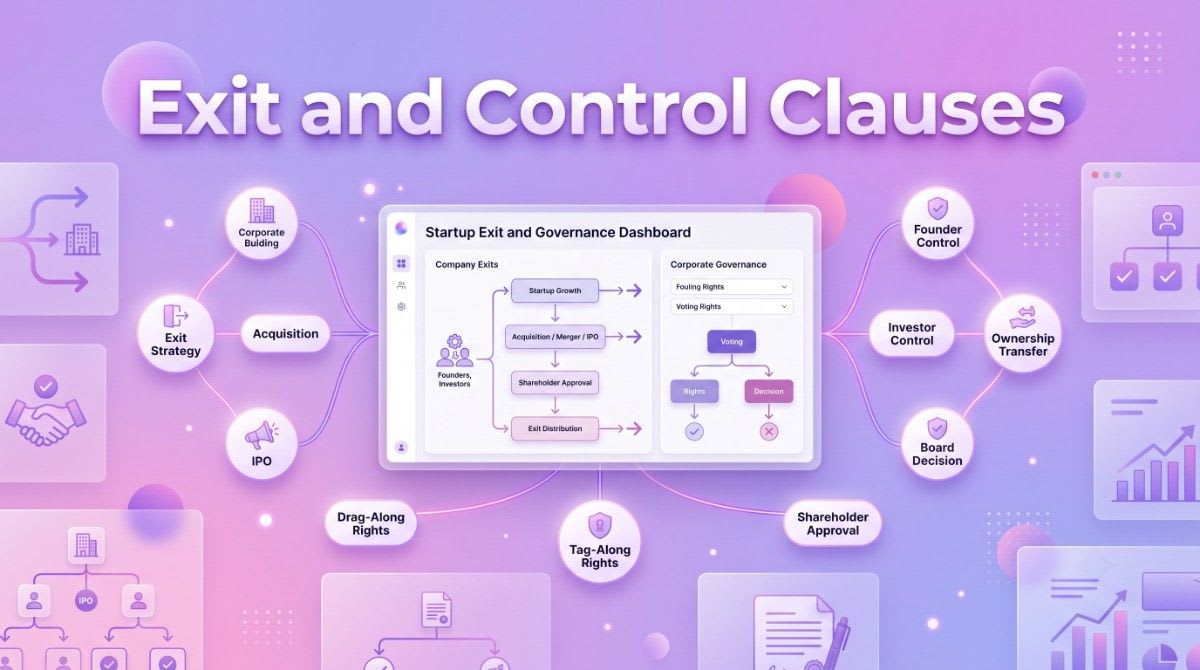 A few clauses come into play specifically around an exit or sale of the company.
Drag-along rights let majority shareholders force minority shareholders to go along with a sale.
Tag-along rights let minority shareholders join a sale on the same terms as majority shareholders.
Protective provisions give investors veto power over specific major decisions, like raising new debt or selling the company.
These clauses rarely come up day to day, but they matter enormously in the moment they're actually used.
Should Founders Negotiate Every Clause?
Not every clause deserves the same fight. Some terms, like founder vesting or a standard 1x liquidation preference, are close to market standard and pushing too hard on them can cost you goodwill without much upside. Others, like liquidation preference multiples, full ratchet anti-dilution, or an unusually large board seat ask, are worth negotiating firmly.
A good rule of thumb: spend your negotiating energy on clauses that affect control and downside protection, not just the ones that are easiest to understand. And bring in an experienced startup lawyer before you sign anything. The cost of a legal review is small compared to the cost of a bad clause you didn't catch.
What Happens After Signing a Term Sheet?
Signing the term sheet isn't the finish line, it's closer to the starting gun for the next phase.
Due diligence: investors dig into your financials, legal history, cap table, contracts, and team.
Legal documentation: lawyers draft the full set of binding agreements based on the term sheet.
Shareholders' Agreement (SHA): spells out rights and obligations of all shareholders in detail.
Share Subscription Agreement (SSA): governs the actual issuance and purchase of new shares.
Closing the investment: funds are transferred and the new cap table becomes official.
This process usually takes anywhere from a few weeks to a couple of months, depending on how complex the deal and the due diligence turn out to be.
Common Mistakes Founders Make While Reviewing a Term Sheet
Focusing Only on Valuation
A high valuation with a harsh liquidation preference can leave founders worse off than a lower valuation with clean terms. Valuation is just one input, not the whole picture.
Ignoring Investor Control Rights
Board seats, veto rights, and protective provisions can shift real control away from founders, even when the equity split still looks founder friendly on paper.
Accepting Unfavorable Liquidation Preferences
Founders sometimes accept 2x or participating preferences without realizing how much of an exit that eats into. It's worth running the numbers on a few exit scenarios before agreeing.
Overlooking Anti-Dilution Clauses
Full ratchet anti-dilution rarely comes up in good times, but it can be brutal in a down round. Founders who skip past this clause often regret it later.
Not Consulting Legal Experts
Trying to save on legal fees at this stage is one of the most expensive mistakes a founder can make. A lawyer who works with startups regularly will catch things a founder simply won't.
Best Practices Before Signing an Investor Term Sheet
Read and understand every clause, not just the valuation and check size.
Negotiate strategically, focusing energy on the terms that affect control and downside risk.
Protect founder ownership by watching dilution, vesting, and liquidation terms closely.
Think beyond valuation to the long term relationship you're entering with this investor.
Bring in experienced legal and financial advisors before you sign anything.
Conclusion
A startup term sheet is much more than a funding document. It shapes founder control, investor relationships, and the company's future long after the ink dries. Don't let valuation be the only number you're paying attention to. Take the time to understand liquidation preference, anti-dilution clauses, board rights, pro-rata rights, and founder vesting before you sign anything, and get an experienced advisor to walk through the full startup investment agreement with you. The terms you negotiate now are the ones you'll live with for years.
Frequently Asked Questions
1. What is a startup term sheet?
It's a non-binding document that outlines the proposed terms of an investment, including valuation, equity offered, and investor rights, before formal legal agreements are drafted.
2. Is a term sheet legally binding?
Most of it isn't, but sections like confidentiality and exclusivity usually are binding, even while the core deal terms remain open for negotiation.
3. What is liquidation preference?
It's a clause that determines who gets paid first, and how much, when a company is sold or liquidated, typically giving investors priority over common shareholders.
4. What is an anti-dilution clause?
It protects investors from losing value if a future funding round happens at a lower valuation, by adjusting their effective share price through a formula.
5. Should founders negotiate every clause?
No. Some clauses are close to market standard, like founder vesting. Others, like liquidation preference multiples or anti-dilution type, are worth negotiating carefully.
6. What happens after signing a term sheet?
The company moves into due diligence, followed by drafting the shareholders' agreement and share subscription agreement, before the investment officially closes.