Top Indian Startups That Secured Funding in 2026
By Toishaa Soni · 11 May 2026
Explore top Indian startups funded in 2026 across AI, fintech, and SaaS. Discover key funding trends and investor insights.
The Indian startup ecosystem has entered 2026 with sturdy momentum. And honestly? The numbers back it up. Indian startups raised $11.7 billion in FY26, a 20% increase over FY25.
India now holds its place as the world's fourth-largest tech startup funding market, sitting right behind the US, UK, and China. That is not a small thing.
The current funding environment in 2026 shows a fundamental shift from the earlier funding boom period because investors now exercise greater judgement in selecting startups to support. Investors believe in new ideas, yet they increased their funding to early-stage companies by 33%, which brought their total investment to $4.8 billion. The majority of venture capital funding in India continues to go to AI, fintech, SaaS and on-demand services. The standard has advanced in all industries now.
Which Indian startups received funding during 2026 because they became the top performers? The complete financial details are provided here.
Top Indian Startups That Raised Funding in 2026
1. Neysa Networks – $1.2 Billion (Series B)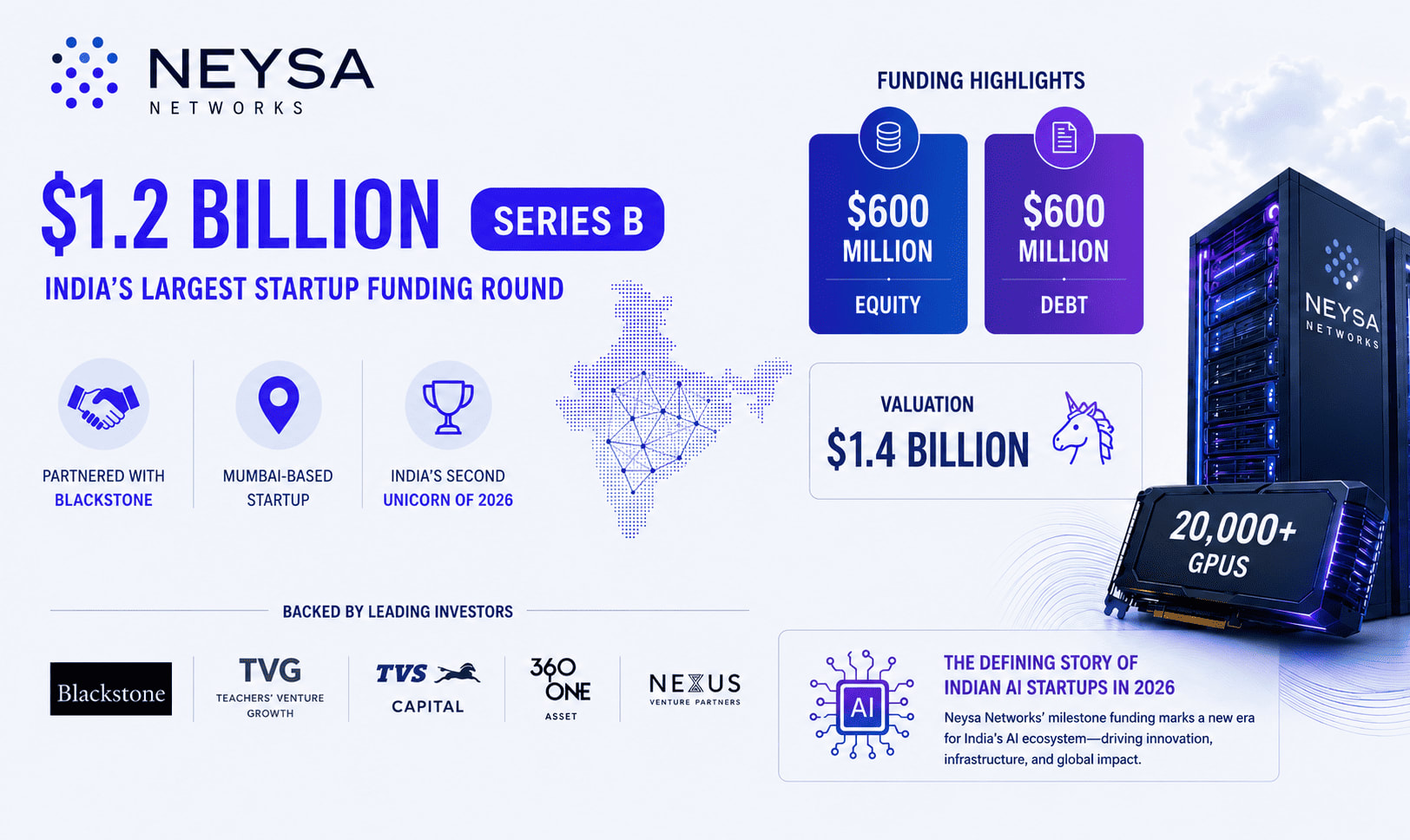
The Neysa Networks funding round became India's largest startup funding round in the year after the company secured $1.2 billion through its partnership with Blackstone, which included Teachers' Venture Growth, TVS Capital, 360 ONE Asset and Nexus Venture Partners as additional investors. The Mumbai-based startup received a valuation of $1.4 billion through the funding round, which comprised $600 million in equity and $600 million in debt, making it India's second unicorn of 2026.
Neysa develops GPU-powered cloud infrastructure to support businesses, research organisations, and government institutions in India who require AI model training capabilities. The plan aims to establish a computing foundation for the country, which includes deploying more than 20,000 GPUs to establish the necessary infrastructure for AI competition on the global stage. The defining story of Indian AI startups in 2026 revolved around this development.
2. KreditBee – $280 Million (Series E)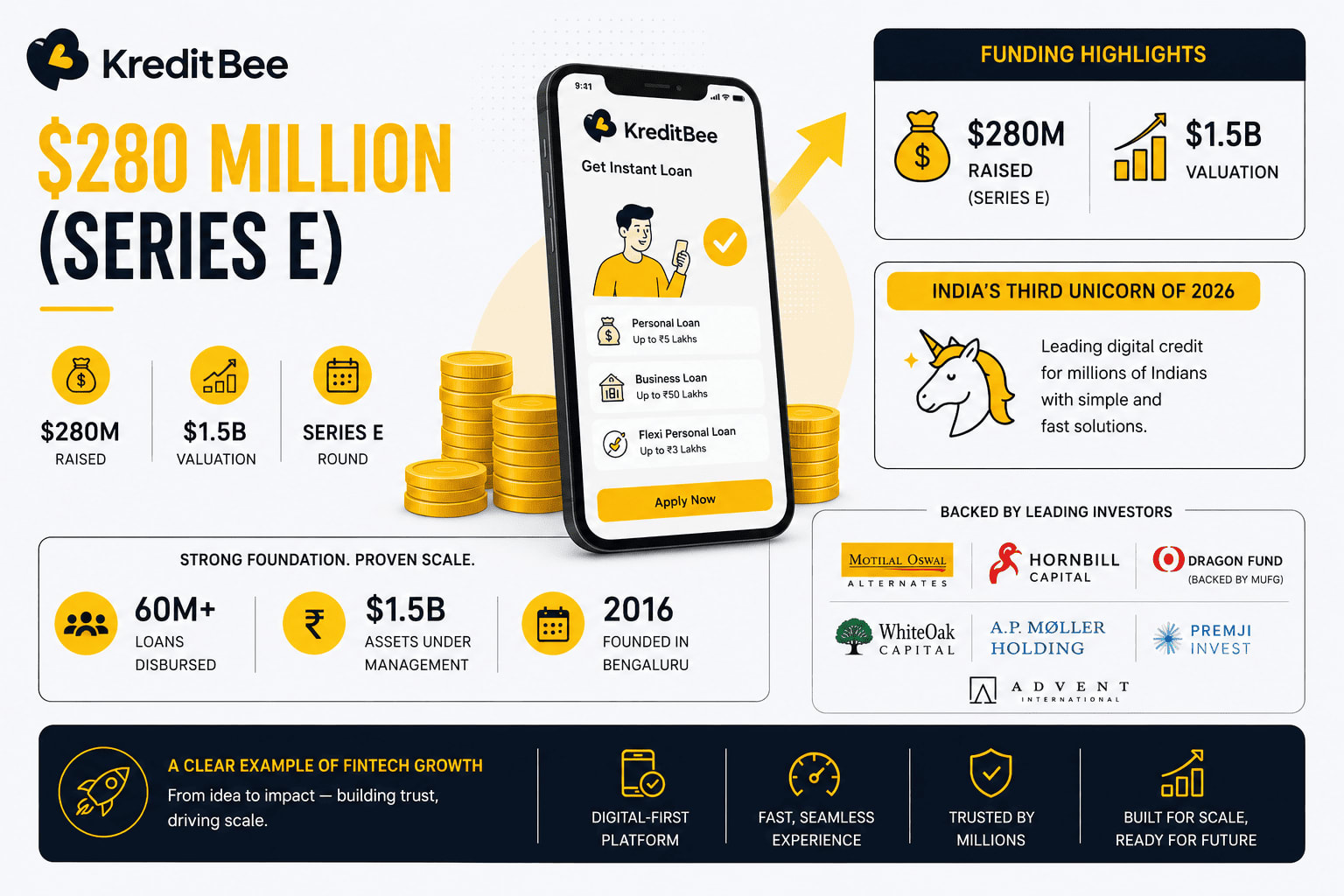
KreditBee raised $280 million in April 2026, hitting a $1.5 billion valuation and becoming India's third unicorn of the year.
The Bengaluru-based fintech startup was backed by Motilal Oswal Alternates, Hornbill Capital, Dragon Fund (backed by MUFG), WhiteOak Capital, A.P. Moller Holding, Premji Invest, and Advent International. Founded in 2016, KreditBee has disbursed over 60 million loans and manages nearly $1.5 billion in assets. This is one of the clearest examples of fintech startup funding India producing a genuine, scaled business and not just a well-funded one.
3. OpenFX – $94 Million (Series A)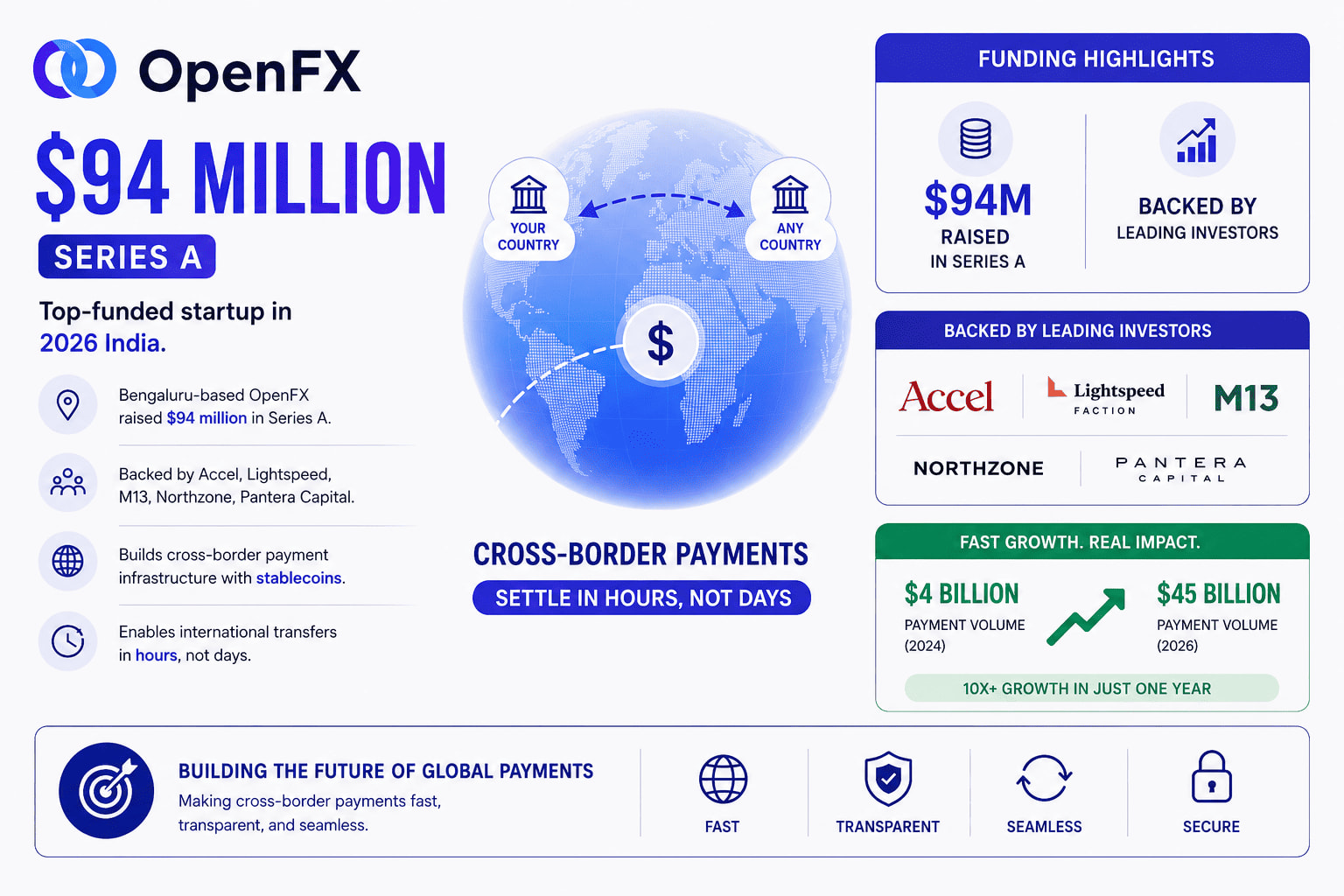
OpenFX quietly became one of the most talked-about startups funded in 2026 India.
The Bengaluru-based startup raised $94 million in a Series A backed by Accel, Lightspeed Faction, M13, Northzone, and Pantera Capital. OpenFX builds cross-border payment infrastructure using stablecoins, making international transfers settle in hours rather than the usual two to five business days. In one year, its annualised payment volume jumped from $4 billion to $45 billion. That kind of growth does not happen by accident.
4. Rocketlane – $60 Million (Series C)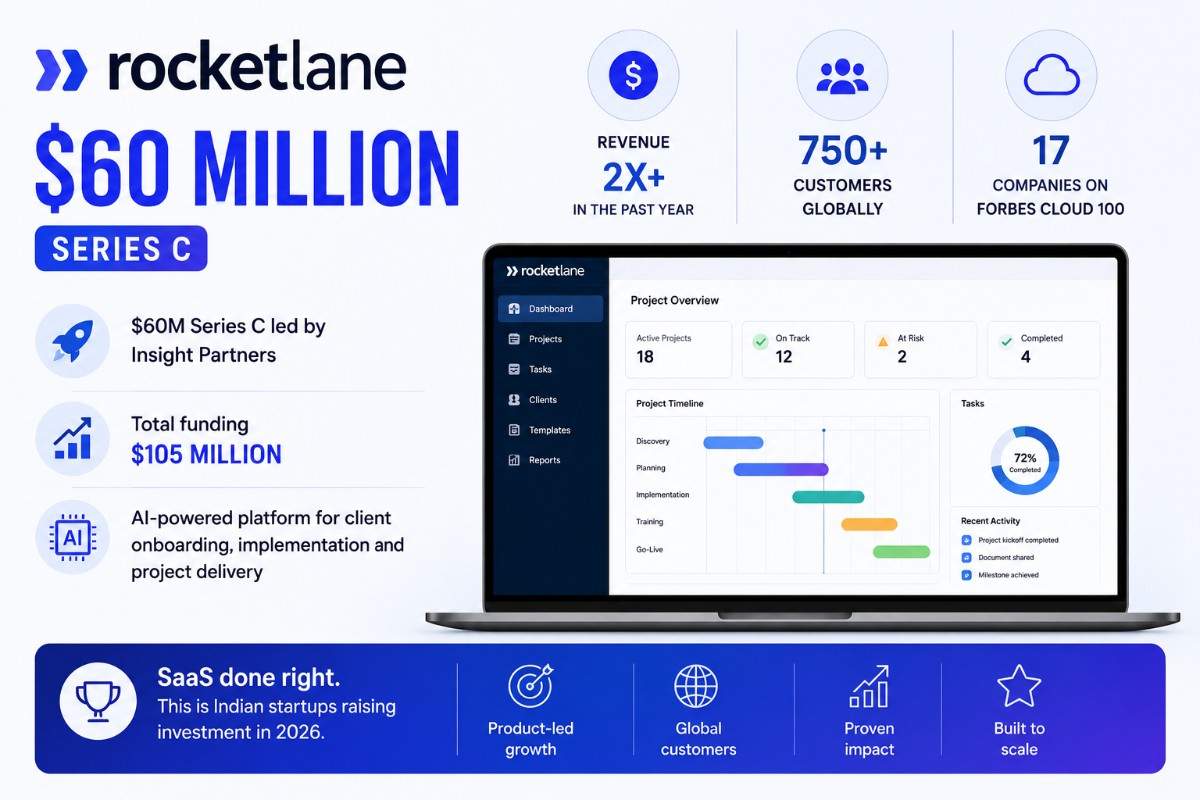
Rocketlane is the right textbook example of a SaaS startup. The Chennai-based startup raised $60 million in a Series C led by Insight Partners, bringing total funding to $105 million. Rocketlane's AI-powered platform manages client onboarding, implementation, project delivery and generating its revenue more than doubled in the past year. It now serves 750+ customers globally, including 17 companies on the Forbes Cloud 100. This is what Indian startups raising investment in 2026 looks like when the product actually does the selling.
5. Snabbit – $56 Million (Series D)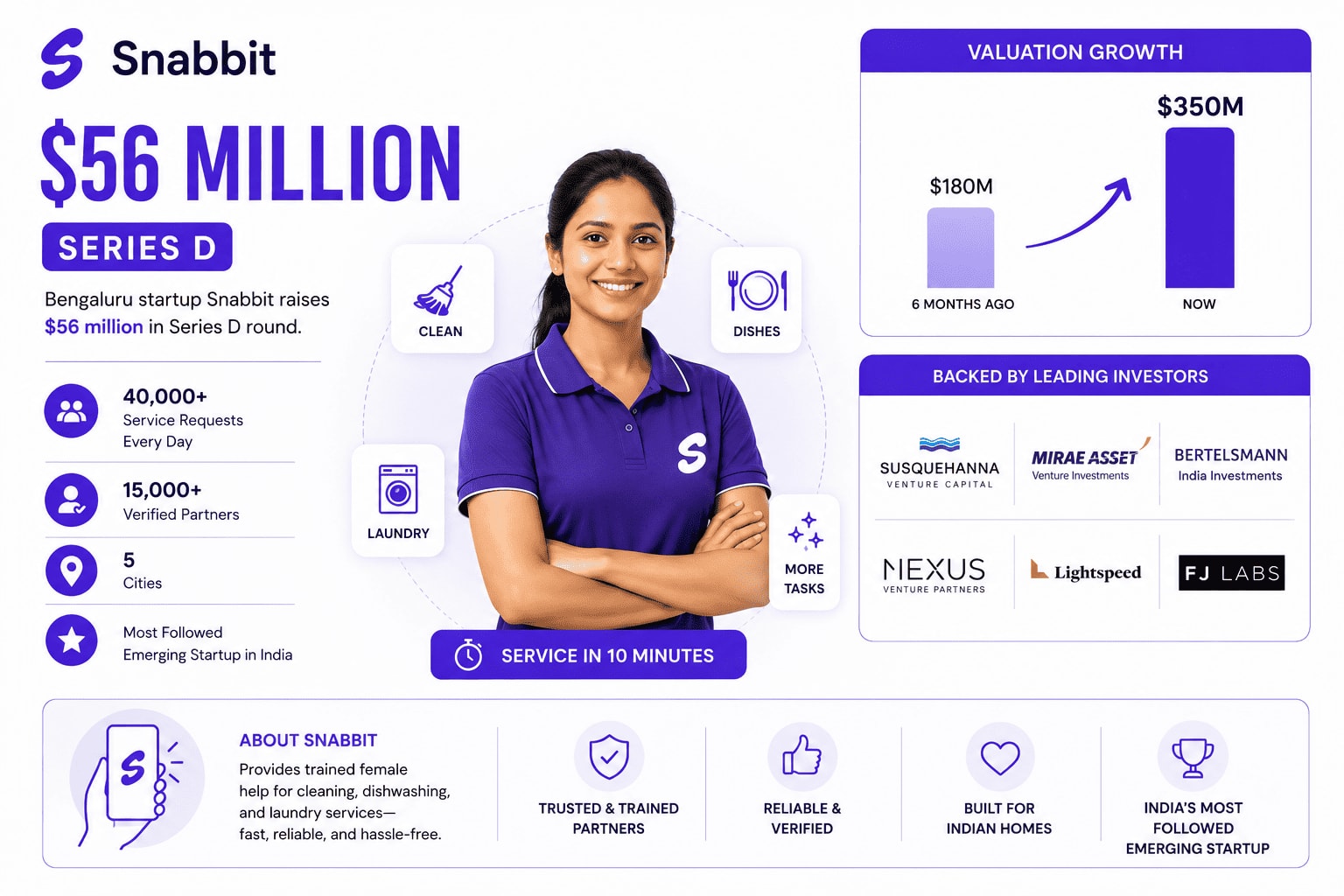
The Bengaluru startup Snabbit has raised 56 million dollars through a Series D funding round which Susquehanna Venture Capital and Mirae Asset Venture Investments and Bertelsmann India Investments co-led, together with Nexus and Lightspeed and FJ Labs. The company now processes over 40000+ service requests every day throughout five cities using its network of 15000+ workers. The company's valuation increased from $180 million to $350 million within a time period of six months. This startup has become the most closely followed company among all Indian startups which are currently emerging.
6. Juspay – $50 Million (Series D)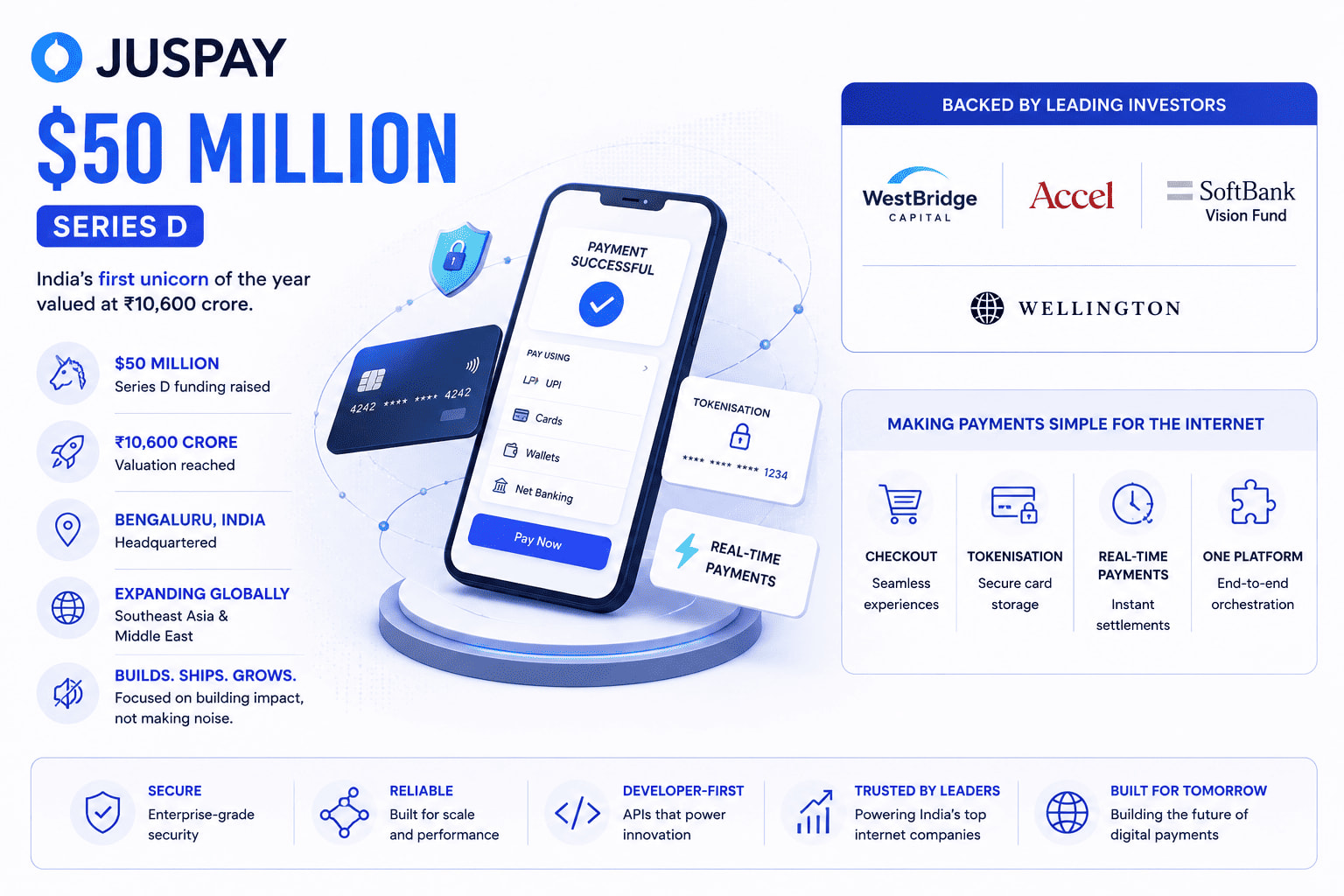
Juspay became India's first unicorn of the year by raising $50 million led by WestBridge Capital with Accel, SoftBank Vision Fund, and Wellington participating. The Bengaluru-based fintech reached a valuation of ₹10,600 crore.
It builds payment orchestration infrastructure for large internet companies, handling everything from checkout to tokenisation to real-time payments. The company is now expanding into Southeast Asia and the Middle East. It just builds, ships, and grows; unlike other startups, it does not make a lot of noise.
7. Sahi – $33 Million (Series B)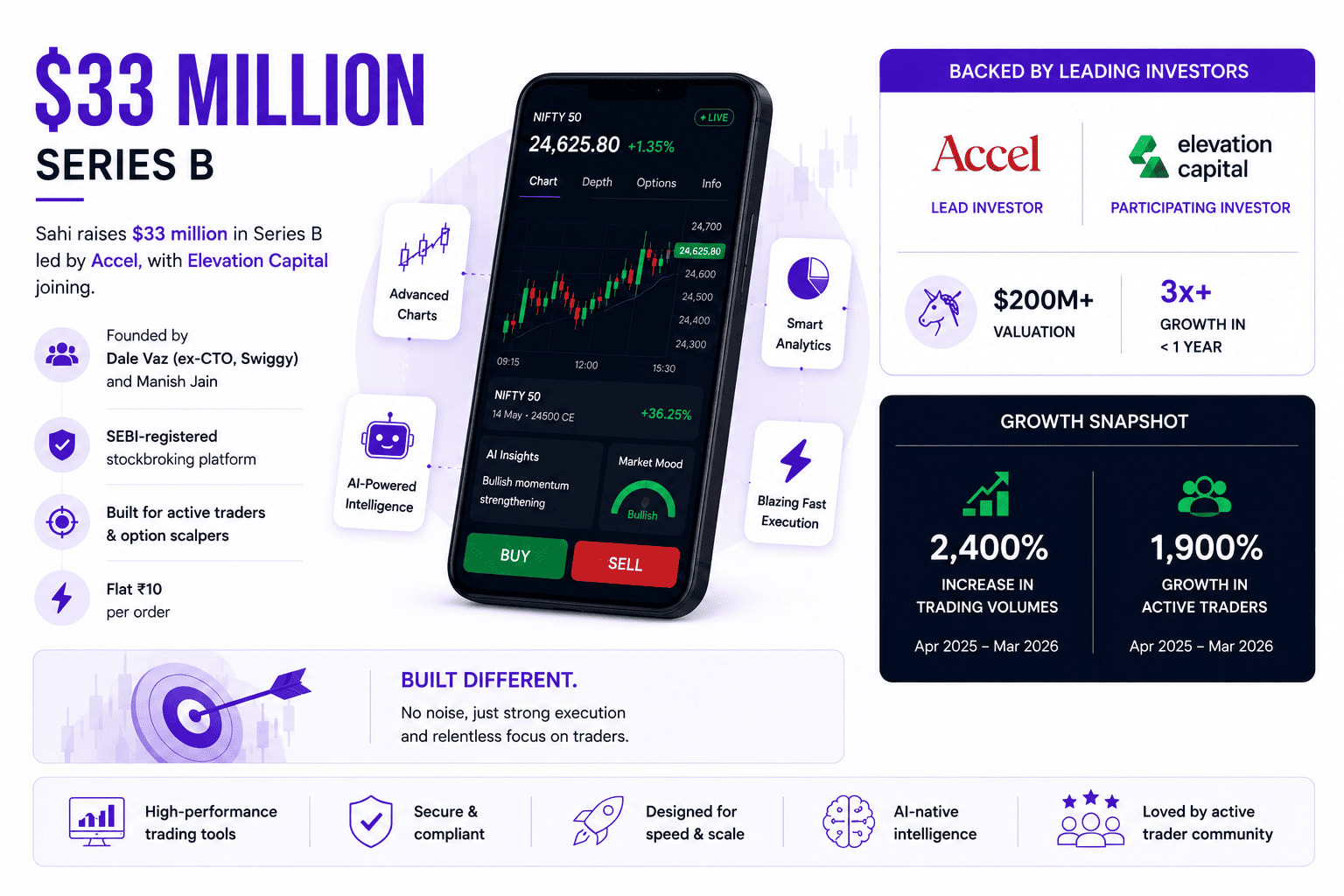
Sahi is arguably the most impressive growth story among top-funded startups in India 2026.
The Bengaluru-based AI-native trading platform raised $33 million in a Series B led by Accel, with Elevation Capital joining. Valuation crossed $200 million, basically more than 3x its Series A value from less than a year ago. Between April 2025 and March 2026, Sahi posted a 2,400% increase in trading volumes and 1,900% growth in active traders. For a fintech startup, those are jaw-dropping numbers. Founded by Dale Vaz (ex-CTO of Swiggy) and Manish Jain, this one is built differently.
Emerging Startups to Watch
The Indian startup has multiple new companies securing significant funding after the major funding events in 2026. The digital-first D2C consumer brand Palmonas achieved a successful funding round after raising 40 million dollars, which proves that such brands can still secure investment when they maintain high customer retention rates. Kimbal Technologies raised 22 million dollars in Series B funding from Hyderabad to expand its AI powered smart grid technology, which demonstrates that deep tech startups are now receiving active funding from investors in the year 2026. Oolka, a credit lifecycle platform, raised 14 million dollars in Series A funding from Accel, Lightspeed, and Z47 to show that niche infrastructure projects still receive investment from Indian fintech startups during their early funding stages.
Key Startup Funding Trends in 2026
1. AI Is the Bas₹eline Now, Not the Differentiator
Every major funded startup in 2026 either builds on AI or uses it meaningfully in operations. From Neysa's GPU infrastructure to Sahi's trading intelligence, AI startups in India in 2026 stopped being a category. They became the default.
2. Fintech Kept Growing When Others Slowed
Fintech was one of the few sectors that actually grew in FY26, pulling in $2.4 billion with a 14% increase year on year. KreditBee and Juspay showed that the fintech startup funding India story is far bigger than just payments apps.
3. Early-Stage Deals Surged
Early-stage funding hit $4.8 billion in FY26, up 33% year on year. Investors are actively looking for the next wave of startups, but they also want to see a real idea with a real founder, not just a trend-chasing deck.
4. Fewer Big Rounds, Higher Standards
India had only 13 funding rounds above $100 million in FY26, down from 23 in FY25. Investors are concentrating capital into fewer, stronger bets. Getting to $100M+ is harder now, and that is probably healthy.
5. Bengaluru Leads, Mumbai Is Rising
Bengaluru remains the undisputed capital for SaaS and deeptech startups. But Mumbai made real noise in 2026. Fintech and consumer startups from the city are attracting more capital than ever before in startup investment trends in 2026.
What Founders Can Learn From 2026 Funding Trends
The biggest lesson from 2026? Investors have not stopped writing cheques; they have simply become far more selective about where they place their bets. Here is what the top-funded startups got right:
Build the business before building the pitch. Startups like Rocketlane and Sahi attracted investors because they showed real growth, strong retention, and proven traction.
Unit economics now matters more than future promises. Investors in 2026 want startups with healthy margins or a clear path to profitability.
AI must create measurable impact. Simply calling a product “AI-powered” is not enough anymore. Investors want to see how AI improves efficiency, reduces costs, or drives growth.
A strong sector alone will not guarantee funding. Even in popular sectors like fintech and AI, only startups with solid execution, strong founders, and clear market positioning secured major investments.
Startup Coach Perspective
At Startup Coach, we see 2026 as a transition year. Not because funding slowed down, it did not. But because the game has changed. The days when a big vision and a confident founder could close a round on narrative alone are behind us. What works now is showing up with a business that already proves itself and a story that follows the numbers, not the other way around.
The startups that led Indian startup funding in 2026 did not get lucky. They were prepared. They built fundable businesses first and fundraised second. That is the lesson every founder needs to carry into their next pitch.
Conclusion
The Indian startup ecosystem in 2026 continues to evolve rapidly. The active sectors of AI, fintech, and SaaS, along with on-demand services and deep tech, no longer attract investor backing because investors now choose to fund specific enterprises. The $11.7 billion capital raised in FY26 demonstrates a trend where investors concentrate their funding on a select group of startups that show stronger potential.
The top Indian startups that secured funding in 2026 succeeded because of how they operated, not just what they built. The funded companies differ from others because they demonstrate solid fundamentals and sustainable growth and execute their plans effectively. The startup ecosystem of India does not experience a setback from that shift. The ecosystem has achieved maturity according to this sign.
The Indian startup ecosystem in 2026 continues to evolve rapidly. The active sectors of AI, fintech, SaaS, on-demand services, and deep tech are attracting investors who are prioritizing strong execution and sustainable growth over hype.
The top Indian startups that secured funding in 2026 succeeded because they focused on strong fundamentals, clear market positioning, and scalable business models. That shift is not a slowdown. It is a sign that the ecosystem is becoming more mature and disciplined.
For founders preparing to raise capital in this evolving funding environment, connect with our experts for further guidance.
FAQs
Q: Which Indian startup raised the highest funding in 2026?
Neysa Networks raised the largest funding round of 2026 at $1.2 billion, led by Blackstone. It also became India's second unicorn of the year with a valuation of $1.4 billion.
Q: Which sectors attracted the most startup funding in India in 2026?
Fintech pulled in $2.4 billion in FY26, growing 14% year on year. Enterprise applications attracted $3.6 billion in total. AI startups in India in 2026 dominated both early stage deal volume and the largest late-stage rounds.
Q: How much total funding did Indian startups raise in FY26?
Indian startups raised approximately $11.7 billion in FY26, a 20% increase over FY24, maintaining India's position as the world's fourth largest tech startup ecosystem.
Q: Which Indian startups became unicorns in 2026?
Three startups achieved unicorn status in 2026: Juspay reached a $1.2 billion valuation, Neysa Networks at $1.4 billion, and KreditBee, which became the highest valued among them at $1.5 billion.
Q: What can founders learn from the top funded startups of 2026?
The clearest lesson from startup investment trends in 2026 is to build the business before fundraising. The top funded startups came with proven unit economics, real retention, and verifiable growth, not just a vision. That is what gets funded today.