Startup India Investors List 2026: Find Verified Investors Across India
By Toishaa Soni · 1 April 2026
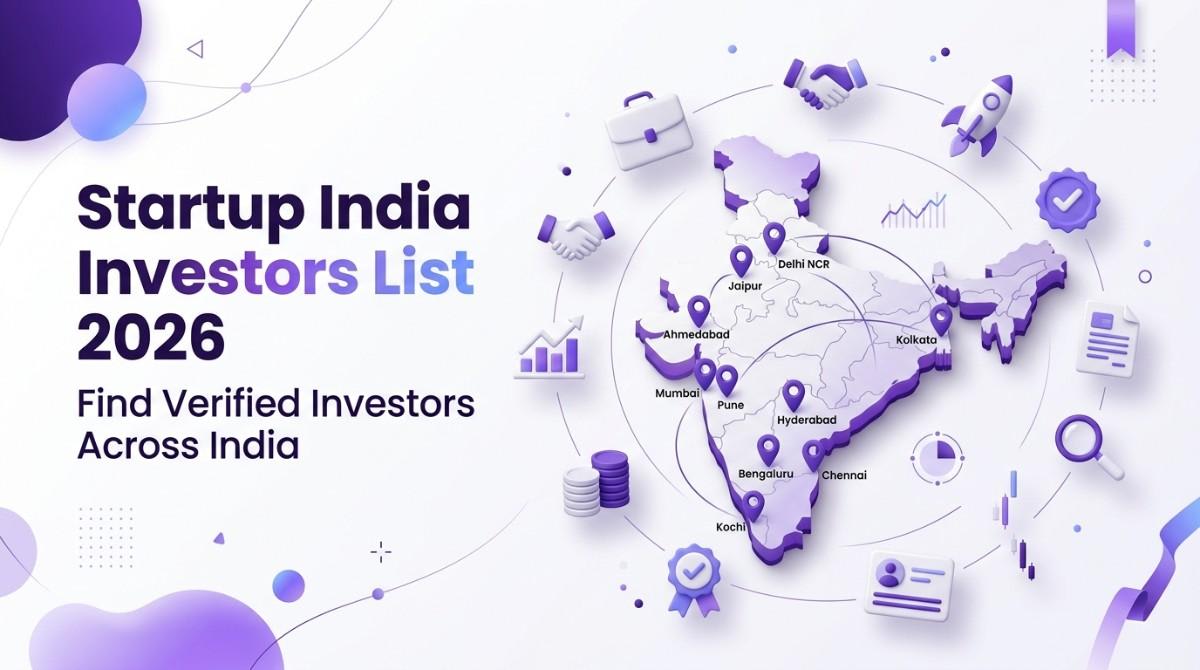
Explore startup investors in India 2026 including angel investors venture capital firms and funding platforms with insights on how to raise funds.
India’s startup ecosystem has become one of the fastest-growing innovation hubs globally, with rapid growth across sectors like fintech, edtech, healthtech, SaaS, AI, and climate tech driven by both founders and a strong investor network.
Investors today offer more than just capital, providing mentorship, strategy, and industry connections. In 2026, the ecosystem is more diverse than ever, with active participation from angels, VCs, and institutions across all stages.
This guide covers a curated list of Startup India investors, along with insights on how the funding ecosystem works and how founders can approach the right investors effectively.
Understanding the Role of Startup Investors in India
Startup investors are individuals or organizations that provide financial support to businesses in exchange for equity or ownership stakes. However, their role goes far beyond funding. In a highly competitive startup environment, investors often act as strategic partners who help founders navigate challenges, refine their business models, and scale operations.
In India, the investor ecosystem has matured significantly. Earlier, funding opportunities were limited to a few metro cities and a handful of venture capital firms. Today, thanks to digital platforms, government initiatives, and the rise of angel networks, startups from smaller cities and diverse backgrounds can access funding more easily.
Investors typically evaluate startups based on factors such as market opportunity, business model, scalability, team strength, and traction. The level of involvement varies depending on the stage of investment, with early-stage investors being more hands-on compared to late-stage institutional investors.
Types of Startup Investors in India
India’s startup funding ecosystem is made up of multiple types of investors, each catering to different stages of a startup’s journey.
1. Angel Investors: The First Believers
Angel investors are usually high-net-worth individuals who invest their personal funds into early-stage startups. These investors often come in when the startup is still at the idea or prototype stage, making them the first external believers in a founder’s vision.
What makes angel investors particularly valuable is their willingness to take risks. At a stage where startups may not have significant revenue or traction, angel investors focus on the potential of the idea and the capabilities of the founding team. In many cases, they also provide mentorship and help founders build their initial network.
India has seen a surge in angel investors over the years, including successful entrepreneurs and industry leaders who actively invest in startups. Their involvement has significantly improved access to early-stage funding across the country.
2. Venture Capital Firms: Fueling Growth and Scale
Venture capital firms play a critical role in scaling startups. Unlike angel investors, VCs manage pooled funds from institutional investors and deploy them into high-growth startups. These firms typically invest in startups that have already demonstrated product-market fit and are ready to expand.
Venture capital investors in India are known for backing startups across multiple funding rounds, from seed to Series C and beyond. They focus on startups with strong growth potential, scalable business models, and large market opportunities.
Over the years, India has become a hotspot for venture capital activity, attracting both domestic and global VC firms. These firms have been instrumental in building unicorn startups and positioning India as a global innovation hub.
3. Angel Networks and Investment Platforms
As the startup ecosystem expanded, angel networks emerged as a structured way for multiple investors to come together and invest collectively. These networks allow startups to raise larger amounts of capital while giving investors access to curated investment opportunities.
Angel networks also simplify the fundraising process by providing a platform where startups can pitch their ideas to a group of investors. This reduces the time and effort required to connect with individual investors separately.
In addition to traditional networks, digital investment platforms have also gained popularity, enabling founders to connect with verified investors across India.
4. Corporate and Global Investors
Corporate investors and global funds have increasingly become active in the Indian startup ecosystem. Large multinational companies invest in startups to stay ahead of innovation and explore strategic partnerships. Global investors bring not only capital but also international exposure, helping Indian startups expand into global markets. Their participation has significantly increased the scale and competitiveness of the ecosystem.
Startup India Investors List 2026
India’s investor ecosystem is vast, but certain investors and firms stand out due to their consistent track record, sector expertise, and strong founder support. At the early stage, several angel investors have built reputations for identifying high-potential startups and supporting them through their initial journey. These investors are known for backing disruptive ideas and helping founders refine their business strategies.
In the venture capital space, multiple firms have emerged as leaders in funding high-growth startups. These firms invest across sectors such as technology, fintech, consumer brands, and enterprise solutions. Their involvement often signals credibility and attracts further investment.
Early-stage funds have also gained prominence, focusing specifically on startups at the ideation or MVP stage. These funds bridge the gap between angel investing and traditional venture capital, providing crucial support during the early phases of a startup. Additionally, corporate and global investors continue to play a significant role in large funding rounds, enabling startups to scale rapidly and compete on a global level.
City-wise Distribution of Startup Investors in India
India’s startup investors are primarily concentrated in major cities, each offering unique advantages.
1. Bengaluru: The Startup Capital
Bengaluru is widely regarded as the startup capital of India. The city hosts the highest number of venture capital firms, angel investors, and startup founders. Its strong technology ecosystem and global exposure make it a preferred destination for both startups and investors.
Startups in Bengaluru benefit from access to experienced mentors, a skilled workforce, and a collaborative ecosystem that fosters innovation.
2. Mumbai: The Financial Hub
Mumbai’s position as India’s financial capital makes it a key hub for startup investors. The city is home to numerous angel networks, venture capital firms, and private equity investors.
Mumbai’s strength lies in sectors such as fintech, media, and consumer brands. Its proximity to financial institutions and corporate headquarters provides startups with strategic advantages.
3. Delhi NCR: Rapidly Growing Ecosystem
Delhi NCR has emerged as a strong startup ecosystem, particularly in sectors like edtech, e-commerce, and logistics. The region benefits from its proximity to policymakers and large corporations. Investors in Delhi NCR are actively funding startups across various stages, making it a competitive and fast-growing ecosystem.
4. Hyderabad and Other Emerging Cities
Cities like Hyderabad, Chennai, Pune, and Ahmedabad are rapidly gaining traction as startup hubs. These cities offer lower operational costs, supportive government policies, and growing investor interest. The expansion of investor networks into Tier-2 cities is one of the most significant trends shaping the future of startup funding in India.
Sector-wise Investment Trends in India (2026)
The Indian startup ecosystem is highly dynamic, with investor interest shifting based on emerging trends and market demands.
1. Fintech continues to attract significant investment due to the rapid adoption of digital payments and financial services. The success of digital platforms has created a strong foundation for innovation in this sector.
2. Artificial intelligence and deep-tech startups are gaining momentum, with investors focusing on cutting-edge technologies that have global applications. These sectors are expected to see substantial growth in the coming years.
3. Healthtech has also emerged as a key area of investment, driven by the increasing demand for digital healthcare solutions and telemedicine.
4. SaaS startups in India are gaining global recognition, attracting investments from both domestic and international investors. These startups benefit from scalable models and recurring revenue streams.
5. Climate tech and sustainability-focused startups are also receiving increased attention as investors prioritize environmentally responsible innovations.
How to Find Verified Startup Investors in India
Finding the right investor is one of the most critical steps in a startup’s journey. While the number of investors has increased, identifying the right fit requires careful research and strategy.
Founders can start by exploring official platforms such as the Startup India portal, which connects startups with recognized investors. Incubators and accelerators also provide access to curated investor networks, making them valuable resources for early-stage startups.
Networking events, startup conferences, and pitch competitions offer opportunities to connect with investors in person. These interactions often lead to meaningful relationships and funding opportunities.
Digital platforms and professional networks like LinkedIn have also become powerful tools for reaching out to investors. However, it is important to personalize outreach and clearly communicate the startup’s value proposition.
How to Approach Startup Investors Successfully
Approaching investors requires preparation, clarity, and confidence. One of the most important tools in this process is a well-structured pitch deck that clearly outlines the business model, market opportunity, competitive advantage, and financial projections. Investors are particularly interested in startups that demonstrate traction, whether in the form of users, revenue, or partnerships. Even at an early stage, showing progress and validation can significantly improve funding chances.
Founders should also focus on building a strong narrative around their startup, highlighting what makes it unique and why it has the potential to succeed. Clear communication and storytelling play a crucial role in capturing investor interest.
Additionally, founders must be prepared for due diligence, which involves verifying financial, legal, and operational aspects of the business. Transparency and professionalism during this process are essential.
Challenges in Raising Startup Funding in India
Despite the growth of the ecosystem, fund raising in India comes with its own set of challenges. Competition among startups is intense, with thousands of founders vying for investor attention. Investors often prefer startups with proven traction, making it difficult for early-stage ventures to secure funding. This creates a gap that is gradually being addressed by early-stage funds and angel networks.
Geographical limitations can also pose challenges, as startups in smaller cities may have limited access to investors. However, digital platforms and remote pitching are helping bridge this gap. Long fundraising cycles and complex negotiation processes can also be challenging for founders. Patience, persistence, and strategic planning are key to overcoming these hurdles.
Future of Startup Funding in India
The future of startup funding in India looks promising, with growing participation from domestic and global investors and a rise in niche-focused micro-VC funds. Innovation-driven sectors like AI, biotech, and clean energy are expected to lead growth, while expansion into Tier-2 and Tier-3 cities will unlock new opportunities.
Support for women-led and inclusive startups is also set to increase, positioning India as a strong global hub for innovation and entrepreneurship.
Conclusion
The growth of startup investors in India has been a key driver behind the country’s thriving startup ecosystem. From angel investors who support early-stage ideas to venture capital firms that fuel large-scale growth, the availability of funding has significantly improved over the years.
The Startup India investors list 2026 reflects the diversity and strength of India’s funding landscape. For founders, understanding this ecosystem and building the right connections can make a significant difference in their entrepreneurial journey.
As the ecosystem continues to evolve, startups that focus on innovation, scalability, and strong execution will find ample opportunities to secure funding and achieve long-term success.
FAQs
What are startup investors in India?
Startup investors are individuals or organizations that provide funding to startups in exchange for equity.How can I find investors for my startup in India?
You can use platforms like Startup India, incubators, networking events, and LinkedIn.Who are angel investors?
Angel investors are individuals who invest personal funds in early-stage startups.What is venture capital funding?
It is funding provided by firms that invest in high-growth startups.Is it easy to get funding in India?
It can be competitive, but strong ideas and execution improve chances.