Bridge Rounds: When and How to Raise One
By Rohini Rajpoot · 10 September 2026

Learn when to raise a bridge round, how it works, its risks, investor options and equity implications for startups.
You raised your seed round, hired a small team and assumed the next round would come together in a few months. Then it didn't. Investors want stronger traction, your runway is shrinking, and the milestones you promised are still a few months away.
This is where bridge round funding for a startup enters the conversation. Interim funding can give you the runway extension you need to get over the line. But a bridge round isn't the destination. It's meant to help you reach the next one.
What Is a Bridge Round in Startup Funding?
A bridge round is a smaller round of financing raised between two larger ones. It's called a bridge because it carries the company from where it is now to where it plans to be, usually the next major round.
Picture the path like this: Seed Round, then Bridge Round, then Series A. The bridge gives you extra months to hit milestones that make the next raise easier. The money can come from existing investors, angels, new investors or strategic backers, and it's often put together faster than a full round.
Why Do Startups Raise Bridge Funding?

Founders usually end up here for one of a few reasons.
The next round is taking longer: Fundraising almost always takes more time than planned, and your cash doesn't wait.
You need more runway: You're not yet at the next milestone or at profitability, and the current money won't stretch that far.
A big milestone is close: Maybe it's a product launch, a revenue target, a key customer, a regulatory approval or a new market. Reaching it before you pitch can change your valuation conversation.
Market conditions have shifted: Sometimes it's smarter to take a little capital now than to accept poor terms in a tough market.
Existing investors want to back you: People who already believe in the company may be willing to put in more to help you reach the next stage.
When Should a Startup Raise a Bridge Round?
The best time is before you're desperate. Founders who wait until there are six weeks of cash left negotiate from a weak spot, and investors can tell.
A bridge round can make sense when:
Your core business is showing real progress
You have a clear next milestone
Your current runway isn't enough to reach it
A proper institutional round looks likely but isn't ready yet
The extra capital would meaningfully improve your position
It's usually a bad idea when growth is weak with no recovery plan, when the business model isn't working, when you're dodging hard decisions, or when there's no specific milestone the money will help you hit.
A bridge should buy time to create value. It shouldn't just delay the problem.
How Does a Bridge Round Work?
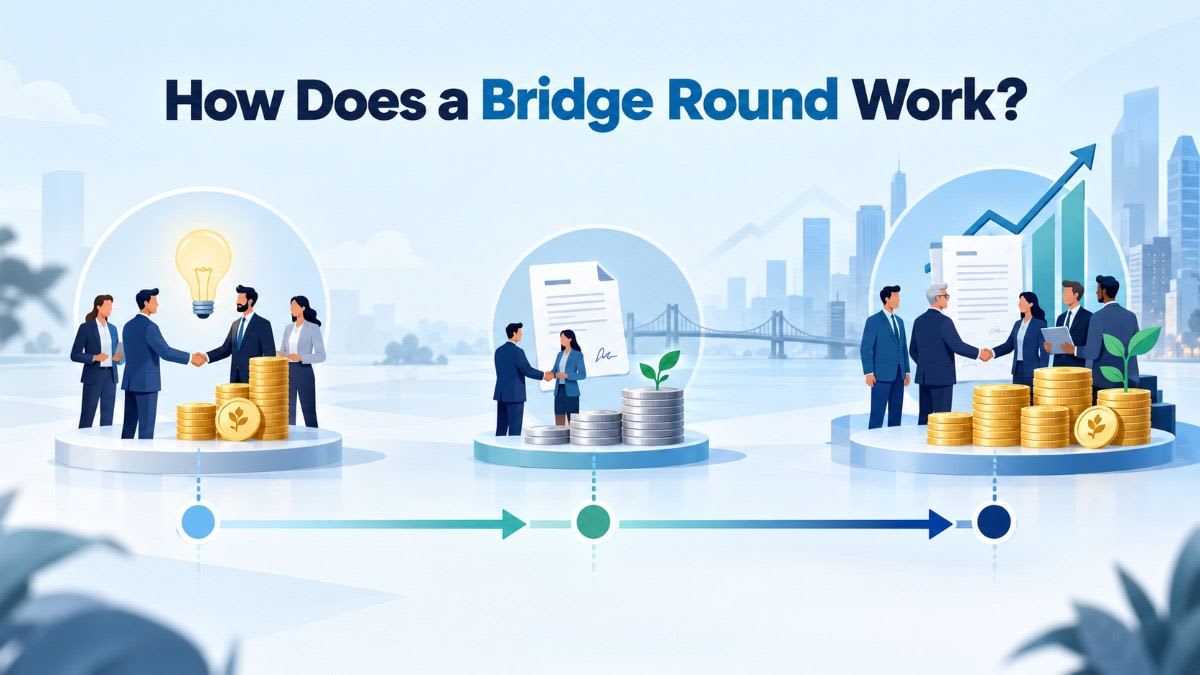
Here's the usual flow, without the jargon.
Find the funding gap: Work out how much runway you actually need, not how much you'd like.
Define the milestone: What must be true before the next round?
Choose the instrument: This could be equity, a convertible note or another agreed structure.
Approach investors: Start with existing ones, then angels, strategic investors and new investors.
Negotiate terms: Valuation, conversion terms, discount, cap, investor rights and dilution all come up here.
Close: Finish the paperwork and get the money in.
Which structures are available can depend on your company type and the rules that apply to it, so check with a lawyer or chartered accountant before you commit.
Bridge Round vs Seed Round: What's the Difference?
People often mix them up, so here's a quick look.
Bridge Round | Seed Round |
Usually provides interim capital | Usually an early institutional funding round |
Often follows an earlier round | Often one of the first major outside rounds |
Focused on extending runway and reaching milestones | Focused on building and proving the business |
Can be smaller | Can be larger, depending on the startup |
May use convertible instruments | Can be equity or other structures |
These are general patterns, not rules. The exact structure varies by startup, investor and deal.
Who Invests in Bridge Rounds?
Existing investors are usually the first call. They already know your numbers and your team, so they can move quickly.
Angel investors may join when the opportunity and terms make sense for them.
New institutional investors can come in if you already have enough traction to interest them.
Strategic investors may participate when there's a strong business or industry link, such as a partner, supplier or large customer.
How Much Should a Startup Raise in a Bridge Round?
There's no standard amount. It depends on your monthly burn, your current runway, how long the next round is likely to take, and what the next milestone costs to reach.
A simple way to think about it:
Bridge amount = monthly burn x months needed + a reasonable buffer
The buffer matters. Raise too little and you'll be back in fundraising mode almost immediately, which eats time you should spend running the business.
How Much Equity Is Typically Given in a Bridge Round?

There isn't a universal percentage, and anyone quoting you a fixed number is oversimplifying. What you give up depends on valuation, the instrument, any discount or valuation cap, the amount raised, your existing ownership and the conversion terms.
If you use a convertible note, the investor may not get shares right away. The money converts into equity later, usually at your next financing, based on the agreed terms. That's why you need to model what conversion could mean for your cap table before you sign.
Convertible Note Bridge: How Does It Work?
A convertible note starts as a form of debt and later converts into equity, typically when you close your next priced round. Startups like it for bridge financing because it can be quicker and cheaper to set up than a full equity round, and it lets you postpone the valuation discussion.
A few terms are worth knowing:
Valuation cap: a ceiling on the valuation used when the note converts
Discount: a lower conversion price for the note holder compared with new investors
Interest and maturity: the interest that builds up and the date the note falls due, where applicable
If you're looking at bridge financing for startups in India, the available instruments and compliance requirements can differ by company structure, so get professional advice on what fits.
The easier a financing instrument looks on day one, the more important it is to understand what it could mean at conversion.
What Are the Risks of Raising a Bridge Round?
Dilution. Conversion or new equity can reduce founder ownership more than expected.
Dependence on the next round. If it doesn't happen, the bridge can become a real problem.
Unfavourable terms. Pressure can push founders into terms they'd normally refuse.
Too little runway. An undersized bridge leaves you fundraising again within months.
Signalling risk. Repeated bridges without visible progress can make future investors nervous.
Whatever you raise, have a clear plan for what happens after the bridge.
Bridge Round vs Other Funding Options
A bridge isn't your only way to extend runway. You could also look at bootstrapping and cutting costs, venture debt, revenue-based financing, a fresh equity round, or an extension of your previous round. Each comes with its own cost, eligibility rules and trade-offs. Compare them before you decide a bridge is the answer.
Bridge Round Readiness Checklist
Before you talk to investors, make sure you can tick these off:
Calculate your current runway and monthly burn
Define the funding gap and the next milestone
Prepare updated financials and recent traction numbers
Review the terms of your existing investors
Understand how much dilution you could face
Prepare your fundraising story
Have a clear plan for the next round
Is a Bridge Round Right for Your Startup?
A bridge may make sense if you have traction, a clear milestone and a temporary funding gap. Think twice if you have weak fundamentals, no clear milestone and no realistic plan for the next round.
Don't use bridge funding to keep a broken model alive. Use it to give a promising business enough time to reach its next milestone.
How Startup Coach Can Help
Startup Coach works with founders on fundraising preparation, financial planning, investor readiness, business strategy and growth planning. If you're thinking about your next raise, make sure you know how much you need, why you need it, and what that capital has to achieve.
Conclusion
A bridge round should have a destination. It isn't just about staying alive for a few more months. Use the extra runway to achieve something real, whether that's traction, revenue, product validation or profitability, so the next funding conversation goes better than the last one.
Raise enough to reach the next milestone, and build enough value to make the next round worth raising.
FAQs
1. What is a bridge round in startup funding?
It's a smaller round raised between two larger ones to extend runway and help a startup reach its next milestone.
2. When should a startup raise a bridge round?
When there's a temporary funding gap, real progress in the business and a clear milestone the money will help you reach.
3. How is a bridge round different from a seed round?
A bridge usually provides interim capital after an earlier round, while a seed round is often an early institutional round focused on building the business.
4. Who invests in bridge rounds?
Mostly existing investors, along with angels, new institutional investors and strategic investors.
5. How much equity is typically given in a bridge round?
There's no fixed percentage. It depends on valuation, the instrument, discount, cap and the amount raised.